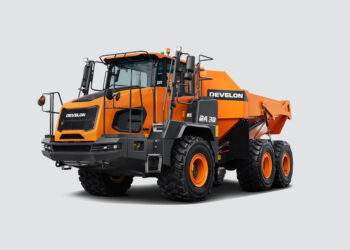
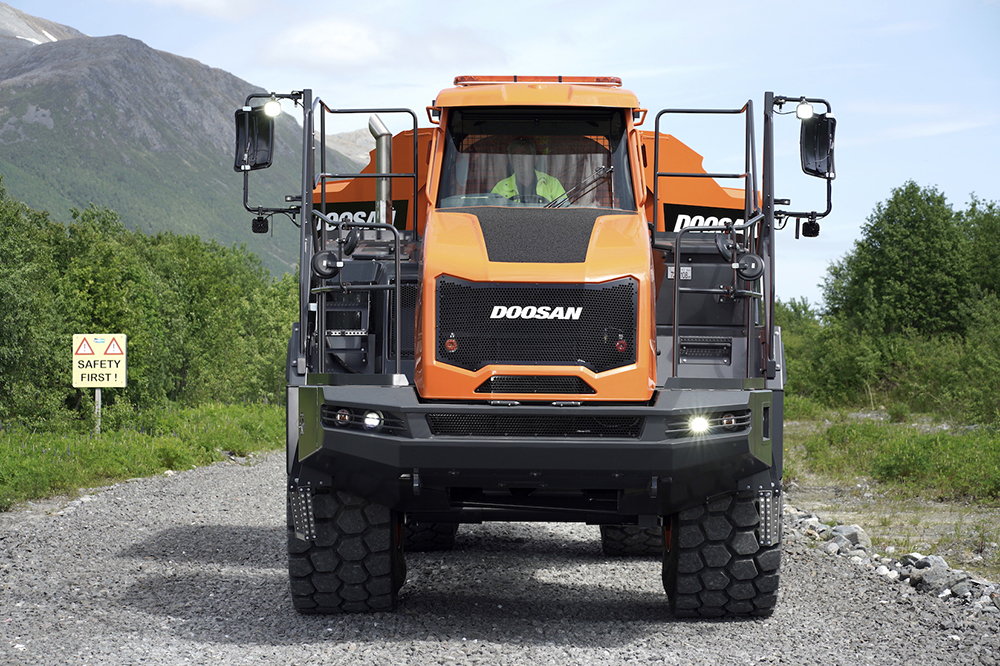
The new 4×4 version of the DA45-7 ADT complements the company’s standard range of 6×6 ADT models, including the 28-tonne DA30-7 and 41-tonne payload DA45-7. The 4×4 DA45-7 aims to compete with 40-tonne class rigid dump trucks (RDTs).
In Doosan’s new 4×4 ADT, the front truck and cab unit is the same as in the original 6×6 model, with modifications being made to the rear dumper unit only. Featuring a ZF EP8-420 transmission, the 4×4 DA45-7 is a two-axle ADT with twin wheels at the rear, and with a dumper section like that on RDTs in the 40-tonne class.
“With superior operation on poorer roads, smoother surfaces and steeper terrain, the aim of our new 4×4 machine is to challenge RDTs in the 40-tonne class, by providing a dumper product that delivers much more than RDTs,” says Beka Nemstsveridze, Doosan’s ADT product manager.
As well as performing better in conditions that are tough for RDTs, the new 4×4 DA45-7 ADT has a width of less than four metres to avoid the need for special transport and is said to offer a better turning radius than a comparable RDT. The smaller turning radius and the design of the rear dumper unit, which is more suited to carrying flat and heavy rocks, provide particular advantages in the mining and tunnelling industries.
The latter are growing markets for ADTs, and include short-term mining projects, quarrying and contract mining industries, especially those in southern Africa, the UK and Australia. Construction and bulk earthmoving contractors involved in roads, dams, airports, landfills and development projects are also large users of ADTs. Together, these areas make the ADT market a wide one, ensuring a large customer base.
“The development of our 4×4 ADT was inspired by customer demand and the new 4×4 ADT can meet the needs of markets around the world by offering a compelling advantage to customers with specific requirements,” says Nemstsveridze.
“For example, a machine like this might be able to extend the season for a mine that normally has to be stopped for a certain period due to the rainy season.”