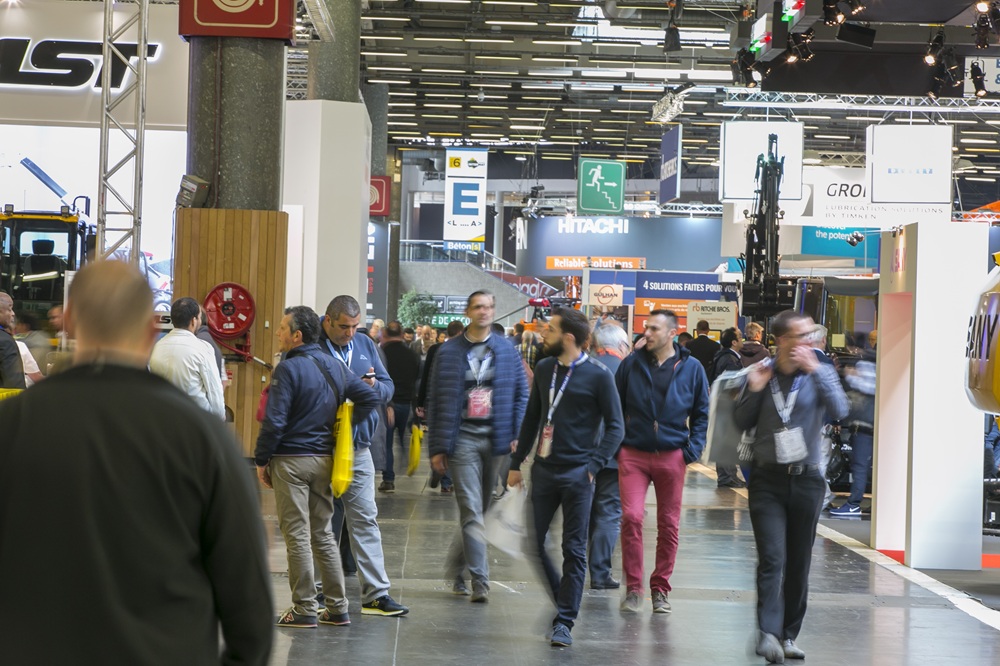
The INTERMAT 2027 exhibition in Paris will focus on sustainability in the construction sector. The event will be titled “The construction industry rising to the challenge of sustainability”. This will focus on the three pillars of sustainability: economic; environmental; social.
The five main trade associations involved in the event, C-MAT, EVOLIS, DLR, FFB and FNTP, are working together to successfully drive the sector’s sustainable transformation, whilst maintaining competitiveness. This edition of the INTERMAT exhibition will offer a space for dialogue, demonstrations and breaking down barriers, both in France and internationally. The upcoming INTERMAT exhibition offers stakeholders an insight into the strategic event in the construction sector, which aims to make sustainability a solution to energy, technological and human challenges.
The sector’s transition to more sustainable models cannot take place without economic balance. Between European climate targets, rising investment costs and the need to maintain business competitiveness, economic sustainability now appears to be the key prerequisite for its transformation. The EU has set an ambitious target of achieving carbon neutrality by 2050. But for manufacturers, businesses, rental companies and equipment suppliers, the question is no longer one of commitment, but of how to achieve this goal.
The industry must simultaneously reduce its carbon footprint, meet increasing regulatory requirements and continue to produce. The European regulatory framework is also shifting the balance within the sector, increasing the burden of administrative obligations and highlighting the importance of stability in safeguarding investments.
Low-carbon equipment remains more expensive than traditional solutions. This means that public procurement is a tool that can shape the market by steering tenders towards low-carbon solutions. Finally, the issue of equipment funding remains crucial. After a difficult period, the European market is gradually recovering, but the investment required for the transition remains substantial. In this context, rental plays a key role in facilitating access to equipment whilst keeping investment costs down. As Philippe Cohet, the chairman of DLR, points out, around 80% of machines are now leased.