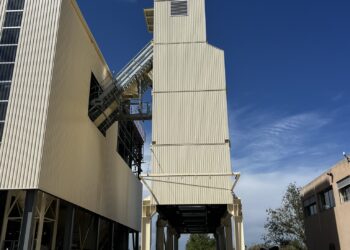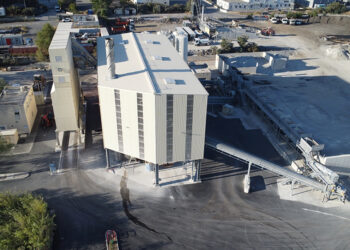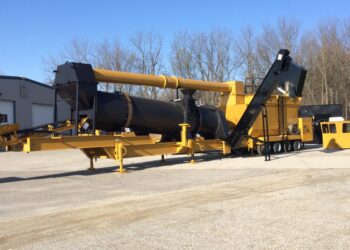
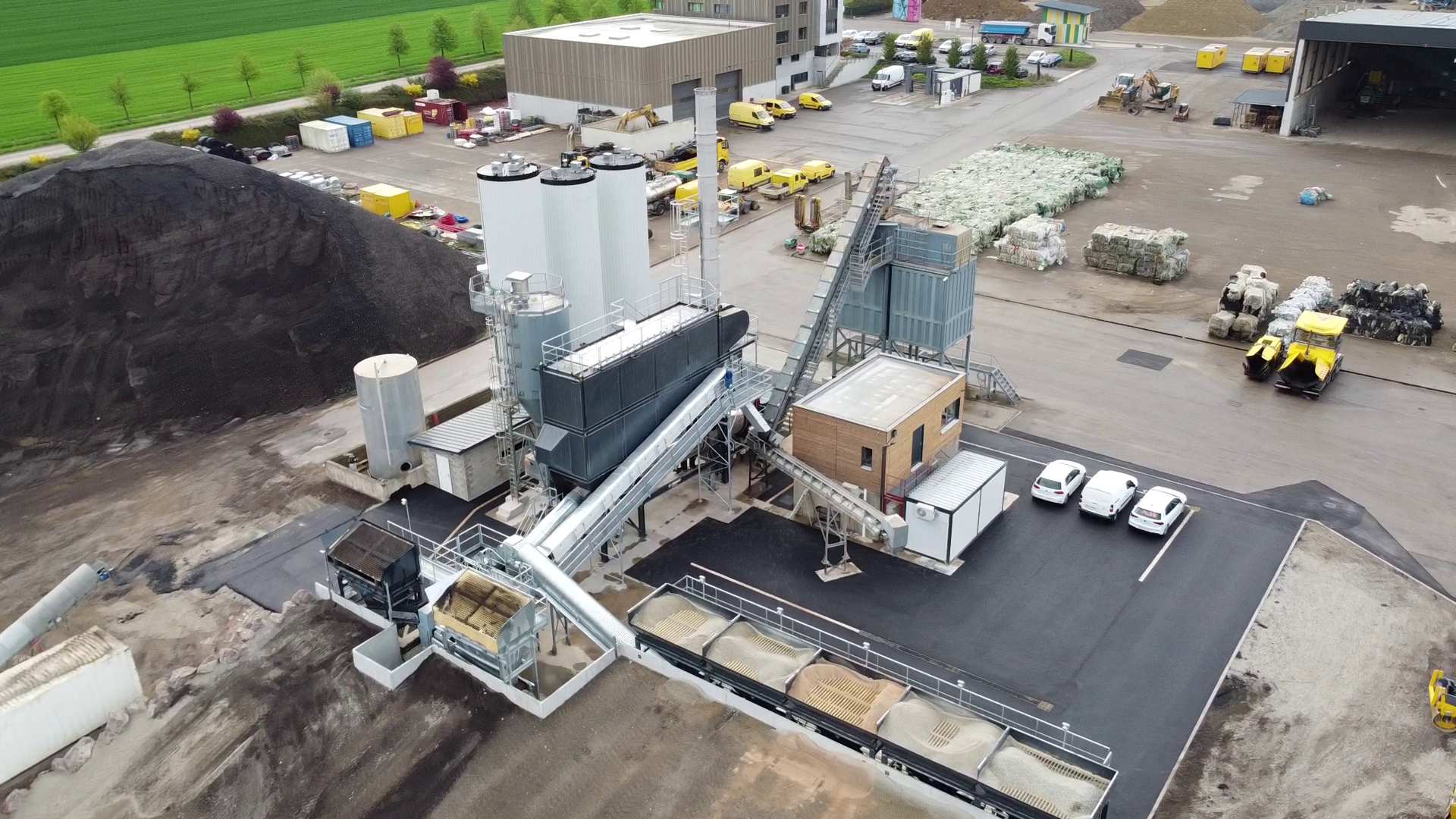
Ermont replaced the 2007 Ermont TSM17 facility with a sophisticated and modern RF200 NEO2 plant. The upgraded plant, commissioned earlier this year, has already produced its first mixes using 50% recycled asphalt aggregates. This marks a significant step forward in sustainable road construction for SEMAROUTE, part of the Lingenheld Group.
The project was to modernise the production facility to meet current performance, environmental, and recycling standards. The RF200 NEO2, based on Ermont’s RETROFLUX counter-flow technology, allows for higher recycling rates while maintaining superior asphalt quality. Compared with the older TSM17 plant, which could only recycle up to 35% of RAP, the new RF200 NEO2 can achieve recycling rates of up to 50% RAP, with full remobilisation of the binder. This represents a substantial reduction in the carbon footprint of the asphalt-production process, while also improving energy efficiency.
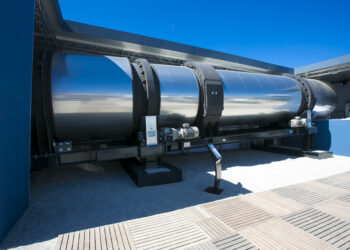
The RF200 NEO2’s high-efficiency, counter-flow dryer-mixer features four distinct zones: drying and heating of aggregates, generation of hot air, drying and heating of recycled aggregates, and binder mixing. Any bitumen vapours released during production are safely incinerated in the burner flame, minimising emissions. The indirect heating process ensures that recycled aggregates are never exposed directly to the flame or high-temperature gases, protecting both the material quality and the environment.
In addition, the plant integrates a foam bitumen kit, enabling the production of warm-mix asphalt, further reducing energy consumption and emissions. With a natural gas burner, a 30°C reduction in asphalt temperature saves approximately 2 kg of CO₂ emissions per tonne of asphalt.
Five new aggregate feeders and a dedicated recycled asphalt (RAP) feeder optimise material handling, ensuring consistency and efficiency in every mix.
By combining advanced technology with practical sustainability measures, the project supports SEMAROUTE and the Lingenheld Group in delivering high-quality, environmentally responsible paving materials. The new plant is boosting the firm’s recycling rates, while also reducing emissions from the facility, improving its overall carbon profile.