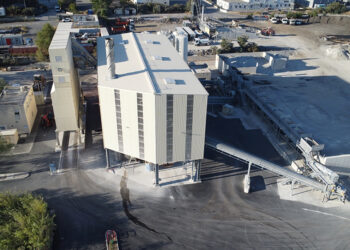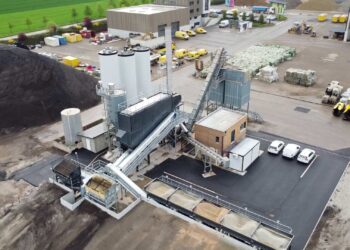
An asphalt-producing facility in Gignac-la-Nerthe, France, is now benefiting from the commissioning of a new plant from Ermont. This replaces an earlier- generation plant from a competitor, delivering advances in technology and reductions in energy consumption and emissions.
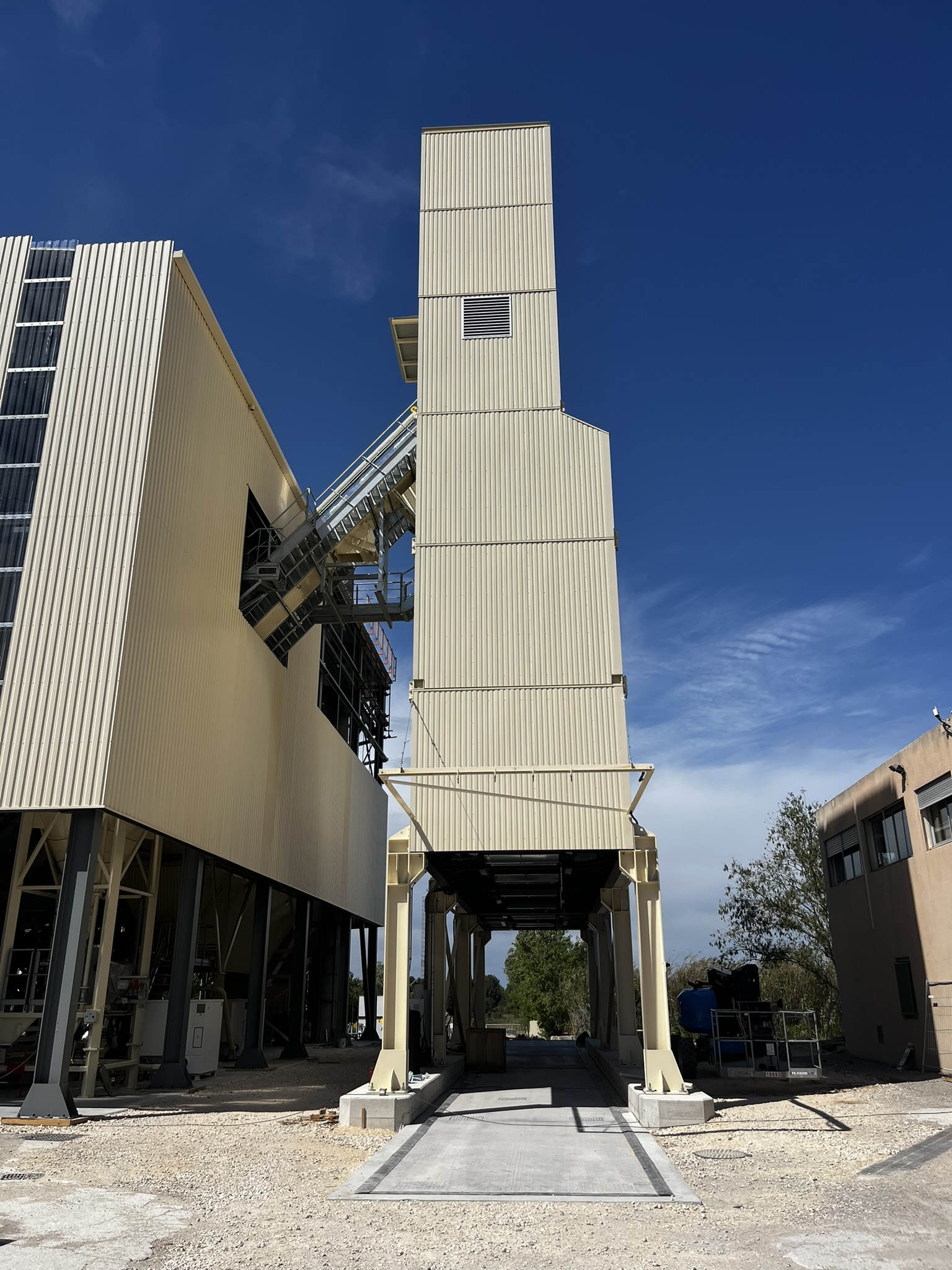
The new TX28 INCITY plant has been supplied by FAYAT Group firm Ermont to producer Provence Enrobés. This next-generation asphalt plant is said to offer the benefits of performance, recycling and environmental excellence. This installation marks a major step in the modernisation of asphalt-production facilities for Provence Enrobés, with a rebuilt site that is more efficient and fully committed to environmental transition.
After eight months of work and a total investment of more than €9 million, Provence Enrobés has renewed its trust in Ermont by selecting a solution designed to meet the challenges of recycling, energy efficiency and territorial integration. At Gignac-la-Nerthe the challenge was to replace a 48m-high batch plant commissioned in 1996 with a next-generation plant – more compact, capable of producing more, recycling more, and significantly reducing its environmental footprint.
Ermont says that its TSX28 INCITY is designed for urban sites requiring compactness, reduced disturbance, energy efficiency and high recycling performance. The plant used previously at the site was a batching type, with a maximum output of around 400tonnes/hour and an estimated annual output of around 200,000tonnes.
The new Ermont continuous plant offers a similar throughput at a maximum of up to 400tonnes/hour and a similar yearly output. However, the new plant offers a big advantage in that it can handle up to 70% of RAP in the mix, compared with just 40% for the previous plant. The new Ermont plant also features an increased storage capacity of 750tonnes, compared with 400tonnes for the plant that was replaced.
Because it features new control technology, the new plant can also switch more easily between different mixes and is able to produce different asphalt types including warm asphalt, asphalt with very high recycled content, coloured asphalt and light asphalt with bio-binder. The new plant meets the latest environmental integration standard for reduced CO₂ emissions and lower energy consumption as well as improved landscape integration. The TSX28 INCITY plant meets the growing need for decarbonisation and recycling in road infrastructure according to Ermont.
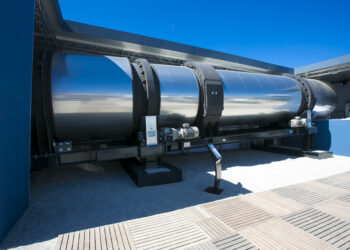
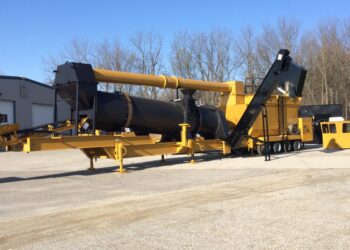
The innovative single-drum design with a twin-shaft continuous mixer allows the TSX28 INCITY the maximum use of local construction materials while ensuring complete binder remobilisation, essential for durable high-recycled content asphalt. The plant can produce asphalt at lower temperatures, reducing energy use, and offers solutions such as light asphalt with bio-binder, contributing to a significant reduction in CO₂ emissions. It has been designed to minimise environmental impact (lower CO₂ emissions, reduced energy use, better landscape integration) and to improve local acceptance of industrial projects.
With an improved production rate for high-recycled-content asphalt, the plant ensures a steady supply for large projects, while maintaining flexibility for local works and specific territorial needs. The integrated DuoTherm process combines heat exchanges between gases and aggregates at moderate temperatures, preserving the binder and improving the quality of recycled asphalt. This system ensures optimal performance while reducing the environmental impact of the installation. The plant also includes an ICPE-compliant recycling platform capable of processing up to 100,000tonnes/year of inert materials (milled asphalt, aggregates and asphalt crusts).