Roads make a crucial contribution to economic development and growth and bring important social benefits. They are of vital importance in order to make a nation grow and develop. In addition, providing access to employment, social, health and education services makes a road network crucial in fighting against poverty. Roads open up more areas and stimulate economic and social development. For those reasons, road infrastructure is the most important of all public assets.
Looking at the European road network, it consists of 5.5 million km with an estimated value of over €8,000 billion. However, due to use and time, this road infrastructure is becoming aged. And what looks acceptable on the surface can be hiding significant problem just below. As a result, it requires maintenance, renewal and modernisation.
Surveys show that adequately maintaining road infrastructure is essential to preserve and enhance those benefits. But a backlog of outstanding maintenance has caused irreversible deterioration of the road network. If insufficient maintenance is carried out, roads can need replacing or major repairs after just a few years. That deterioration spread across a road system very quickly results in soaring costs and a major financial impact on the economy and citizens.
With this in mind, the importance of maintenance needs to be recognised by decision-makers. However in most instances this is not recognised and as a result poor asset management means that many road networks in the EU are not in good condition.
To preserve the assets by preventive maintenance and to balance the long-term need, Road Asset Management programmes or systems can be applied in different countries, to benefit different road stakeholders.
Management of the road asset involves the application of engineering, financial and management practices to optimise the level-of-service outcome in return for the most cost-effective financial input. Indeed, the main objective is simply to apply the right treatment at the right time to achieve the desired level of service, indicating that the road infrastructure is a financial asset for society and the economy.
At the same time, there is a Vision Zero approach towards road safety. The EU set new targets for reducing road traffic deaths, aiming for zero deaths on the EU network by 2050. In line with this goal, the EU announced it would halve road casualties by 2020. The Vision Zero White Paper Communication reiterates the main elements of the recent “Road Safety Policy Orientations 2011-2020” published in July 2010.
It has been estimated that the number of people killed in road traffic crashes each year is in excess of 1.1 million, while some 50 million or so are injured. Although road traffic injuries occur for a multitude of reasons, the condition of the road surface is an important factor in preventing crashes.
In EU countries, in spite of many measurements, the crash statistics published recently have some deficiencies with regard to prevention. However, it is clear that road maintenance is increasing in importance because of the implications this has with regard to safety and road crashes. In other words, the European road sector has the responsibility to keep roads in a good shape, so as to reduce the number of crashes.
In virtue of its importance, the European Road Federation(ERF) published a Manifesto on Road Asset Management (RAM), called ‘Keeping Europe Moving – A Manifesto for long-term, effective management of a safe and efficient European road network’, in March 2013 in Brussels.
The Manifesto places maintenance and modernisation as key issues and highlighted the problem of the shortfall in investments all over Europe for maintenance of the road infrastructure and its consequences. The report says this will result in deterioration of the network, increased risks of crashes, congestion problems, increased noise and a reduced service to society. And it explains this by providing some essential facts and figures. The Manifesto also made some policy recommendations and called on decision-makers at European, national and local level to take action.
Several NGOs in Brussels including the ERF and the European Asphalt Paving Association (EAPA), are emphasising this issue by organising a number of activities. These include the 1st Pavement Preservation and Recycling Summit 2015 in Paris. The groups have also visited EU decision-makers in Brussels to draw attention to the importance of preserving the road network for sustainable development.
At the same time the NGOs are inviting EU policymakers to establish the Road Network Asset Value. They are also persuading Member States to boost investment in research and innovation and to develop a sustainable roads’ policy, particularly where Member States are committed to the Vision Zero Initiative.
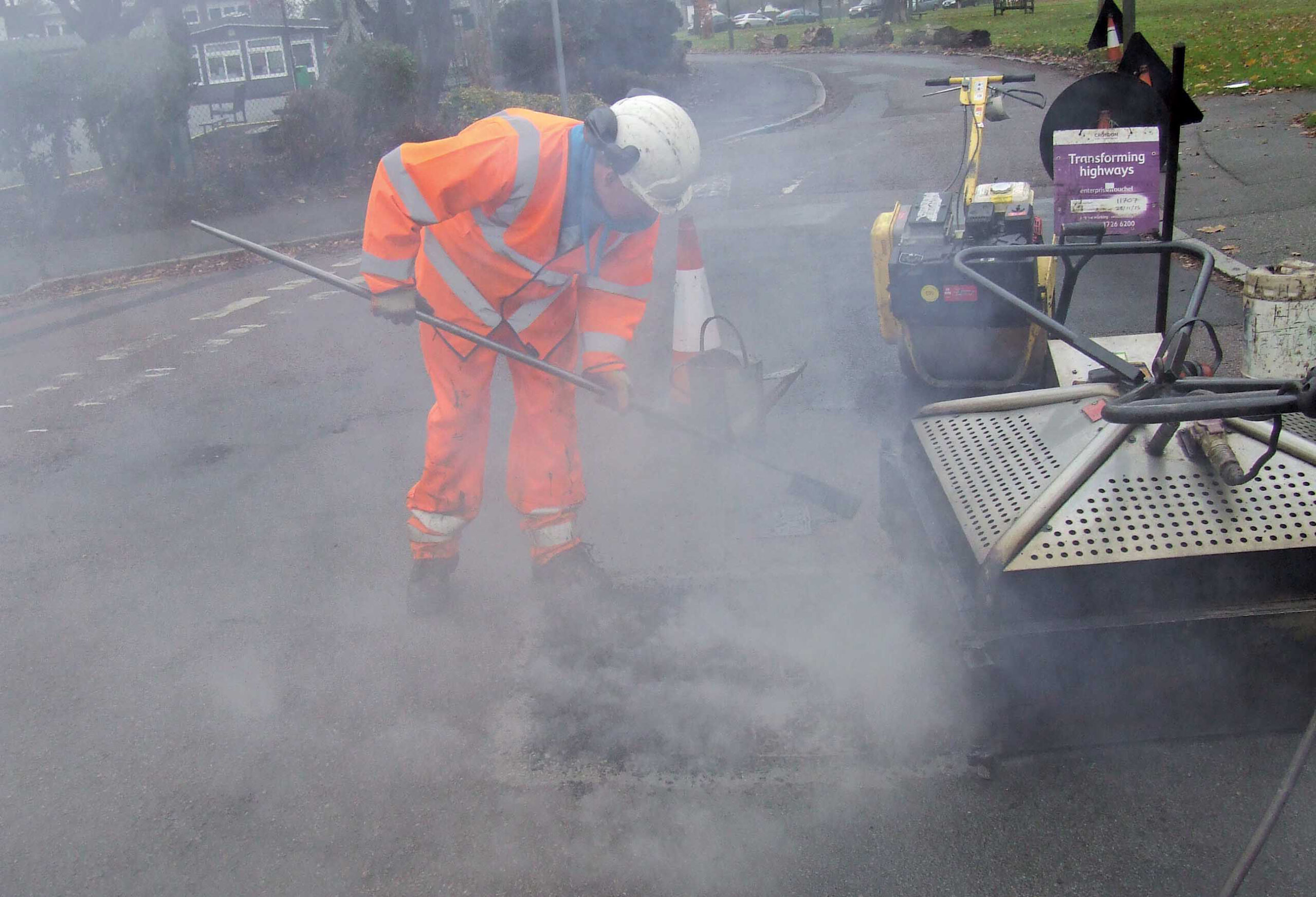
In Europe there are more than enough techniques, machines and materials available to repair the roads. The road industry is calling on the European Commission, European Parliament and the Member States to coordinate efforts in order to implement coherent and balanced policies and legislation between public and private bodies, as well as between the EU and developing countries. More specifically, European and national policymakers should ensure coherence between their policy decisions and consequent investment decisions, even if this requires more flexibility in the interpretation of stability pact principles.
Focussing on road maintenance will bring widespread benefits by not only preserving current assets, but also lowering future costs for citizens, road users, taxpayers and road owners. This would prevent these assets from depreciating in value, provided that timely investment is carried out in time.
*Gülay Malkoc is HSE committee chairperson, European Asphalt Pavement Association (EAPA) and also technical director, Turkish Asphalt Contractors Association (ASMUD)