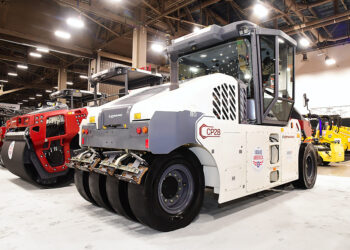
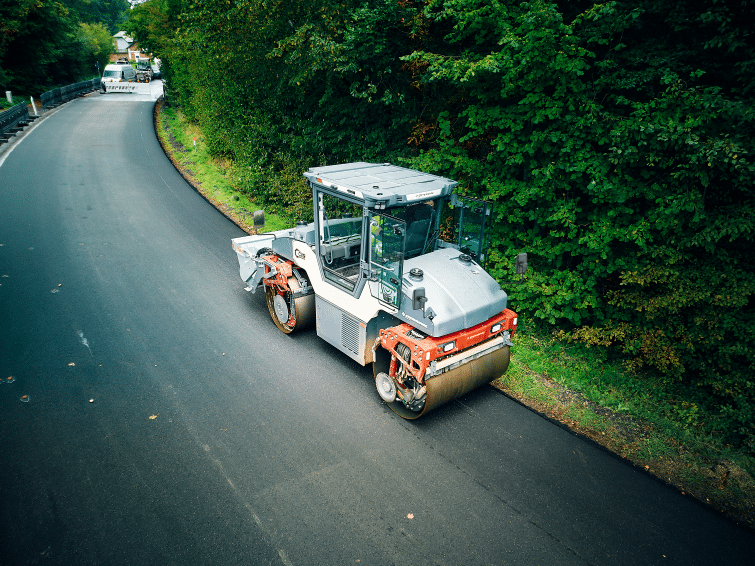
The Seismic system of compaction was originally developed by Dynapac for soil compaction and has been in use since 2019. Its performance for soil compaction is well documented. The system uses the principle of resonance and offers several technical advantages. These include lower energy and fuel consumption, reduction of double jumping, lower noise levels and decreased mechanical wear.
Last year, Dynapac launched its first asphalt roller equipped with the Seismic system, Seismic Asphalt. While the underlying principle remains the same, Seismic Asphalt has been carefully adapted to meet the distinct challenges of asphalt compaction.
Temperature effects
Although asphalt mixtures typically consist of 90-95% mineral aggregates, there is one key aspect that differs from soil: the binder in asphalt exhibits strong thermo-plastic characteristics. This affects the material’s stiffness during compaction, particularly as the mix cools. This is precisely what distinguishes Seismic Asphalt from Dynapac’s Seismic Soil system – the asphalt system must continuously account for thermal variations to maintain optimal performance.
When asphalt is freshly laid and hot, it is relatively easy to compact. As it cools, the binder stiffens rapidly, making the material more resistant to compaction. Figure 1 illustrates that, as the temperature drops, the compaction effort (amplitude) must increase to maintain effective densification.
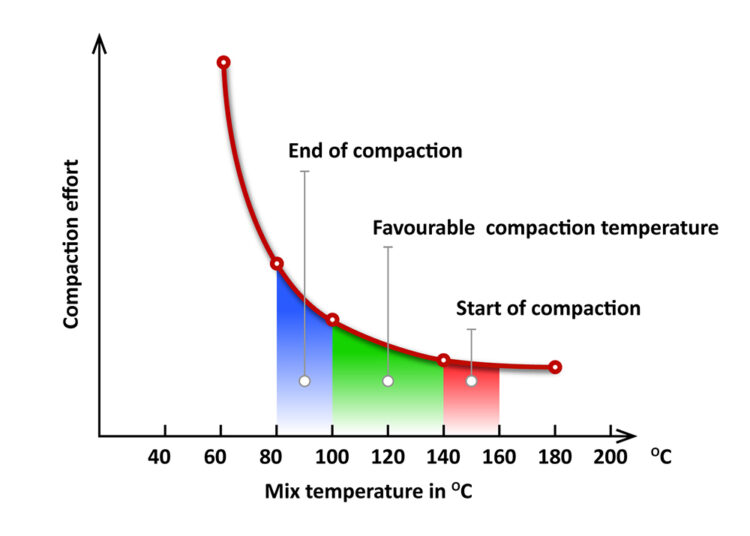
Figure 1. Compaction effort as a function of the mix temperature: to achieve the desired density, a cooler mix requires a higher compaction effort (higher amplitude) compared to a warmer mix
Traditional solutions to this problem involve mechanically adjusting the drum amplitude using complex internal mechanisms. While technically feasible, these systems are sensitive, costly and energy-intensive. Dynapac’s approach with Seismic offers an alternative. By modifying the vibration frequency to match the resonance characteristics of the drum-material system, amplitude can be increased naturally, without mechanical intervention.
The principle of Seismic
Seismic is based on the resonance phenomenon, where a vibrating system reaches its maximum amplitude when operating at its natural frequency. For every combination of drum mass and material stiffness, a resonance curve can be established (see Figure 2). It is important to note that the amplitude values typically quoted in technical specifications refer to the nominal amplitude – measured when the drum is suspended in air. Once the drum contacts the ground, the actual amplitude is influenced by the dynamic interaction between drum and material.
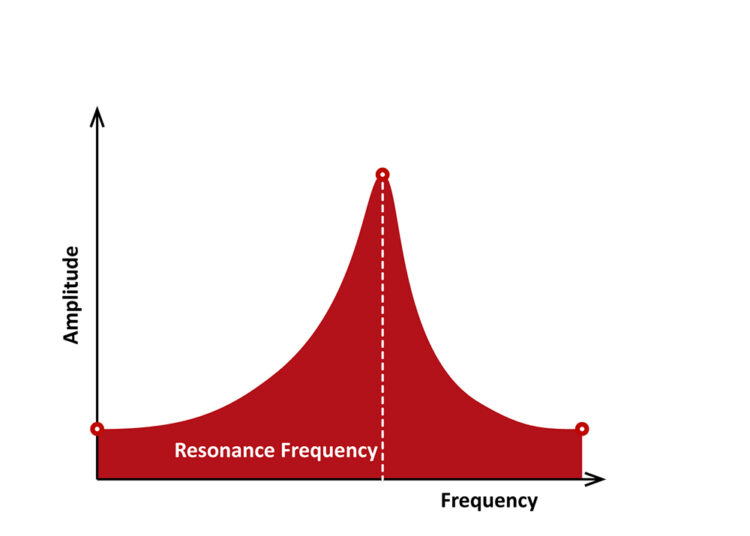
Figure 2. General resonance curve: the vibration amplitude is amplified when the compaction frequency correlates to the resonance frequency (natural frequency) of the drum-material system
Figure 3 shows a typical resonance curve for asphalt. While the amplitude peak is less pronounced than in soil, it is still significant. Operating below the resonance frequency results in a sharp drop in amplitude and compaction performance. Operating above the resonance frequency yields a more gradual decline in amplitude. This behaviour is key to understanding how Seismic can be used to optimise compaction.
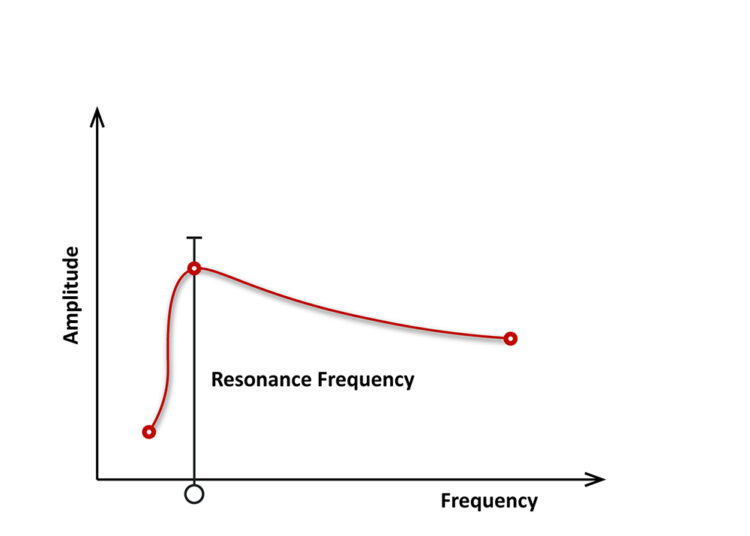
Figure 3. Resonance curve from an asphalt application
Frequency adjustment
In soil applications, it has been demonstrated that adjusting the vibration frequency to approach the resonance frequency increases the actual drum amplitude – without requiring mechanical changes. This is a technically elegant solution that avoids the complexity and energy demands of mechanical amplitude adjustment systems.
In asphalt applications, the need for increased amplitude as the mix cools can be addressed by adjusting the vibration frequency to move closer to the resonance peak. Figure 4 combines temperature and stiffness data to show how the system determines the optimal operating frequency. When the mix is hot, the roller operates above the resonance frequency, avoiding unnecessary amplitude boosts. As the mix cools, the system lowers the vibration frequency, increasing amplitude naturally to maintain compaction efficiency.
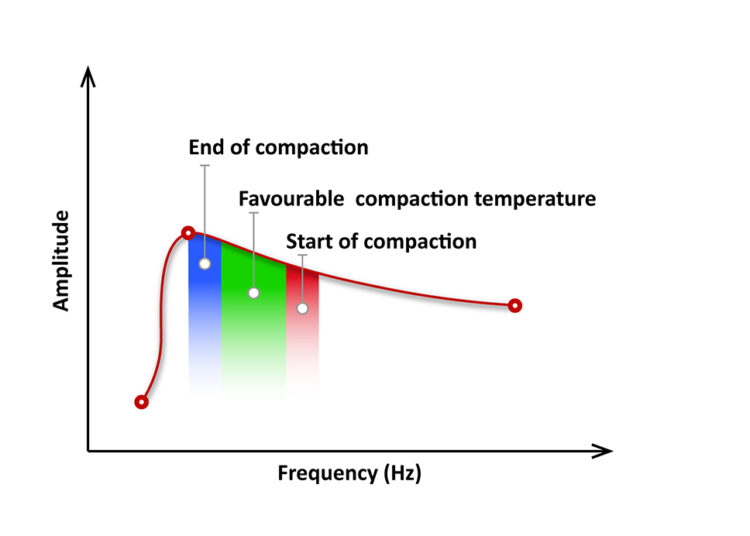
Figure 4. Combined temperature and stiffness/resonance curve for an asphalt application: how close the machine shall operate with respect to the resonance frequency is based on the mix temperature, giving exactly the right “amplitude boost” required to maintain an efficient compaction process even at lower mix temperatures
System architecture
The Seismic Asphalt system integrates several components to achieve this adaptive behaviour. Two infrared (IR) temperature sensors (front and rear) mounted on the roller measure the surface temperature of the asphalt in the direction of travel. Simultaneously, a compaction meter calculates the resonance frequency of the drum-asphalt system.
This data is processed by a logic unit that determines the optimal vibration frequency to achieve the required amplitude boost. The system performs these calculations and adjustments five times per second, allowing it to respond rapidly to changing conditions such as temperature and material stiffness.
To validate the performance of the Seismic Asphalt system, Dynapac conducted a series of in-house and field trials. These included various asphalt-mix types, such as Stone Mastic Asphalt (SMA), Asphalt Concrete (AC) and Asphalt Base, with different aggregate fractions and layer thicknesses. More than 360 core samples were extracted and analysed for air-void content to assess compaction quality.
Figure 5 presents results showing the degree of compaction as a function of the number of passes. Each curve represents a different frequency setting, but the same machine (a CC4000 VI) was used throughout. Notably, the Seismic system operated at a significantly lower mean frequency than the fixed-frequency settings, yet achieved equal compaction performance. This indicates a higher energy efficiency because the system uses resonance to increase amplitude without increasing power consumption.
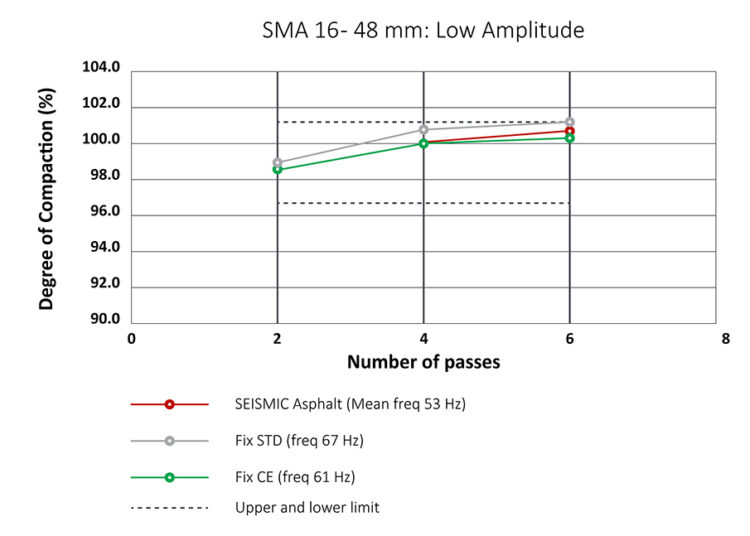
Figure 5. Degree of compaction as a function of the number of passes for a CC4000 VI with different frequency settings operated at High Amplitude (HA)
Long-term field trials, together with contractors, have shown a reduction in fuel consumption of approximately 15% when using a machine equipped with the SEISMIC system, compared to a non-SEISMIC machine.
Conventional systems for amplitude adjustment typically rely on mechanical solutions, often implemented only on the front drum. This results in asymmetric compaction behaviour, as the rear drum operates without active adjustment. In contrast, the Seismic system applies frequency-based control to both front and rear drums, maintaining maximum compaction performance of the machine.
Conclusion
The Seismic Asphalt system represents a technically sound approach to the challenges of asphalt compaction. By integrating real-time temperature sensing with resonance-based frequency adjustment, the system adapts dynamically to changing material conditions. This enables effective compaction even as the mix cools, without the need for complex mechanical systems.

For engineers and practitioners in the field, Seismic offers a compelling example of how fundamental physical principles – such as resonance – can be applied to solve practical problems in road construction. The system’s ability to maintain performance while reducing energy consumption and mechanical complexity makes it a noteworthy development in compaction technology.
*Andreas Persson is the inventor of Dynapac’s patented Seismic system and has 18 years of experience in the compaction industry. He is lead engineer in application and vehicle dynamics at Dynapac where he focuses on applying physical principles to improve machine performance and efficiency.