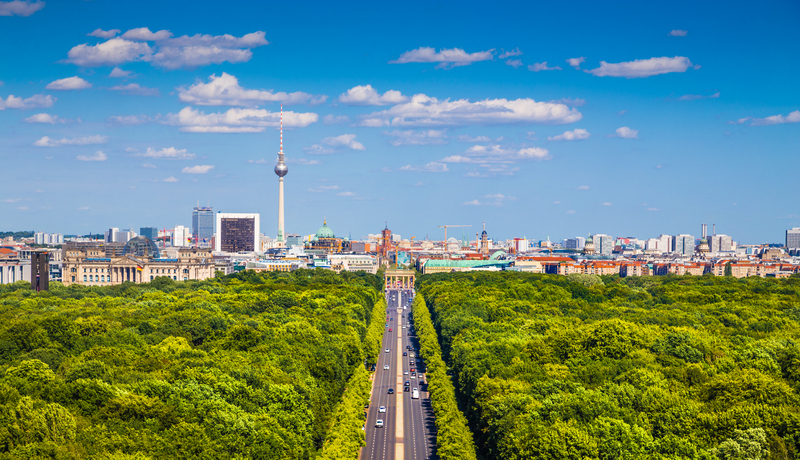
Work is underway for the new A100 bridge in Germany’s capital, Berlin. The bridge will be located at the Dreieck Funkturm and will take the place of the existing Ringbahn bridge, part of the A100 Autobahn route. The builders aim to complete the construction work within a tight timeframe.
Crossing the Spree River, the 931m Rudolf-Wissell Bridge is the longest bridge in Berlin with 12 spans. The bridge opened to traffic in 1961 and was originally designed to carry 20,000 vehicles/day, but is now having to cope with around 180,000 vehicles/day and is part of Germany’s third busiest motorway section. The condition of the old concrete bridge has been a cause for concern for some time, with structural issues having been identified in 2005.
The new twin bridge link is being built beside the existing bridge by DEGES for the state-owned roads firm Autobahn and the German Federal Government. The bridge to the east is being built first and once completed, traffic will switch from the old bridge, and it will be demolished. The second new bridge will be built along the alignment of the existing structure.
The project will boost capacity as the existing structure features just three lanes in either direction and suffers from traffic delays at peak periods. The structure of the existing bridge is also wearing out due to the heavy traffic load it now has to carry. Back in 2020 the project was expected to cost €240 million and be complete by 2028. But increases in labour and material costs have seen the pricetag rise to €270 million and the completion date is likely to be delayed. This will cause serious transport problems for Berlin if the old bridge has to be closed to traffic due to its deteriorating condition before the new link can be completed. The bridge replacement project forms part of a wider plan to upgrade the A100 route where it passes through Berlin’s Charlottenburg area.
Meanwhile, Germany’s Schwering North Bypass project is now expected to cost €95 million. This is considerably more than the €25 million originally expected when the work was announced in 2016.