The Cape Fear Memorial Bridge replacement project in North Carolina will face a decision over the best option. Building a new bridge is likely to cost $1.1 billion, a considerable increase from the $400 million estimated originally.
Growing traffic volume
The existing structure carries US 17, US 76 and US 421. With the local population growing, around 80,000 vehicles/day are expected to use the crossing by 2045. According to the North Carolina Department for Transportation (NCDOT), the existing bridge is safe but is reaching the end of its lifecycle. It now has to be monitored, inspected and maintained on a frequent basis. The bridge is functionally obsolete as it can no longer service current traffic demands effectively. Repairs and upgrade work have been carried out during its service, with $15 million having been spent on improvements and maintenance in 2019. But the bridge will not be able to cope with anticipated traffic demand while its repair and maintenance costs continue to climb.
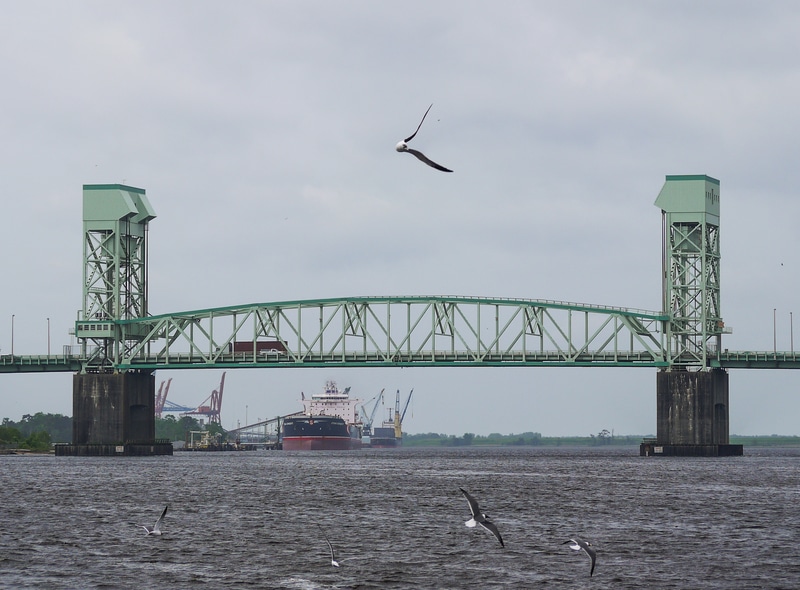
The existing bridge opened to traffic in 1969 and has a steel deck that can be raised to a height of 42m to allow vessels to pass underneath. The steel lifting section is 124m in length and is raised by mechanisms in the two lifting towers. The bridge is 924.5m in length, with a 16.5m-wide road surface and has a load limit of 47tonnes.
Options available
Various options are under consideration for the bridge replacement. One is for a bridge with a 41m-long lifting section, while another is for a lifting section of just 19m. The latter would be less costly and is favoured by residents and environmental groups as well as the Historic Wilmington Foundation. However, the former is favoured by NCDOT. According to the Historic Wilmington Foundation, the shorter lifting deck would have less of an impact on the area and surrounding wetland.
There is a debate on how the new bridge will be paid for. The US Department of Transportation awarded a $242 million grant to aide with funding of the replacement bridge in 2024. But the remainder of the cost may have to be paid for through tolling, which many residents are against.
Replacement needed
What is not up for debate though is the need to replace the bridge. The crossing suffers traffic delays due to repair and maintenance needs for the bridge. Meanwhile, the operation of the lifting system causes congestion. The bridge also lacks bicycle and pedestrian lanes to support active travel modes.