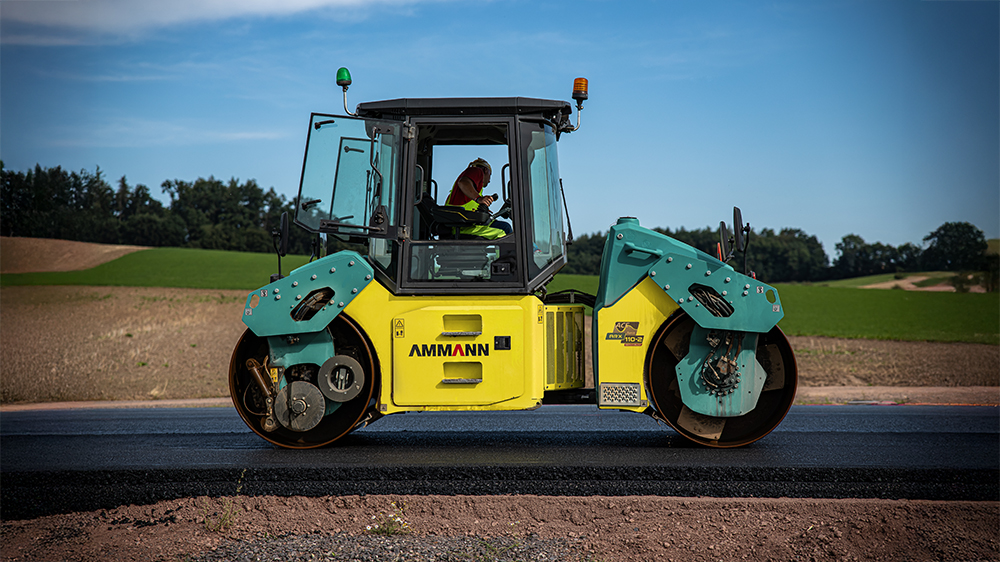
The Ammann ARX 90-2 and ARX 110-2 articulated tandem rollers introduce a re-engineered operator interface, where the symmetrical cab layout and fingertip steering (FTS) system combine to deliver measurable gains in control precision, ergonomics and operational safety.
The symmetrical cab is enabled by the complete removal of front and rear crossbeams from the machine structure. This structural redesign expands the operator’s direct line of sight to all drum edges and contact points, achieving 360° visibility. The view exceeds the 1 x 1 metre safety standard in both directions, providing continuous visual control of the compaction zone.
ROPS integration is structurally optimised, with four posts positioned close to the cab doors rather than at the corners while minimising visual obstruction. From a technical standpoint, the geometry of the cab supports consistent spatial awareness, which is critical when operating in offset (crab) mode or near boundaries such as curbs and joints.
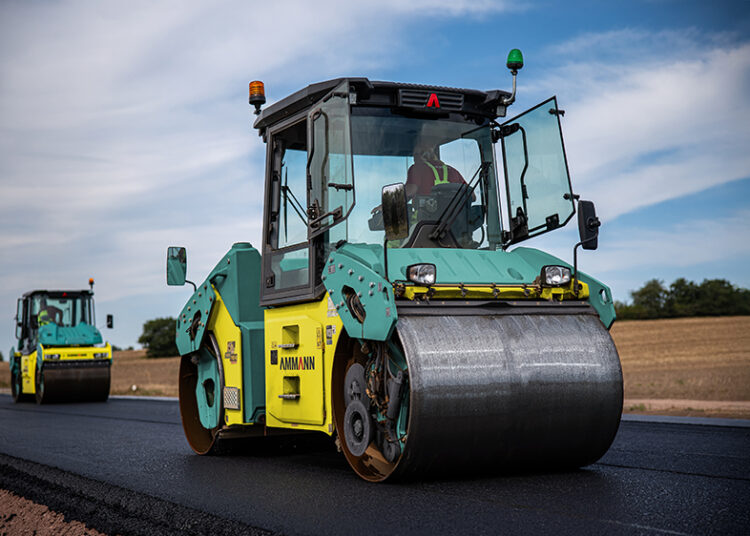
The operator station is centrally aligned within this symmetrical layout and paired with a 270° rotating seat. This ensures that control inputs, display orientation and visibility remain consistent regardless of travel direction. Unlike conventional asymmetrical configurations, there is no need for operator repositioning or adaptation when switching from forward to reverse, reducing response time and cognitive load.
Fingertip steering (FTS) replaces the mechanical steering wheel with an electronically controlled input (steer-by-wire) module integrated into the armrest. Steering commands are transmitted with high sensitivity and minimal input force, enabling precise articulation control. The system supports fine corrections during compaction passes, particularly important when maintaining uniform overlap and edge alignment.
Ergonomically, FTS significantly reduces repetitive upper-body movement. The operator’s forearms remain supported, while palm-rest stabilisation limits micro-fatigue in wrist and shoulder joints. Over extended operating cycles, this contributes to sustained control accuracy and reduced variability in compaction quality.
The FTS system is fully integrated into Ammann’s next-generation Human Machine Interface (HMI). All primary controls are centralised and remain within the operator’s reach throughout the full seat rotation range. The 10-inch display provides continuous feedback on vibratory settings, machine status and ACEforceIntelligent Compaction data, including real-time kB values, helping operators to monitor compaction progress and achieve target density more efficiently.
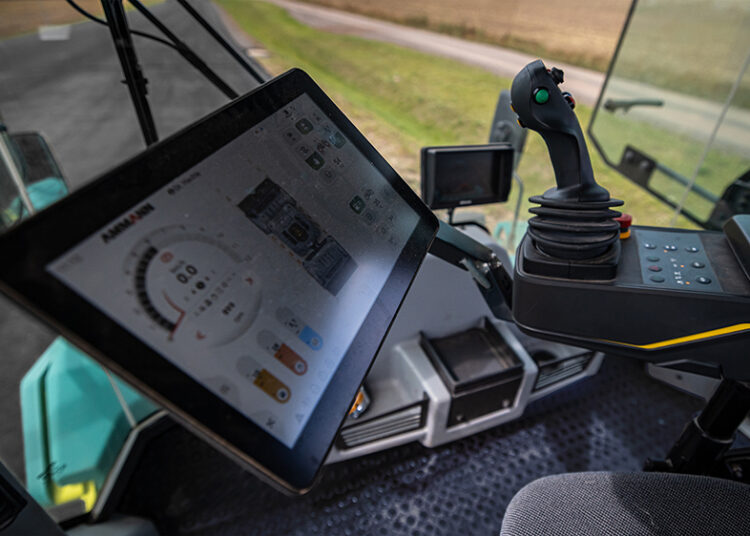
Importantly, the display is mounted on an adjustable support linked to seat movement, preserving optimal viewing angles at all times. This ensures uninterrupted access to critical data without requiring operator head or torso repositioning, further reducing fatigue and improving reaction time.
The combined system – symmetrical cab, elimination of crossbeams, rotating operator station and FTS – enables fully bidirectional operation without performance compromise. This is particularly advantageous in high-productivity applications where frequent directional changes are required.
Standard on both rollers is a two-stage vibratory system with a wide frequency range, enabling operators to precisely adjust compaction output. The ARX 90-2 and ARX 110-2 offer adjustable frequencies from 37 to 54 Hz and deliver compaction forces ranging from 47 to 120 kN per drum.
A range of options further enhances productivity, comfort and serviceability. The offset mode (crab mode) increases machine versatility by expanding the working width and enabling compaction close to curbs.
A “combi” version with four tyres extends application flexibility. High-frequency drums enable faster compaction or paving speeds while maintaining optimal impact spacing.
Content produced in association with Ammann