As pressure increases on the cost and availability of resources, investment in recycling technology continues to grow across the road building industry. To meet its full potential, a greater understanding is needed of material performance to allow the building of more resilient, sustainable and economic networks – *David Smith explains
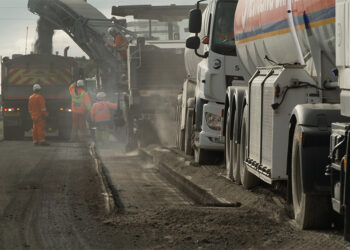
Over the past decade, the road construction industry has made significant strides in recycling. Reducing the reliance on virgin materials is of environmental importance, but also a matter of financial and practical concern for the sector as pressure increases on finite resources.
Whilst aggregate availability has always varied from region to region, a growing challenge lies in the reduction in bitumen output, as advances in the oil industry enable a greater focus on the extraction of more valuable fuels – placing pressure on costs for our sector.
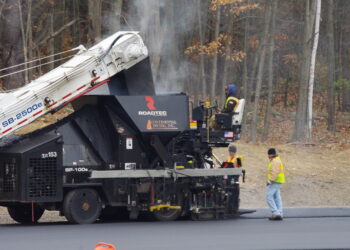
Greater use of recycling to maximise existing resources provides a way out of this trap and across the globe, the road building industry is making notable progress. In Japan, contractors are laying mixes with an average recycled asphalt pavement (RAP) content of 47% and in the US experimental trials and pioneering projects have resulted in high-performing routes containing in excess of 70% RAP. In fact, in a recent trial in Indiana, 100% RAP was successfully employed.
Other regions are, however, lagging behind. In the UK, FM Conway, in partnership with Transport for London, recently pioneered a surface course mix containing 50% high polished stone value (PSV) recycled aggregate, but it is crucial to continue pushing the boundaries of current specifications if the sector is to resource planned investment targets to the tune of £23 billion.
Meeting this challenge will rely on an ability to monitor, understand and design increasingly sophisticated recycled mixes. Based on current technology, it is unlikely that the road building sector will be able to ultimately move to a fully closed-loop recycling model. But by investing in research and development to understand material performance, the industry can hone its methods and reduce the pressure on virgin resources.
The answer lies in gathering and analysing performance data for the materials being used on roads to improve the understanding of the causes of pavement fatigue and failure. In the context of climate change, which is seeing greater pressure put on our networks from extreme weather conditions, this ability is becoming ever more important. Put simply, the industry needs to be able to predict with increased certainty how our roads will respond to these challenges if the sector is to improve durability and resilience.
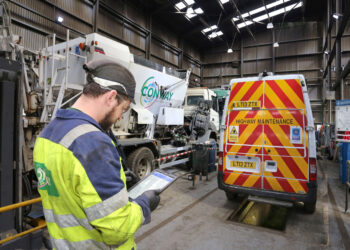
Critically, while this data will be used in the laboratory to design mixes, the industry needs to ensure that performance can also be guaranteed on the road itself – once scaled up to industrial quantities of production. That is why FM Conway has been working with the universities of New Hampshire and Nottingham, to develop a testing regime to ensure that real world conditions can be replicated in the laboratory. This is to ensure that the industry can develop materials that deliver predictable performance, and enabling us to increasingly refine materials to meet specific challenges.
Having invested in data to fully understand product deterioration and ageing, asphalt producers and contractors alike can then directly address these issues to maximise recycling. Incorporating additives into asphalt mixes, such as Polymer Modified Bitumen (PMB), to improve road elasticity is becoming best practice and last year we invested in our own PMB production – enabling producers to build-in resilience and maximise the durability of bitumen resource.
Critically, investment in binder technology is essential to boosting performance, but the journey does not stop there. Having designed more durable materials, the sector needs to continue to evaluate their performance throughout their entire life cycle. As climate change and resource pressures intensify, the industry must remain alive to its impact on materials and respond accordingly – constantly evaluating the performance of these modified materials so that it can continue to refine, improve and redesign materials.
Investment in research and development is fundamental to the success of the road network. The industry needs to understand how our materials are currently performing so that it is possible to design-in performance to improve life cycles. Through this the industry can, and will, realise greater recycling within the road network, while ensuring that they are fit for the challenges of the future.