A major environmental offsetting programme is forming a key part of the UK’s massive, £11 billion Lower Thames Crossing road tunnel project. A nature area providing new homes for local wildlife has been set up in Kent, a major green space forming part of work to make the Lower Thames Crossing Britain’s greenest road.
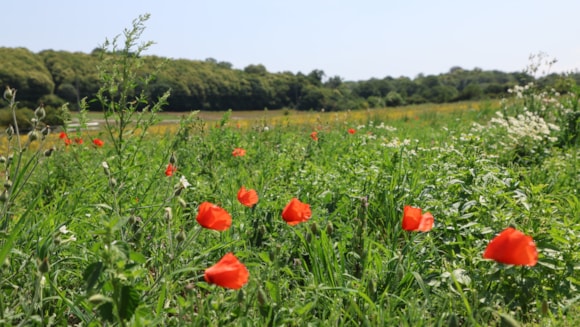
The 13ha ecological site acts as a gateway to the Kent Downs with a public footpath providing a link from the village of Thong. National Highways has created the new habitat early in the project, so it has time to mature ahead of major construction work starting. The site has been transformed from a low biodiversity grassland field into a rich new habitat for local wildlife such as insects, newts, lizards, snakes, birds and bats.
It also provides habitats for reptiles, with some potentially being relocated from project construction sites to ensure they are out of harm’s way. More than 200 new trees including silver birch, hazel, oak and yew have been planted along with shrubs, hedgerows and four new ponds created. The nutrient levels of the soil at the site have been adjusted to encourage a wider variety of plant species such as fescue grasses, crested dogstail and common bent to thrive and avoid a small number of dominant species from taking over. Over the coming years the area will evolve as meadows and grasses grow, ponds fill with rainwater, and local wildlife begins to make the site its home.
Katharina Ferguson, Sustainability and Supply Chain Development Director for the Lower Thames Crossing said: “The Lower Thames Crossing is one of a new generation of projects that will boost the economy and protect and enhance nature. “As well as tackling congestion and unlocking growth, it will create landscape scale new habitats across the region. We’re excited to finish the first piece of this ecological jigsaw in Kent, which will be transformed over the next year as meadows and trees grow and a wide range of animals make it their home.”
Jamie Henderson, Kent County Council’s Cabinet Member for Environment, Coastal Regeneration and Public Health, said: “Its location next to Shorne Woods Country Park builds on the work Kent County Council has already undertaken with Lower Thames Crossing to enhance woodland habitats for dormice, a protected species found across Kent. The creation of a large pond is another valuable addition, enhancing habitats for a wide range of wildlife while also supporting reptile mitigation.”
The project will also be the first major infrastructure scheme in the UK to be carbon neutral in construction. Only electric or machines or equipment fuelled by hydrogen will be allowed onsite. Low carbon materials and techniques will also be used in the construction work. Work on the Lower Thames Crossing started earlier this year. Planning permission and the final part of public funding that will enable the private sector to take forward construction and long-term operation of the new road was given in 2025.