Romania’s planned A1 highway project is receiving financing of up to €1 billion from the European Investment Bank (EIB). The new highway will provide a faster and safer transport connection between the historic city of Sibiu and the industrial city Pitesti.
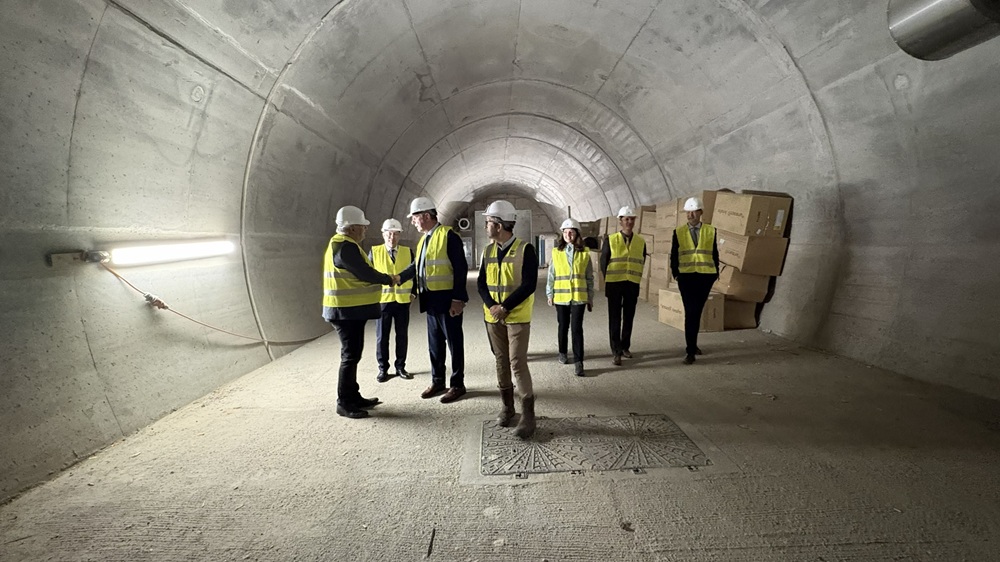
The highway will stretch over122km and connect the cities of Pitești northwest of Bucharest and Sibiu in central Romania. The route runs through Curtea de Argeș, which is located in a valley in the Southern Carpathians along the Argeș River. The tunnel there will be nearly 1.4km long and have two lanes in each direction.
The A1 is due for completion by 2029 and will speed road travel between Western Europe and the Black Sea.
Tsakiris visited the site with Romanian director general for Transport and Infrastructure Felix Ardelean. They reviewed the progress of construction and discussed upcoming steps with project participants.
The EIB has signed two loan tranches of €500 million each for the project, which has a total estimated cost of around €5.5 billion and is also being supported by EU grants and Romanian funding. The EIB signed the first tranche in October 2025 and the second tranche in January.
In addition to improving the transport link, the A1 highway will boost road safety and cut traffic congestion, strengthen economic integration and ease environmental concerns in local communities.
One stretch of the Sibiu-Piteti highway could be opened later in 2026, according to the latest reports. The section 4 stretch between Tigveni and Curtea de Arge is nearly 10km long and is being built by Austrian firm PORR. The firm has mobilised a large workforce and numerous items of machinery on the section and could have the stretch ready six months ahead of the original February 2027 schedule. If this is achieved it would mean around 54km of the planned 122km A1 highway would be ready for use.
Meanwhile, Romania’s National Road Investment Company has awarded the contract for section 4 of the A8 highway running from Târgu Mure to Ungheni. The €699.5 million package of works will be carried out by a partnership of Italian firms headed by ITINERA and including ICM and SAIPEM.
This 46-month contract is for the 15.5km stretch between lai and the Prut Bridge at Ungheni. This work includes building 5km of the route in neighbouring Moldova, as well as a bridge spanning the River Prut that forms the border between the two countries. The work includes building 14 bridges and overpasses, two tunnel sections and two major junctions.