• About
  • Advertise
  • Contact
Thursday, July 16, 2026
Newsletter
Global Highways
  • News
  • Products
  • Features
  • Categories
    • Asphalt Milling, Paving & Compaction
    • Concrete Milling, Paving & Compaction
    • Connected Construction
    • Earthmoving & Soil Compaction
    • Engines, Components & Tyres
    • Finance & Funding
    • Highway & Network Management
    • Maintenance
    • Materials
    • Recycling
    • Road Markings, Barriers & Workzone Protection
    • Road Structures
  • Events
    • Events Calendar
    • CONEXPO-CON/AGG 2026
    • Intertraffic Amsterdam 2026
    • bauma 2025
  • Latest Magazine
  • Videos
No Results
View All Results
  • News
  • Products
  • Features
  • Categories
    • Asphalt Milling, Paving & Compaction
    • Concrete Milling, Paving & Compaction
    • Connected Construction
    • Earthmoving & Soil Compaction
    • Engines, Components & Tyres
    • Finance & Funding
    • Highway & Network Management
    • Maintenance
    • Materials
    • Recycling
    • Road Markings, Barriers & Workzone Protection
    • Road Structures
  • Events
    • Events Calendar
    • CONEXPO-CON/AGG 2026
    • Intertraffic Amsterdam 2026
    • bauma 2025
  • Latest Magazine
  • Videos
No Results
View All Results
Home News ERF sets out sign inspection guidelines

ERF sets out sign inspection guidelines

The European Union Road Federation suggests that its checklist - downloadable for free - is included in any existing tools for road safety inspection and audits that road agencies may have.

by David Arminas
December 27, 2024
in News
Reading Time: 4 mins read
A A
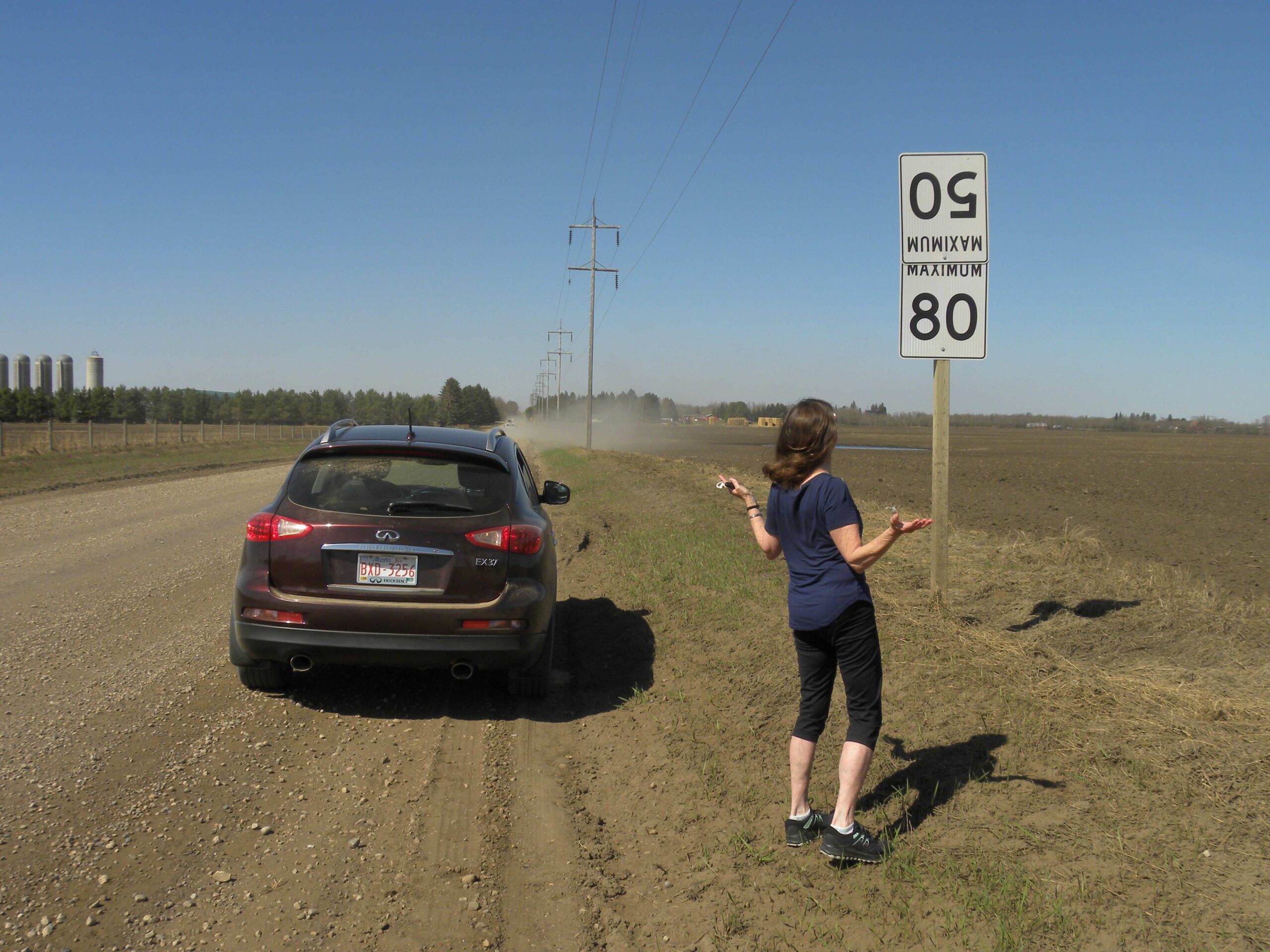
Clearly understood signage is important for both human and ADAS, advanced driver-assistance systems (David Arminas/World Highways - near Edmonton, Alberta, Canada)

Clearly understood signage is important for both human and ADAS, advanced driver-assistance systems (David Arminas/World Highways - near Edmonton, Alberta, Canada)

Experts in the ERF working group of road signs have developed a practical guide for a quick inspection of road signs that includes a checklist.

The ERF is recommending that the guide and checklist – downloadable for free – is included in any existing tools for road safety inspection and audits that road agencies may have. Converted to a smart phone application, a digital checklist can automatically issue reports with pictures and geolocation data.

Thorough road sign inspections are more than ever a critical part of highway maintenance, notes the ERF, based in Brussels, Belgium. Clearly seen and up-to-date signage is important for both human and ADAS, advanced driver-assistance systems. ADAS are technologies that assist drivers with the safe operation of a vehicle. Through a human-machine interface, ADAS increases vehicle and road safety by using automated technology, such as sensors and cameras, to detect nearby obstacles or driver errors, and can respond accordingly. ADAS can enable various levels of autonomous driving.

The ERF guidelines can be downloaded for free by clicking here.

The European Union’s road safety initiatives led to a substantial decrease in fatalities, from 51,400 in 2001 to 19,800 in 2021. However, while the number of road deaths was halved during the first decade, progress later stagnated. In 2021, fatalities increased by 6% compared to 2020, indicating the need for renewed efforts.

In its 2020 Sustainable and Smart Mobility Strategy, the European Commission confirmed its goal of achieving zero road fatalities by 2050 – the ‘Vision Zero’ objective – and halving the number of fatalities by 2030 compared to 2019 figures.

In January 2023, the Commission issued guidelines on the methodology for assessing road infrastructure safety. The guidelines noted that it is essential to evaluate whether road signs are placed at the most critical points of the road, such as upstream of intersections and curves. But they must also be immediately readable and understood by a driver.

A report by the European Court of Auditors, released in March this year, acknowledged progress in EU road safety. However, it stressed that EU member states needed to be more serious about the widely adopted safe system approach, a strategy to improve road safety. Otherwise, “halving fatalities and serious injuries between 2020 and 2030 and of getting both close to zero by 2050 are unlikely to be reached”. The ERF guidelines follow on from these indications by the European Court of Auditors that more needs to be done to ensure that signs are readable.

The European Union Road Federation is a non-profit association which coordinates the views of Europe’s road infrastructure sector and acts as a platform for research and dialogue on mobility issues between stakeholders and institutional players. The organisation’s working group on signs advocates for the correct deployment of signs ensuring their visibility and recognisability during daytime, night-time, bad weather conditions and also to facilitate driving conditions for an ageing population. The guiding strategy is the safe road approach, adopted in many countries.

According to US Department of Transportation, the approach works by building and reinforcing multiple layers of protection to both prevent crashes from happening in the first place and minimise the harm caused to those involved when crashes do occur. The safe roads approach differs from a conventional safety approach because it focuses on both human mistakes as well as human vulnerability. Notably, safe roads will design a system with many redundancies in order to protect all road users – drivers, cyclists and pedestrians.

It is understood that all elements of a road network, from vehicles, infrastructure and speed limits to road users and post-crash care, must act together as one to minimise the chance of a crash and to prevent death or serious injury.

According to Brake, a UK road safety charity, road agencies can create self-explaining roads as part of the safe roads subsection. Self-explaining roads are designed so that the driver is aware of what is expected of them and behaves appropriately. Each class of road is immediately recognisable and understood , with its own carriageway width, road markings, signage and street lighting consistent throughout the route. The simplicity and consistency of the road’s design reduces driver stress and driver error, says the charity.

Self-explaining roads also emphasises a proactive approach to road safety, with improvements made to improve both the actual and perceived risks of road safety. Crash hot spots are identified and engineering measures taken to remedy them, such as improving road surfaces, removing roadside obstacles to vision, or installing traffic lights. This is where the ERF guidelines and check list come in.


Categories: Road Structures
Promoted Content Header
ERF VIEW COMPANY
The expected 30,000 attendees from over 140 countries this year will discover innovations and solutions from more than 900 exhibiting companies (image courtesy of Intertraffic)
News

Global Highways: ‘Infra Stage’ at Intertraffic Amsterdam

January 21, 2026
The theme for the congress will be “Connecting to Empower Mobility: Roads as Enablers of a Sustainable Future for All”
News

EU Green Deal at IRF World Congress 2024

July 2, 2024
Improved road markings will reduce pollution (image © David Arminas/World Highways)
Features

Road markings and microplastics

May 13, 2024
ERF director general Christophe Nicodème: "Road infrastructure investment is necessary for its maintenance, preservation, and adaptation to new mobility (image © Dm Stock Production/Dreamstime)
News

Transport groups push for priority in EU budget

April 5, 2024

Related Posts

A new highway link connects Basrah in Iraq with Faw Port – (image: Dynamoland/Dreamstime.com)

Key Iraq highway link complete

by Mike Woof
July 15, 2026

A key stage of the $17 billion road link between Iraq and Turkey is complete

A new stretch of road in the Czech Republic will improve traffic flow around the capital Prague – (image: Micka/Dreamstime.com)

23 bridges for Czech highway project

by MJ woof
July 14, 2026

A new highway in the Czech Republic is benefiting from the construction of 23 bridges

Subsidence stemming from climate change presents a major risk to key infrastructure – (image: Prime Global Publishing)

Subsidence from climate change threatens key infrastructure

by Mike Woof
July 14, 2026

Climate change is causing subsidence and threatening key infrastructure

Join our newsletter

The mission of Global Highways is to cover the latest technologies and best practices in all areas of road, bridge and tunnel construction and maintenance, as well as their safe operation and management.

Subscribe to our newsletter

About Us

  • About Us
  • Advertise
  • Contact
  • Terms & Conditions
  • Privacy Collection Notice
  • Privacy Policy

Popular Topics

  • News
  • Features
  • Products
  • Videos
  • Events
  • CONEXPO-CON/AGG 2026
  • Intertraffic Amsterdam 2026
  • bauma 2025

© 2026 All Rights Reserved. All content published on this site is the property of Prime Creative Media. Unauthorised reproduction is prohibited

No Results
View All Results
NEWSLETTER
  • News
  • Products
  • Features
  • Categories
    • Asphalt Milling, Paving & Compaction
    • Concrete Milling, Paving & Compaction
    • Connected Construction
    • Earthmoving & Soil Compaction
    • Engines, Components & Tyres
    • Finance & Funding
    • Highway & Network Management
    • Maintenance
    • Materials
    • Recycling
    • Road Markings, Barriers & Workzone Protection
    • Road Structures
  • Events
    • Events Calendar
    • CONEXPO-CON/AGG
    • Intertraffic Amsterdam 2026
    • bauma 2022
  • Latest Magazine
  • Videos
  • About
  • Advertise
  • Contact

© 2026 All Rights Reserved. All content published on this site is the property of Prime Creative Media. Unauthorised reproduction is prohibited