A new research project is setting out to use cosmic rays to measure the structural integrity of the UK’s ageing transport infrastructure.
Dr David Mahon of the University of Glasgow has received £459,000 in new funding from UKRI’s Science and Technology Facilities Council (STFC) to support the project, which aims to reduce the cost and environmental impact of repairs to road and rail bridges by enabling earlier detection of structural problems.
The project builds on Dr Mahon’s expertise in muography, a technique which uses measurements of cosmic rays to create detailed 3D images of the interiors of structures.
When the rays collide with the nuclei of the gases found in the planet’s atmosphere, the impact releases particles known as muons.
When muons strike objects on earth, they are deflected very slightly from their course. The amount of deflection depends on the chemical composition of the object they hit, with heavier elements causing greater deflection.
Measuring the deflection patterns over time, paired with sophisticated computer analysis, allows researchers to build up images of structures which are impossible to produce using other non-destructive techniques like X-rays.
Lynkeos Technology Ltd, a spinout from the University of Glasgow, is already using muography techniques developed by Dr Mahon and colleagues to help the nuclear industry map the locations of pieces of radioactive waste stored in concrete-filled containers at some of the UK’s nuclear power plants.
Over the next two years, Dr Mahon will work on reducing the size and improving the scanning speed of the muon detector technology to make it more suitable to be taken out of the lab and stationed in real-world conditions to take cosmic ray measurements. In partnership with Transport Scotland, the detectors will be tested at a series of bridges across the city of Glasgow.
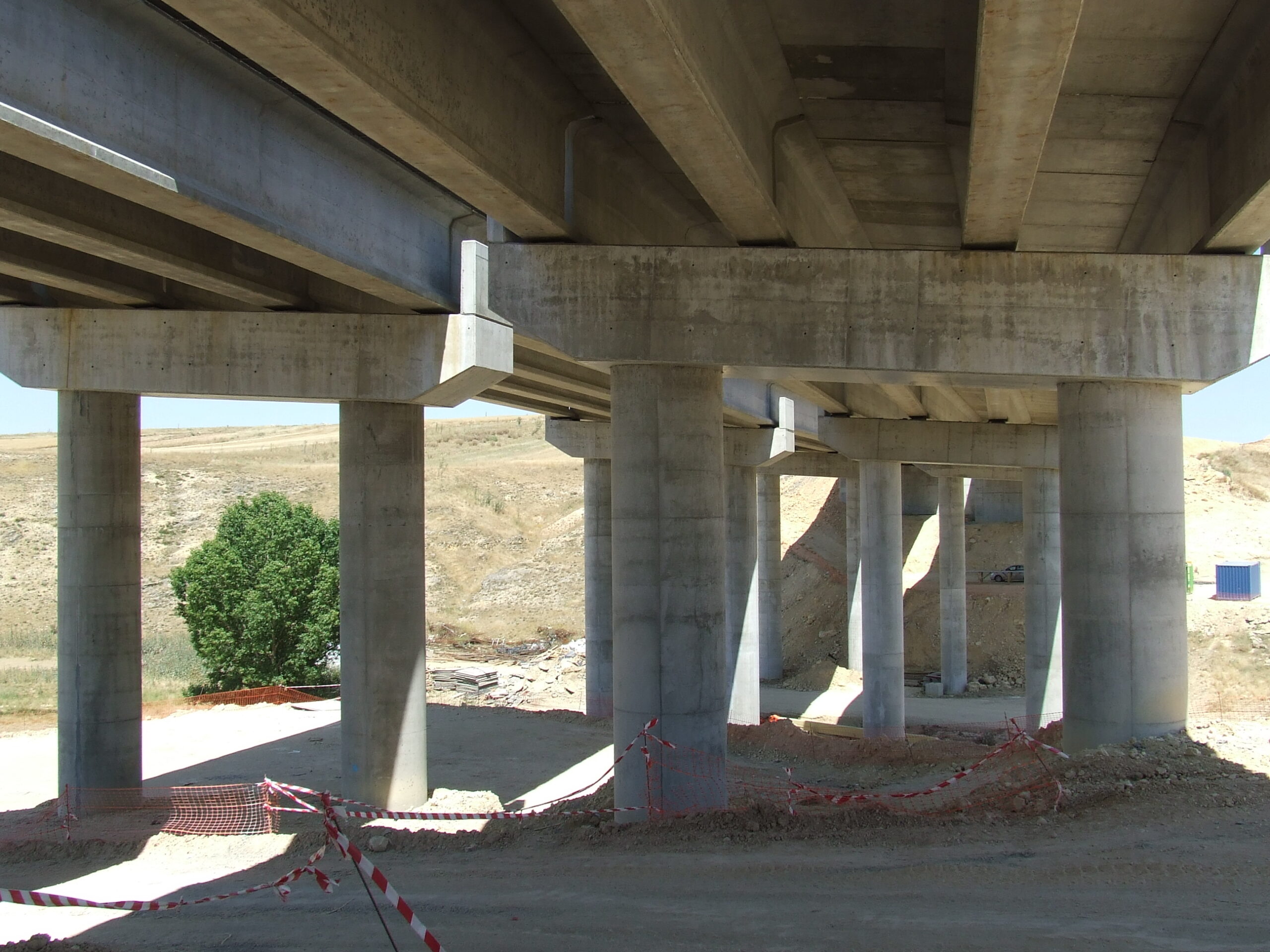
Dr Mahon, of the University of Glasgow’s School of Physics & Astronomy, said: “There are more than 74,000 road and rail bridges across the UK, most of which are made from reinforced concrete, and many of which were built between 50 and 60 years ago. That means they’re now getting close to the end of their intended lifespan, so it’s important that they are properly monitored to ensure that they can be repaired when necessary.
“Current inspection methods often require exposing steel substructure, which can lead to rust and further weakening when exposed to rain, so non-destructive testing methods which allows maintenance crews to see inside.
“Muography is a technique that’s already proven its worth in the nuclear industry, and it seems ideally placed to enable non-destructive testing in transport infrastructure too. This grant from the STFC will enable us to build on our previous achievements and build new, more portable test kits that can identify fatigue or defects at a much earlier stage than is currently possible. Being aware of problems earlier, before they cause significant damage or disruption, could help bring the overall cost of repairs down.”
Hazel McDonald, Chief Bridge Engineer at Transport Scotland, said: “”We’re proud to be supporting the University of Glasgow and Lynkeos Technology’s innovative development of cosmic-ray muography with field trials on our network of road bridges. Muography’s ability to look deeper into structures has the potential to transform structural integrity inspection, ensuring ageing public structures are safe and reducing travel disruption.”
Once the project’s initial research phase is complete, Lynkeos Technology Ltd will work to bring the updated technology to market.
Dr Mahon added: “Extending the lifespan of our built infrastructure through non-destructive testing could also help countries around the world achieve their net-zero goals. If we can help these structures stay in service for longer, we can reduce the need for replacement structures. Concrete and steel, which are still required to build most of our major infrastructure projects, are produced using carbon-emitting materials and processes, so keeping structures working safely for longer could help reduce the carbon footprint of our roads and bridges.”