
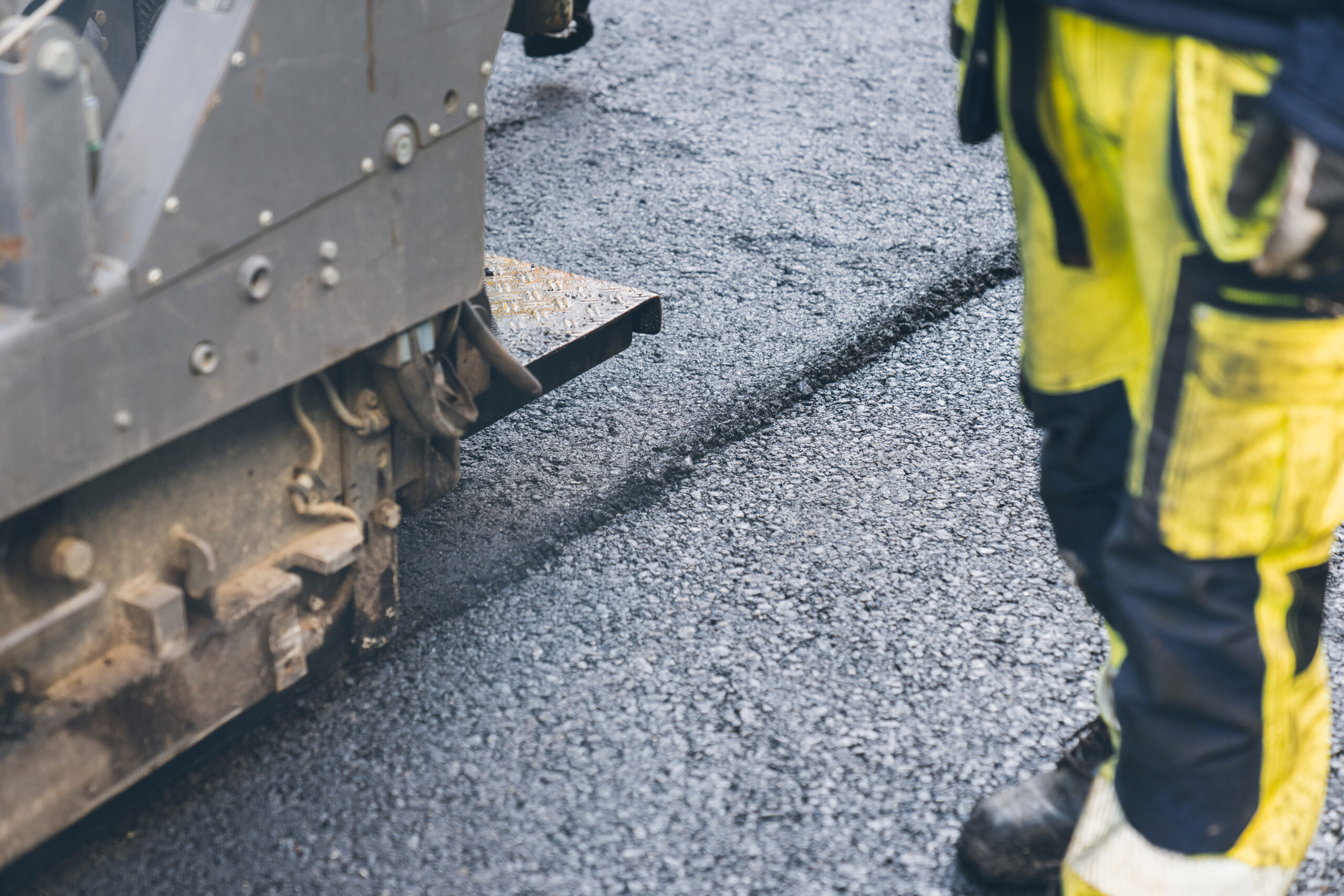
The project, being carried out in the village of Östra Tommarp, outside Simrishamn in southeastern Skåne, will use around 1,500 tonnes of asphalt.
Skanska says that Asfalt Zero is the company’s most sustainable asphalt product. Pine oil partially replaces the fossil binder bitumen. It also contains large amounts of recycled asphalt. In addition, the pulp is produced in an asphalt plant that is powered by fossil-free fuel.
It was a year ago that Skanska reported its Asfalt Zero had been used for a cycling and pedestrian route the municipality of Kumla, a small town around 15km from the city of Obero, which is 200km from Stockholm. The contractor laid the asphalt using only electric machinery to significantly reduce carbon dioxide emissions and at the same time strengthen the municipality’s sustainability ambitions.
By using Asphalt Zero and renewable fuels for all machines and transport, the project is estimated to save 87.5% CO₂-e compared to whether traditional asphalt and fossil fuels had been used.
Normal requirements according to TRV (industry standard) by 2025 are 26kg CO₂-e/tonne asphalt for ABT coatings.
“We are always curious and want to explore new ways to reduce our dependence on oil,” said Stefan Rittbo, project manager, Swedish Transport Administration. “Every step towards a greener future is valuable and we want to actively contribute to improving our carbon footprint.”
“We are proud of our cooperation with the Swedish Transport Administration, which is now taking another step towards a more sustainable infrastructure together with Skanska,” said Jörgen Andersson, regional manager, Skanska Industrial Solutions. “Sweden is facing extensive infrastructure initiatives where this type of investment becomes an enabler for our common climate goals.”
Trafikverket is responsible for long-term infrastructure planning for transport: road, rail, shipping and aviation. It owns, constructs, operates and maintains all state-owned roads and railways and operates many car ferry services.