• About
  • Advertise
  • Contact
Thursday, July 16, 2026
Newsletter
Global Highways
  • News
  • Products
  • Features
  • Categories
    • Asphalt Milling, Paving & Compaction
    • Concrete Milling, Paving & Compaction
    • Connected Construction
    • Earthmoving & Soil Compaction
    • Engines, Components & Tyres
    • Finance & Funding
    • Highway & Network Management
    • Maintenance
    • Materials
    • Recycling
    • Road Markings, Barriers & Workzone Protection
    • Road Structures
  • Events
    • Events Calendar
    • CONEXPO-CON/AGG 2026
    • Intertraffic Amsterdam 2026
    • bauma 2025
  • Latest Magazine
  • Videos
No Results
View All Results
  • News
  • Products
  • Features
  • Categories
    • Asphalt Milling, Paving & Compaction
    • Concrete Milling, Paving & Compaction
    • Connected Construction
    • Earthmoving & Soil Compaction
    • Engines, Components & Tyres
    • Finance & Funding
    • Highway & Network Management
    • Maintenance
    • Materials
    • Recycling
    • Road Markings, Barriers & Workzone Protection
    • Road Structures
  • Events
    • Events Calendar
    • CONEXPO-CON/AGG 2026
    • Intertraffic Amsterdam 2026
    • bauma 2025
  • Latest Magazine
  • Videos
No Results
View All Results
Home News US adopts minimum retroreflectivity standards

US adopts minimum retroreflectivity standards

The US Federal Highway Administration has announced the standards required for maintaining minimum levels of retroreflectivity for pavement markings.

by David Arminas
September 12, 2022
in News
Reading Time: 3 mins read
A A
Key changes include a minimum retroreflectivity

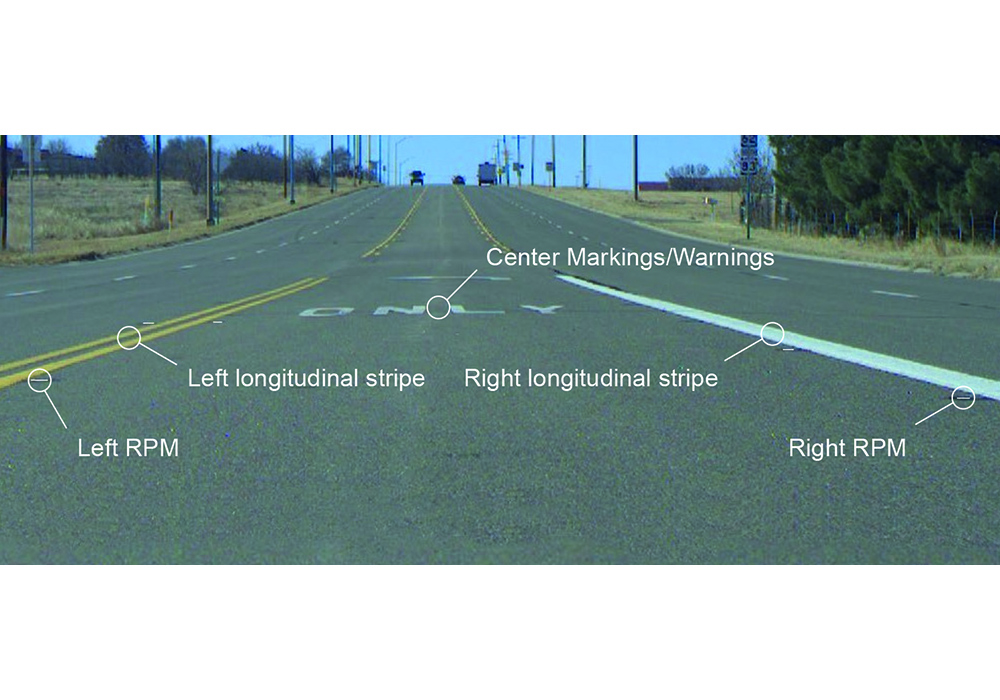
Key changes include a minimum retroreflectivity of longitudinal pavement markings to 50 mcd/m2/lux on roads with speed limits of 56kph (35mph) or greater (image courtesy RetroTek)

Accurate retroreflectivity measurements of line markings across the full lane width has become even more important after a US adopts minimum levels of retroreflectivity performance.

After a long period of consultation and assessment the Federal Highway Administration announced the standards required in maintaining minimum levels of retroreflectivity for pavement markings to all roads open to public travel in the United States.

The US division of Irish firm RetroTeck (Reflective Measurement Systems) says it welcomes the FHWA’s update to the Manual on Uniform Traffic Control Devices and it should play a key role in reducing transportation-related fatalities and serious injuries. The ruling will also help to support the operation of Autonomous Driver Assisted Systems (ADAS) that are increasingly dependent on high quality longitudinal pavement markings to operate correctly.

Key changes include a minimum retroreflectivity of longitudinal pavement markings to 50 mcd/m2/lux on roads with speed limits of 55kph (35mph) or greater, where average annual daily traffic is 6,000 vehicles per day. The minimum retroreflectivity of longitudinal pavement markings is 100 mcd/m2/lux on roads with speed limits of around 110kph (70mph) or greater.

However, the FHWA has decided that this standard does not apply to other pavement markings such as centre symbols, arrows, chevrons or words. Crosshatch markings, transverse markings and crosswalks are also excluded from the minimum standard.

The methods for maintaining pavement markings are detailed in FHWA-SA-14-017 and can be seen by clicking here.

The methods include visual inspections, measured retroreflectivity, expected service life replacement and blanket replacement.

The changes came into effect September 6 and US road authorities and departments of transport have four years to comply with the new rulings.
Next Steps for US Road Agencies

RetroTek said it would “highly recommend” that US road agencies start the planning process now to address how they will monitor and maintain pavement markings to the new standards for minimum retroreflectivity levels. “We believe the most efficient solution which maximises data collection and minimises disruption to road users is the RetroTek-D mobile retroreflectometer system. This will enable road authorities to get accurate retroreflectivity measurements across the full lane width in one pass, day or night, minimising survey time and fuel costs.

“The ability to compare survey results over different years within our survey software helps authorities to plan and predict pavement marking maintenance requirements and budgets,” the company said.

The RetroTek-D records data in real time and automatically stores it on the PC. The data includes route travelled, retroreflective values (RL), GPS co-ordinates, temperature, humidity, distance, speed, time and presence/absence of reflective pavement markings (RPMs) / road studs. The system surveys road traffic markings at legal traffic speeds, eliminating the need for traffic management or road closures, and can assess up to six reflective road assets in one pass.

Since January 2013, Reflective Measurement, based in Dublin, Ireland, has researched and developed machine vision technologies which address the maintenance and safety needs of road infrastructure agencies and airport airside stakeholders.


Categories: Road Markings, Barriers & Workzone Protection
Promoted Content Header
Reflective Measurement Systems VIEW COMPANY
It is also certified to EN1436, ASTM E 1710 industry standards, says the company
Products

Reflections on RetroTek-D

July 24, 2020
RST - May 2019 -Retrotek Istanbul.JPG
Products

Istanbul opts for RetroTek pavement assessments

May 9, 2019
RST Aug 2018 - RetroTek-Texas.jpg
Features

Texas certification of RetroTek-MU operator a first

July 27, 2018

Related Posts

A new highway link connects Basrah in Iraq with Faw Port – (image: Dynamoland/Dreamstime.com)

Key Iraq highway link complete

by Mike Woof
July 15, 2026

A key stage of the $17 billion road link between Iraq and Turkey is complete

A new stretch of road in the Czech Republic will improve traffic flow around the capital Prague – (image: Micka/Dreamstime.com)

23 bridges for Czech highway project

by MJ woof
July 14, 2026

A new highway in the Czech Republic is benefiting from the construction of 23 bridges

Subsidence stemming from climate change presents a major risk to key infrastructure – (image: Prime Global Publishing)

Subsidence from climate change threatens key infrastructure

by Mike Woof
July 14, 2026

Climate change is causing subsidence and threatening key infrastructure

Join our newsletter

The mission of Global Highways is to cover the latest technologies and best practices in all areas of road, bridge and tunnel construction and maintenance, as well as their safe operation and management.

Subscribe to our newsletter

About Us

  • About Us
  • Advertise
  • Contact
  • Terms & Conditions
  • Privacy Collection Notice
  • Privacy Policy

Popular Topics

  • News
  • Features
  • Products
  • Videos
  • Events
  • CONEXPO-CON/AGG 2026
  • Intertraffic Amsterdam 2026
  • bauma 2025

© 2026 All Rights Reserved. All content published on this site is the property of Prime Creative Media. Unauthorised reproduction is prohibited

No Results
View All Results
NEWSLETTER
  • News
  • Products
  • Features
  • Categories
    • Asphalt Milling, Paving & Compaction
    • Concrete Milling, Paving & Compaction
    • Connected Construction
    • Earthmoving & Soil Compaction
    • Engines, Components & Tyres
    • Finance & Funding
    • Highway & Network Management
    • Maintenance
    • Materials
    • Recycling
    • Road Markings, Barriers & Workzone Protection
    • Road Structures
  • Events
    • Events Calendar
    • CONEXPO-CON/AGG
    • Intertraffic Amsterdam 2026
    • bauma 2022
  • Latest Magazine
  • Videos
  • About
  • Advertise
  • Contact

© 2026 All Rights Reserved. All content published on this site is the property of Prime Creative Media. Unauthorised reproduction is prohibited