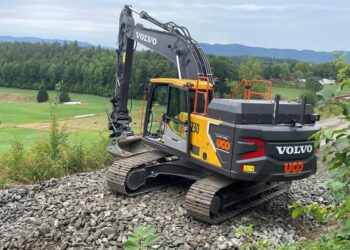
At the forefront of this transformation is Volvo Construction Equipment (Volvo CE), leading with intelligent products and solutions that boost productivity, enhance safety, reduce carbon and lower costs. By combining in-house innovation with strategic partnerships, Volvo CE delivers integrated technologies that meet evolving customer needs and accelerate the shift toward smarter, more sustainable construction.
One notable advancement is 3D machine control, a game-changing technology that is reshaping earthmoving and excavation. Since its launch in 2017, Dig Assist has become an essential tool for Volvo excavator operators. To elevate this experience and meet growing demand for precision, simplicity and real-time insights, Volvo CE excavators are now available with integrated 3D machine control systems from partners such as Unicontrol and Topcon.
Understanding 3D machine control technology
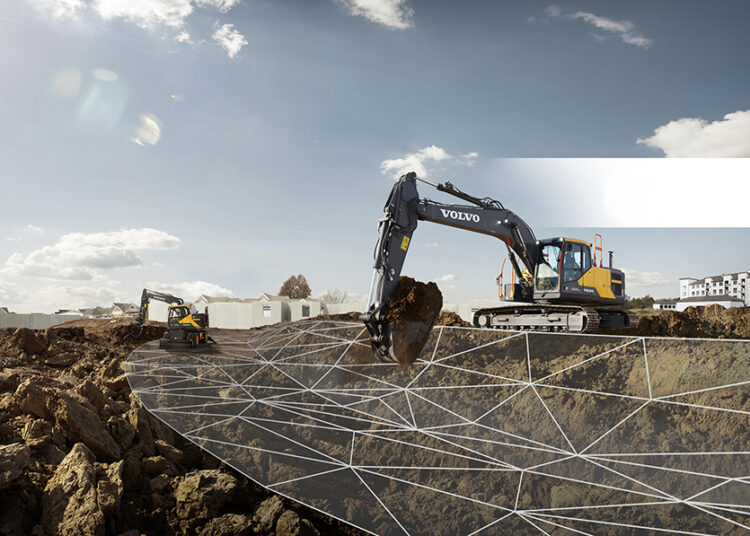
3D machine control is a significant step forward from traditional construction methods. By utilising Global Navigation Satellite Systems (GNSS), Inertial Measurement Units (IMU) – which track acceleration, orientation, and angular movement – and advanced software, this technology provides an intelligent guidance system for construction equipment. Operators benefit from real-time, three-dimensional positioning data, allowing faster, more accurate, and more confident decision-making on site.
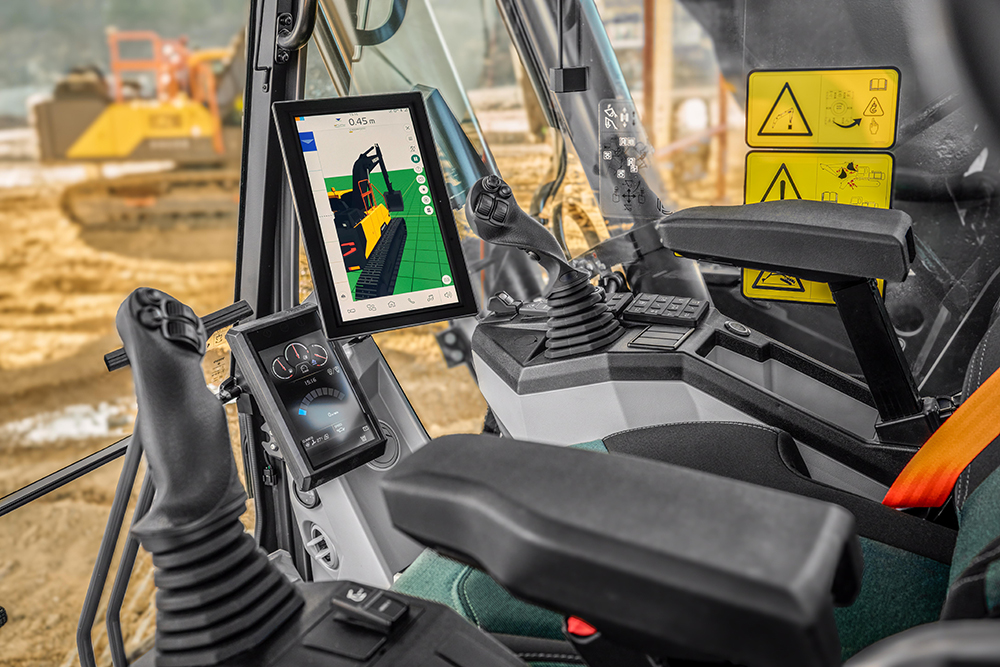
Solutions such as Unicontrol 3D and Topcon 3D-MC are now integrated seamlessly into Volvo CE’s Dig Assist platform, enabling operators to view project designs in real time via the Volvo Co-Pilot display. This transforms the cab into a digital command centre, where operators can see exactly where to dig, grade, or move material. Instant feedback and continuous guidance eliminate guesswork, boosting productivity and reducing rework.
Designed to be intuitive, accessible, and highly responsive, these systems deliver real-time precision, essential for maintaining productivity and accuracy on fast-paced construction sites.
Achieving time and cost savings through precision
The adoption of 3D machine control delivers measurable benefits in efficiency and profitability. By enabling operators to meet target specifications on the first attempt, it significantly reduces rework and material waste which are common challenges with traditional methods that often require multiple passes and corrections. With intelligent 3D guidance, the need for on-site surveyors, grade stakes, and manual measurements is minimised, allowing for continuous operation without frequent stops for verification and adjustment.
The cost benefits extend well beyond labour savings. More precise digging reduces over-excavation, lowering material consumption and waste disposal costs. Operating to exact specifications ensures optimal resource use, while more efficient operations reduce equipment wear and tear, minimising maintenance needs and extending machine lifespan.
Although upfront investment can be a barrier to digital adoption, the return on investment for 3D machine control systems is compelling, typically realised within four to six months. With competitive pricing strategies and scalable integration, 3D machine control is now an accessible, high-impact solution for contractors of all sizes.
Enhancing site safety
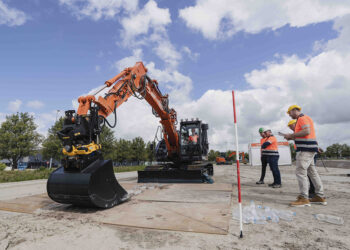
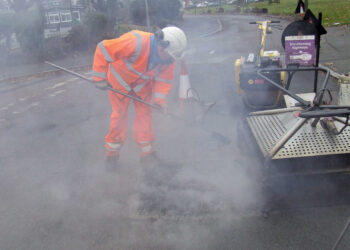
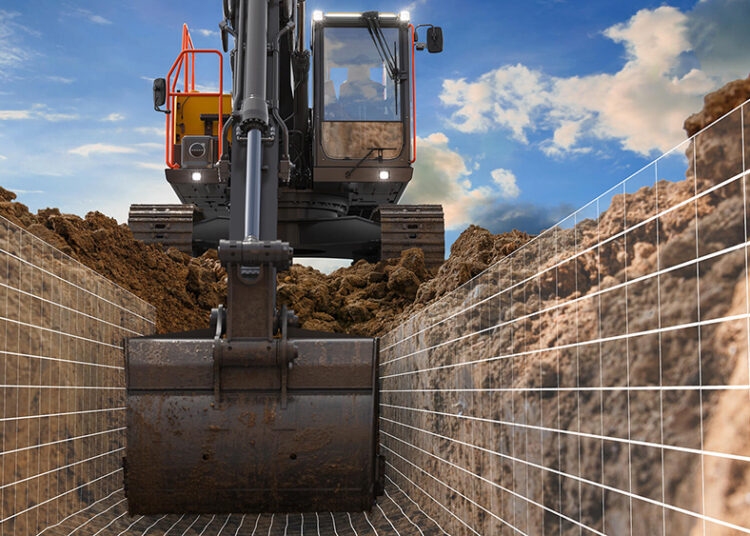
Construction sites present numerous safety challenges, particularly in earthmoving operations. Traditional methods often require surveyors and grade checkers to work dangerously close to active machines, even entering trenches to verify depths. 3D machine control technology changes this dynamic. By providing real-time monitoring and continuous feedback on positioning and progress, it significantly reduces the need for manual checks and keeps workers safe.
Integrated within Volvo CE’s Dig Assist platform, 3D machine control systems allow operators to work independently and with confidence, minimising on-site exposure and significantly lowering accident risk. This aligns with Volvo CE’s ongoing commitment to improving safety across all areas of construction, leveraging digital tools to enhance both operational performance and workforce protection.
Safety is also improved inside the cab. The Volvo Co-Pilot display offers a clear, real-time visual of the work area, helping operators assess terrain, identify hazards, and make informed decisions about machine positioning and operation. Enhanced situational awareness reduces the risk of equipment damage from unexpected obstacles or unstable ground.
Additionally, the precision and responsiveness of 3D systems help reduce physical strain and fatigue on operators. With smoother workflows and fewer manual adjustments, operators maintain better focus and comfort, contributing towards safer, more efficient site operations.
Delivering environmental and training benefits
3D machine control technology also provides sustainability advantages. By eliminating over-excavation and reducing material waste, it helps reduce the environmental footprint of construction projects. Accurate cut-and-fill calculations optimise on-site material usage, reducing the need for transportation and lowering associated emissions.
Greater precision also means less machine-operating time, lowering fuel consumption, reducing carbon output, and lowering operating costs. The shift towards paperless operations reduces reliance on physical plans throughout the project, supporting environmentally sustainable practices.
Beyond environmental impact, 3D machine control technology plays a vital role in tackling the industry’s skills gap. Intuitive visual guidance and real-time feedback within the cab help new operators build confidence quickly, shortening the learning curve and enabling faster onboarding. For experienced operators, the technology enables more complex tasks without the need for specialist expertise or extensive surveying support, unlocking new capabilities.
By accelerating skill development, enhancing accuracy, and supporting sustainable practices, 3D machine control strengthens workforce resilience and environmental performance, all key pillars of Volvo CE’s commitment to make construction safer, more efficient and more sustainable.
Seamless integration into digital workflows
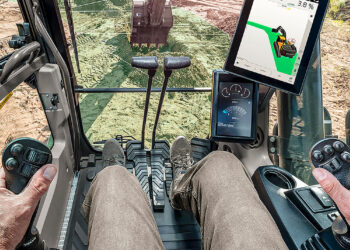
3D machine control technology is crucial for connecting design and planning phases with on-site execution, serving as an important link in the digital construction workflow. The ability to work directly with 3D design files eliminates the need for traditional grade stakes and paper plans, marking a shift from manual, paper-based processes to fully digital project management. Design data flows seamlessly from the office to the site, ensuring operators work with the most up-to-date and accurate information. This real-time connection reduces the risk of errors and ensures consistency between design intent and on-site delivery.
Cloud-based platforms further enhance this integration by enabling real-time project oversight and data sharing. Project managers can monitor progress remotely, assess productivity, and make informed decisions around resource allocation and scheduling. These platforms also support collaboration across the value chain, allowing stakeholders to access live updates, review design specifications, and track work quality and completion metrics with confidence.
Overcoming adoption barriers and embracing a digital future
Despite evidence that digital technologies can significantly boost construction productivity, adoption remains slow due to cost, complexity and resistance to change. The use of 3D machine control solutions is actively addressing these barriers through innovative system design and implementation strategies. Competitive pricing and flexible acquisition models are making the technology accessible to contractors of all sizes, while rapid return on investment helps justify initial expenditures.
Ease of use is central to overcoming complexity concerns. These solutions are designed with operators in mind, enabling fast learning and seamless integration without extensive training or project disruption. As more users experience the benefits firsthand, hesitation gives way to confidence, and enthusiasm for digital transformation grows.
The construction industry is being reshaped by the need for greater productivity, efficiency, safety and sustainability. Digital technologies like 3D machine control are central to this evolution and increasingly sought after by customers demanding smarter, faster, and more precise project delivery. Volvo CE is committed to meeting this demand through a combination of in-house innovation and strategic partnerships. For contractors, adapting to this shift is key to long-term competitiveness.
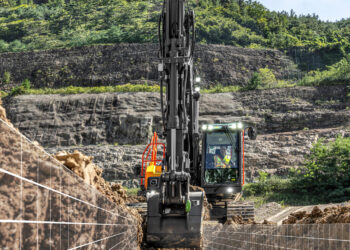
As artificial intelligence, machine learning, and automation continue to advance, 3D machine control solutions will become even more intelligent and integrated. Future systems are likely to include predictive analytics, autonomous operation capabilities, and deeper alignment with Building Information Modeling (BIM) systems, enabling seamless coordination from design to execution.
Volvo CE remains focused on making advanced technology both accessible and intuitive for its customers, accelerating adoption by reducing implementation barriers and responding to evolving market needs. Standardising digital workflows across the industry unlocks new opportunities for collaboration, efficiency, and innovation.
3D machine control offers more than just operational improvements, it is a catalyst for digital transformation. It bridges the gap between complexity and usability, delivering compelling advantages like improved accuracy, increased productivity, enhanced safety, reduced costs, and improved environmental performance. As the technology evolves, these advantages will only grow more pronounced.
The construction industry stands on the brink of a digital renaissance. Embracing digital technologies like 3D machine control will empower contractors to lead in an increasingly competitive and demanding landscape. The future of construction is smart, precise, digital and efficient, and 3D machine control is driving that transformation forward, helping build a more productive, safer, and sustainable industry for future generations.
Produced in association with Volvo Construction Equipment