The COVID-19 pandemic is having extensive ramifications for the entire planet, resulting in an unprecedented disruption of transportation. The halt in production and decline in consumption has resulted in the steepest economic downturn of modern times. The International Labor Association estimates that up to 305 million full-time jobs could be lost. These devastating effects have also taken their toll on the transport sector, which has been significantly impacted by reduced mobility in urban and interurban networks.
During the March/April lockdown, some European toll operators lost up to 90% of traffic and 80% of revenue.
To counteract the grave cross-sectoral economic impacts, governments have already started to release significant stimulus packages. Many of these packages are being directed into infrastructure, known to provide significant short-term benefits such as job creation, whilst further providing wide societal benefits in the long term. With estimates that 1% of GDP invested in infrastructure delivers an economic output increase by 0.4% in the same year and by 1.5% in four years, these choices are easy to comprehend. The effect is even greater for low- and middle-income countries (LMICs), which are estimated to be able to deliver a US$4 return to every $1 invested in infrastructure.
The “return to normal” may never come, as the post-COVID-19 “normality” is likely to differ from anything experienced thus far. Recovery provides opportunities and could become a catalyst for positive change. Policy interventions, the speed and scale of which were previously unimaginable, are being implemented to save lives and force a re-evaluation of how best to operate. There are learning factors to draw from in order to shape a sustainable recovery.
As the stimulus packages are being deployed governments must be well informed in order to design their recovery and reset the transport sector onto a more sustainable and resilient path, ensuring more accessible and inclusive mobility. The road sector can play an important role by ensuring the desired reset and by supporting the economic recovery process overall.
The collective task should be to create a truly safe, sustainable and efficient multimodal transportation system. Roads are a fundamental piece of this multimodal ecosystem; hence it is important that recovery includes road investments.
Here are some good reasons to do so:
1: Efficient and well-maintained roads are a necessity
Under lockdown, essential workers and the delivery of goods had to be ensured. As national borders closed and border controls were reintroduced, many facilities, such as fuel stations, truck stops and overnight accommodation were closed, making it a challenge for truck drivers to plan their journeys. More locally, in many countries demand has surged for home deliveries. Indications are that this demand is unlikely to recede once lockdowns are lifted and we need to account for this change.
2: Road Safety
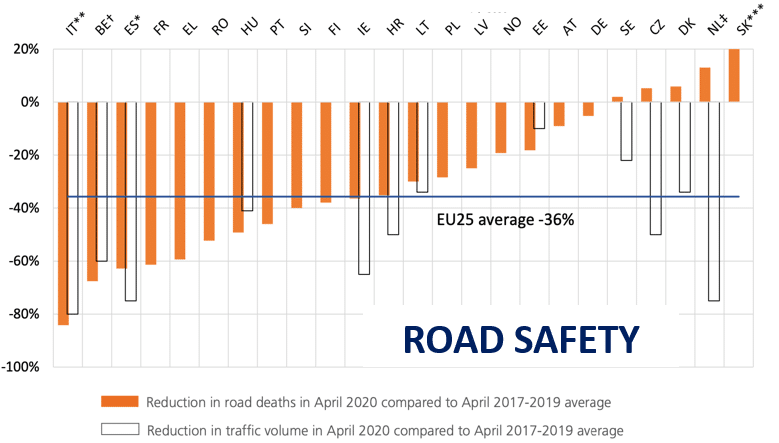
Preliminary analysis shows that the lockdown measures have led to a reduction of road accidents, which is easily comprehensible given the significant reduction of road traffic. However, the severity of these accidents was increased due to higher speeds, and continued infrastructure flaws. The sector has proved that it has the tools to design and build safer roads, but these must be more widely implemented. Road design, through the appropriate choices on quality materials, maintenance scenarios, alongside other solutions, plays a decisive role in saving lives, as well as contributing to the infrastructure’s sustainability. It is essential that the design and planning is done with safety at its core to minimise the loss of human lives, as well as the burden on the health care systems. All new roads should be designed at a minimum 3-star rating or higher, and the sector should hold itself accountable to this.
3: Creating Jobs
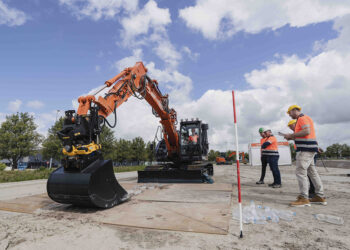
The road sector is a major employer worldwide, accounting for around 5.7% of employment worldwide. Some worksites were shut down pre-emptively, resulting in jobs being lost. Building, upgrading and maintaining road network infrastructure is a key driver for saving and creating jobs, generating income and stimulating economic activity immediately. At the same time, the importance of all related road asset management activities should not be underestimated with regard to their impact on employment. Whilst the construction of new roads, and upgrading and rehabilitation of existing roads are typically “one-off” investment activities, maintenance is a recurrent activity.
4: Fostering Innovation
Today’s infrastructure is not only ageing but the approach to planning, design, and constructing is rapidly becoming out of date as well. Innovation is no longer optional but a must and it has to address different challenges. It is vital to find new business models; there are needs to respond to environmental and climate threats. It is important to ensure the durability of infrastructure especially given the extreme weather events the human race is facing. And there is a need to reduce the consumption of natural resources. With trillions-worth of investments required for existing and new infrastructure assets, the need to do things differently is critical. There is a need to invest in strengthening the overall resilience of the network; to ensure adequate infrastructure for active modes of transport; and to encourage uptake of circular economy thinking to speed up the green transition.
5: Upskill the Workforce
Last but not least, it is important not to forget about human capital. There must be an investment in capacity building. Industry can adequately respond to challenges only if there are skilled personnel. Transition to a more efficient, safe, climate resilient, electrified, connected and autonomous road transport sector requires investments to upskill the labour force.
There is a strong industry commitment to support a sustainable recovery. It is up to everyone now to work together to turn commitment into action.
• Proceedings on IRF’s Roads to Recovery Conference can be accessed on IRF website: www.irfnet.ch
MDB High-Level Joint Statement on Road Safety
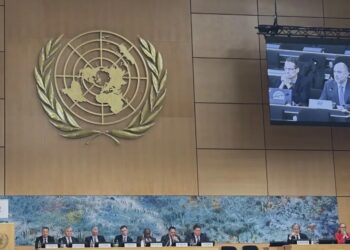
The Global Ministerial Conference on Road Safety was held in Stockholm in February 2020. It brought together delegates from around 140 countries, and Multilateral Development Banks, culminating in the Stockholm Declaration, which calls for a new target to reduce road traffic deaths and injuries by 50% from 2020 to 2030. It invites strengthened efforts on road safety management, safer roads, vehicles and people, and enhanced post-crash care. The Declaration was endorsed by UN General Assembly Resolution A/RES/74/299 dated August 31st 2020. A new Decade of Action for Road Safety 2021-2030 is now being developed and needs support from a broad range of stakeholders, including international financing institutions and development partners.
The Multilateral Development Banks Road Safety Working Group, set up to coordinate on road safety matters, is chaired by EIB during 2020-21. At the Global Ministerial Conference in Stockholm, the group decided to issue a new Joint Statement in support of the Stockholm Declaration and the new Decade of Action.
In the joint statement, the MDBs “…acknowledge the role and responsibility to ensure that we finance sustainability. Grounded on our countries’ needs, priorities and expressed demand, we acknowledge the Declaration’s call for increased investment in road safety, which recognises the high social and economic costs of crash deaths and injuries, and the high social and economic rates of return of projects and programmes that prevent deaths and injuries on roads worldwide.
Collectively and individually, we remain committed to playing our part in supporting our client countries’ priorities. We acknowledge the importance of close cooperation, within and between our respective institutions. To this end, we may review our priorities and procedures to ensure that the road-related programmes and projects we support promote a model of safety that encourages a more ambitious, integrated, accountable and results-oriented approach in our partner countries, with particular focus on safe infrastructure for all users”

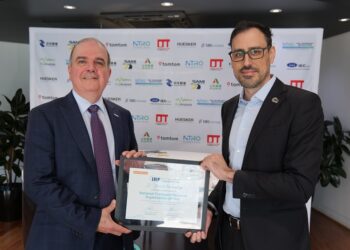
The signing event of the Joint Statement took place on 16th November 2020, the day after the World Day of Remembrance (WDR) for Road Traffic Victims.
This year marks 25 years since a day dedicated to remembering road traffic victims began to be observed internationally.
Under the slogan: Remember, Support, Act, WDR 2020 objectives are to provide a platform for road traffic victims and their families to:
- Remember all people killed and seriously injured on the roads;
- Acknowledge the crucial work of the emergency services;
- Draw attention to the generally trivial legal response to culpable road deaths and injuries;
- Advocate for better support for road traffic victims and victims’ families;
- Promote evidence-based actions to prevent and eventually stop further road traffic deaths and injuries.