As the world gears up for the highly anticipated IRF World Congress 2024 to be hosted in Istanbul on 15-18 October 2024, work on some of the core themes of the Congress is moving on steadily.
Under the overarching theme of “Connecting to Empower Mobility: Roads as Enablers of a Sustainable Future for All”, the Congress serves as a dynamic platform to explore innovative solutions and collaborative efforts.
Set against the backdrop of escalating climate concerns and the imperative to transition towards a greener and more sustainable mobility, the theme of decarbonisation takes centre stage this month and we report here on three recent and important developments.
New Strategy on Reducing Greenhouse Gas Emissions from Inland Transport
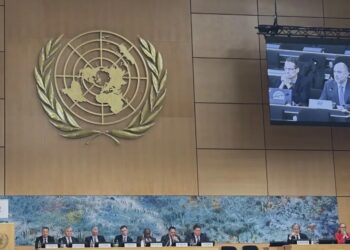
The 86th Session of the United Nations Economic Commission for Europe (UNECE) Inland Transport Committee (ITC) laid the groundwork for a new decarbonisation agenda by leading the adoption by its Members States of a new strategy for the reduction of GHG emissions from inland transport.
IRF president, Anouar Benazzouz, speaking at the high-level policy segment “Taking ambitious climate action – Moving towards decarbonised inland transport by 2050”, referred to some of the significant challenges – but also the opportunities – that the road transport sector is facing in reducing carbon emissions. While the lack of institutional capacity and the inadequacy of traditional funding and financial instruments were mentioned among the main barriers the sector is facing, Benazzouz referred to the adoption of new technologies, innovation and digitalisatoin as some of the key opportunities to work on.
“We have today the tools that can deliver significant results and impact. Not tomorrow, but now. Not aspirational goals but action,” he said addressing the plenary meeting.
The new Strategy on Reducing Greenhouse Gas Emissions from Inland Transport, was adopted by Ministers and country representatives at the end of the meeting. The strategy is a framework document that was welcomed by the IRF President in his intervention. “We welcome the new ITC strategy and the commitment in there to ‘support the adoption of new technologies and innovations, including Intelligent Transport Systems (ITS) and digital solutions,” stated Benazzouz.
An Alliance for Road Decarbonisation
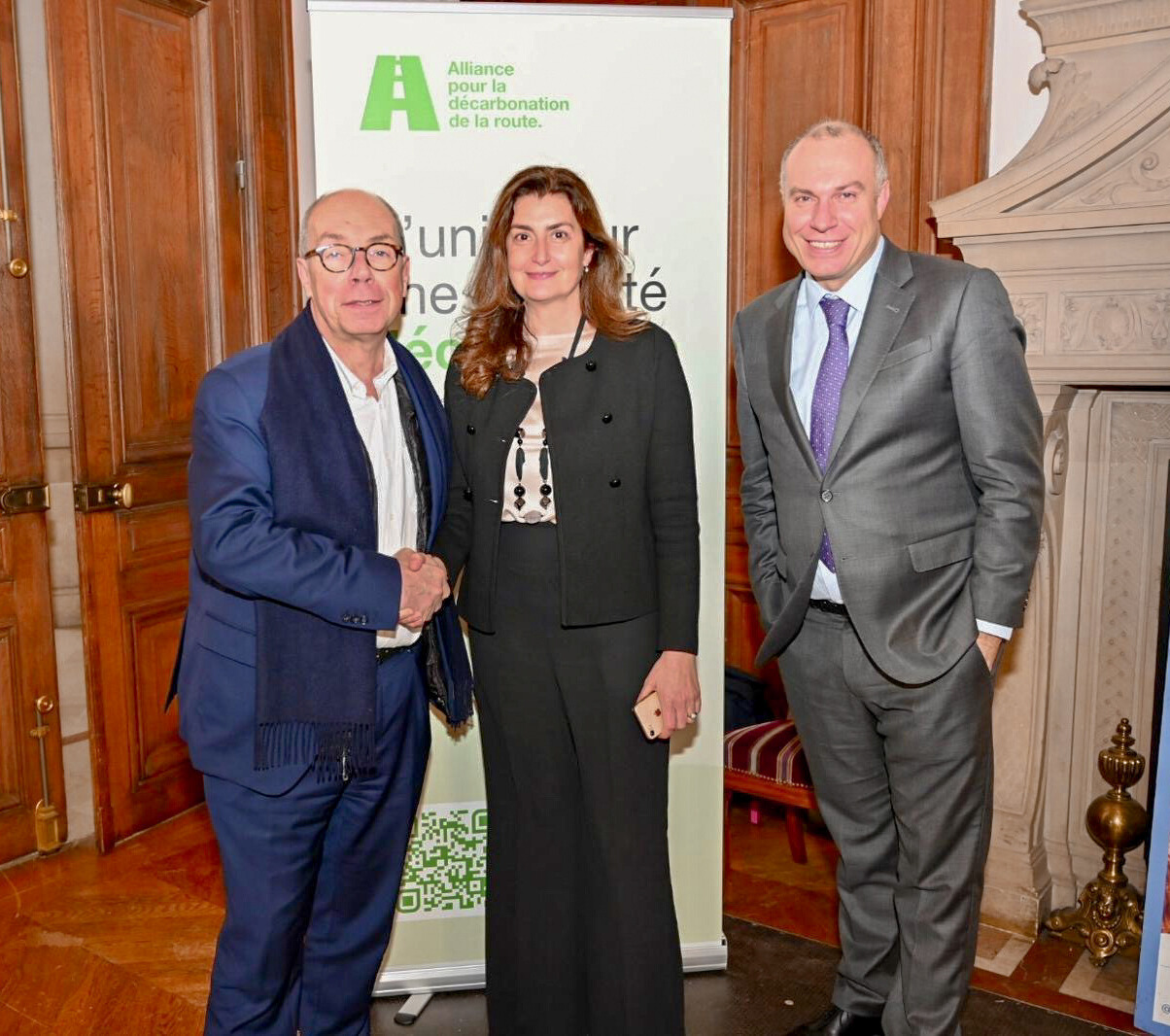
In an effort to accelerate decarbonisation by facilitating concerted action, the International Road Federation will be supporting the Alliance for Road Decarbonisation recently launched in France.
François Gemenne, HEC Professor, IPCC co-author, Patrice Geoffron, University of Paris-Dauphine Economics Professor, and Géraud Guibert, President of La Fabrique Écologique, unveiled the goals of the Alliance for Road Decarbonisation at an event hosted in Paris on 12 March at the presence of the press and many of the members of the Alliance. The objective is to work in partnership with public authorities to develop and implement – by addressing both technologies and usage – effective solutions for a decarbonisation that is also socially viable.
The Alliance includes academics, experts, local authorities, associations, mobility operators and infrastructure managers, automotive manufacturers, carriers, professional federations, unions, engineering groups, insurers, and startups.
“It’s an incredibly rich eco-system the one that the Alliance has been able to pull together in such a short period of time” commented Susanna Zammataro, IRF director general. “As IRF we are pleased to join this effort and bring in our international expertise and network. We look forward to seeing the first results of this collaborative work presented at the Ministerial Meeting which will be hosted during our World Congress in Istanbul in October 2024,” she added.
The Alliance articulates its ambitions around four priority areas of work for the year 2024:
1. Just and acceptable mobility transition: accompanying economic actors and citizens in this transformation, ensuring social inclusion and territorial equity.
2. Decarbonisation of logistics: promoting the use of more sustainable freight transport solutions, reducing CO2 emissions related to logistics, and collaborating with supply chain actors.
3. The road at the heart of a mobility system in sparsely populated and rural areas: ensuring access to decarbonised mobility for all, adapting to the specific needs of rural areas.
4. Road resilience in the face of climate risk: developing infrastructure and transport solutions more resilient to extreme weather events.
Ministerial Meeting on Decarbonisation and Resilience
Amidst the bustling activities of the IRF World Congress 2024, a pivotal moment awaits in the form of a closed Ministerial Meeting included in the Congress programme with the aim to bring the conversation of decarbonisation to a higher level. Under the theme “Decarbonised and Resilient Transport for Resilient Societies and Economies”, ministers, representatives from leading organisations in the sector and industry leaders will convene to underscore the importance of prioritising decarbonisation efforts. Through collaborative partnerships and bold policy commitments, the meeting aims to lay the foundation for resilient societies and economies built on decarbonised transport systems.
The Ministerial Meeting will conclude with a declaration that will be feeding into the dialogue of the COP29 in November 2024.