For many years asphalt recycling (RA, reclaimed asphalt) has been proven to be the most efficient and applicable method for sustainable asphalt-pavement reconstruction. Nonetheless, the level of successful recycling is highly dependent upon the correct choice of type and quantity of recycling agent.
Recycling agents play not only a key role in the recycled mixture’s performance and mechanical properties but also in the mixture’s durability. According to the European Asphalt Pavement Association (EAPA), and as indicated in the harmonised European terminology norms EN 12597:2024, asphalt-recycling agents can be classified as flux oils or rejuvenator.
Although both softeners and rejuvenators can be used for asphalt recycling, only rejuvenators can restore some of the lost chemical properties of the aged bitumen within aged binder. This will be critical for mixtures containing high content of reclaimed asphalt and, as expected, could guarantee the durability of recycled asphalt.
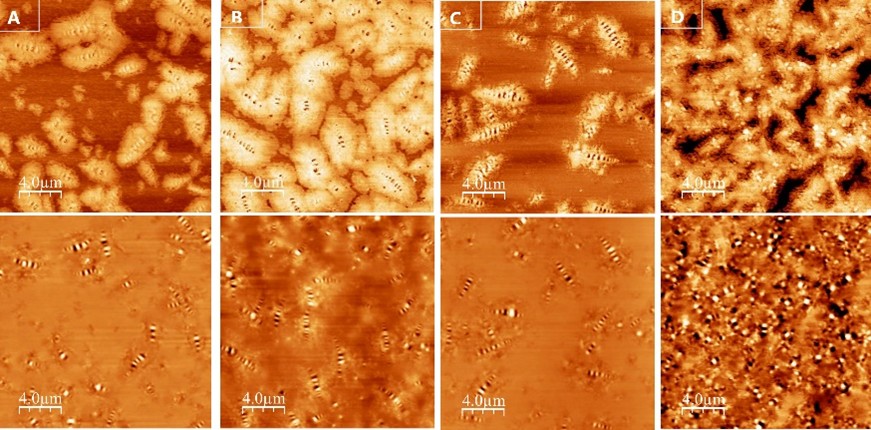
Figure 1 represents the mechanism of action of a rejuvenator compared to a flux oil on an aged binder. It is noteworthy that although both fluxed and rejuvenated aged bitumen showed similar rheological/physical properties, it can be seen that the flux oil affected a certain deformation of the chemical microstructure of bitumen. This ensured only adequate workability when compared to the rejuvenated sample which resulted in a more restored chemical condition.
ACF 2000 Green
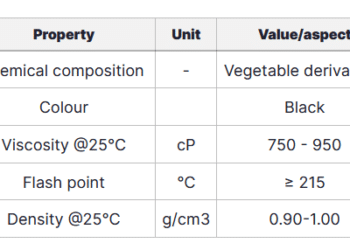
The Iterlene ACF 2000 Green rejuvenator (bio-based) is supplied by Iterchimica, a global asphalt- and bitumen-additive producer based in Italy. ACF 2000 Green gives new life to aged bitumen thanks to the antioxidant and restorative chemical action specifically designed for the high RA content of recycled asphalt mixtures. It reactivates the aged bitumen found within RA by acting directly on the chemical and physical properties. With a recommended dosage of 4-8% of the weight of aged bitumen, this vegetal-based rejuvenator has shown efficiency throughout many documented successful projects around the world. Some of the rejuvenator properties are summarised in Table 1 (above).
Czech project
The rejuvenator ACF 2000 Green was used producing a mixture containing 50% reclaimed asphalt pavement in the Czech Republic in 2017. The project was on a local access road in Siřem, a village near Blšany. Construction took place in 2017 using an AC 11mm mixture placed as a surface course with PEN 50/70 paving bitumen: the aged bitumen characterised by a penetration of 25dmm and a softening point of 60°C*. The rejuvenating agent was used at a dosage of 4% by weight of the aged binder.
The recycled mixture was tested by Brno University of Technology using binder- and mixture-scale European standard methods. According to the results, the rejuvenator effectively restored aged binder properties, activated a greater portion of aged binder and improved the volumetric characteristics. At the mixture level, it significantly enhanced low-temperature cracking resistance without compromising the mixture modulus, demonstrating balanced and improved overall performance.
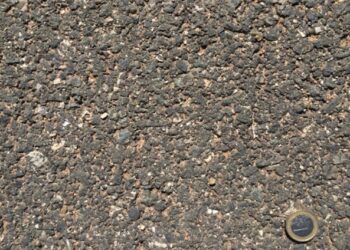
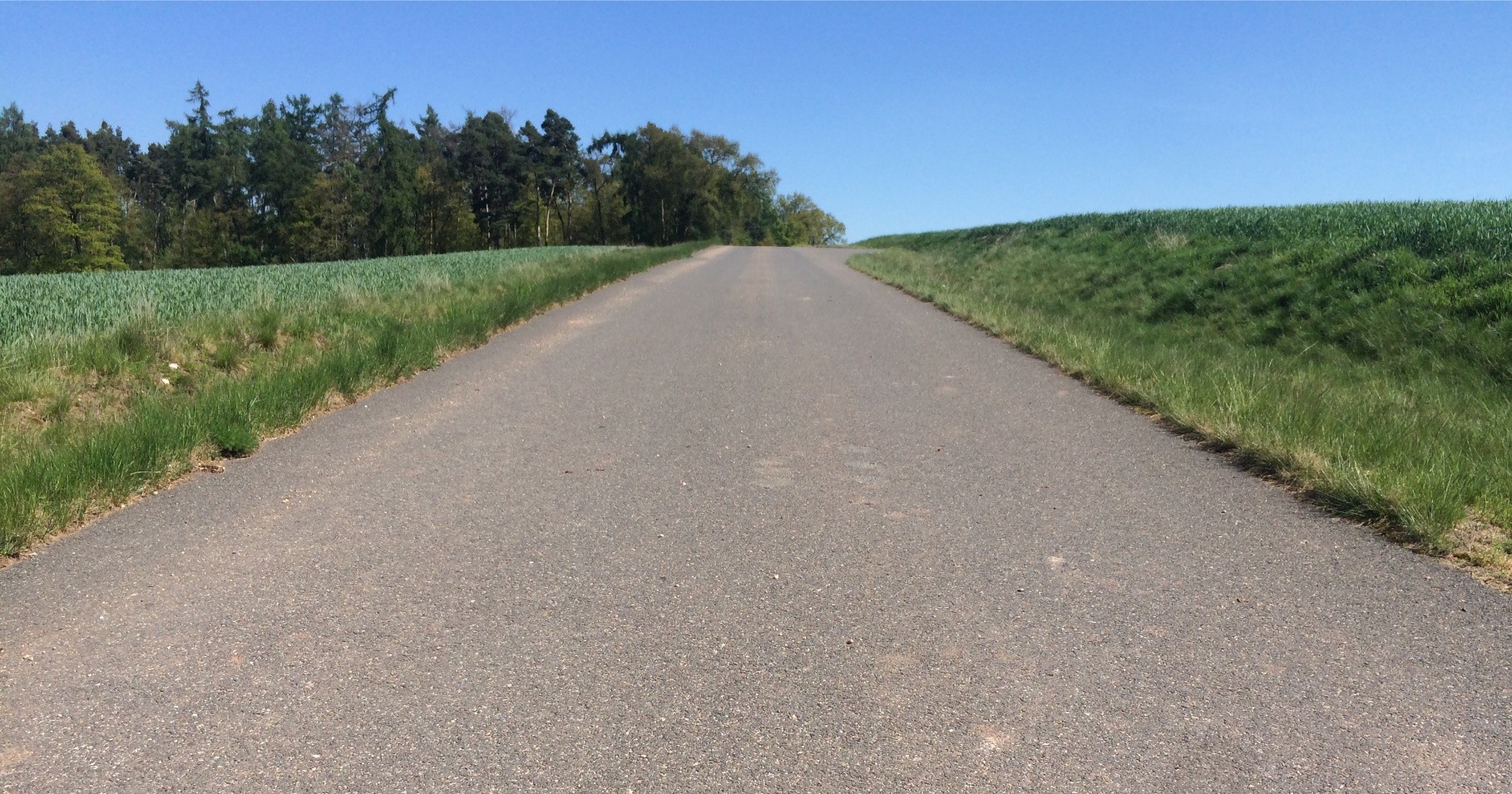
According to condition monitoring by pavement technicians last year, the test pavement in Siřem was in good condition, without thermal cracking or permanent deformation despite the constant passage of heavy agricultural vehicles. Figure 2 shows this section and its texture after eight years under realistic conditions.
*The penetration test measures the hardness or softness of bitumen by determining the depth a standard needle penetrates under specific conditions. The result, expressed in tenths of a millimetre (dmm), is used to classify bitumen into different grades, for example 60/70 and 80/100.