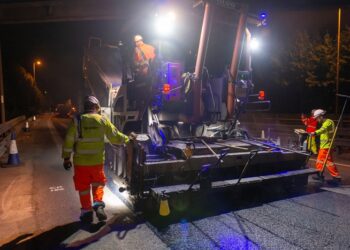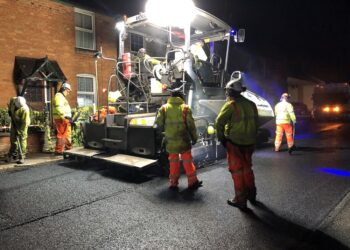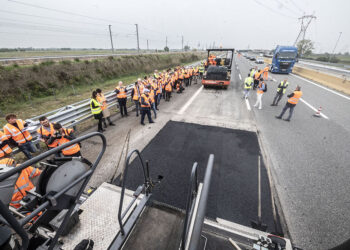
Although warm mix asphalt (WMA) has been around for 25, its use in Europe has only grown significantly in recent years, according to the European Asphalt Pavement Association (EAPA). Its latest figures, published in February 2026, show that the proportion of warm mix used in Europe has risen from around 2.5% in 2013 to 14.6% in 2024 with a steep increase since 2018.
EAPA is on a mission to accelerate the use of WMA. Having published two guides on the subject in 2024, EAPA’s latest venture was a webinar. Held on 12 November 2025, with over 800 people registered to attend, the webinar provided details and insight on practice and progress in eight European countries. What the webinar demonstrated is that there is huge variation in how and why warm mix is deployed in different European countries. The proportion of WMA varies, the technologies deployed and even the way that warm mix is defined.
Chaired by EAPA technical director Breixo Gomez, attendees of the webinar heard from Knut Johannesen, Vinci Construction’s research and development in Germany; Thessa Luijendiik, sustainable infrastructure coordinator for the province of South Holland in the Netherlands; Geir Lange, head of trade and market for Viedekke’s asphalt division in Norway; and Malcolm Simms, director of MPA Asphalt at the Mineral Products Association in the UK. Gomez then shared information on France, Spain, Italy, Ireland, Czech Republic and Croatia.
The German asphalt industry perhaps faces the steepest learning curve. It is being asked to go from virtually zero to 100% in a few years. Johannesen explained that a change in the classification of bitumen in terms of its carcinogenic risk triggered new exposure limits to be set which just could not be met using hot mix. The new exposure limits were published in 2019 with the industry expected to switch by the end of 2026.
The Netherlands has worked with WMA for over 25 years but in 2022, the Dutch asphalt industry announced it would abandon hot mix from 2025. The move was motivated by the will to reduce carbon emissions and increase circularity. The Netherlands has not hit 100% WMA yet due to various barriers, Luijendiik explained: not every asphalt plant is ready, there is a huge range of asphalts used in the Netherlands so lots of testing is needed to find equivalent WMAs; procurement documents have not all been updated; and local authorities tend to be cautious about change.
Norway is often cited as one of the most advanced countries in terms of WMA experience, having had two period when its use increased: first in 1995 when WAM-Foam technology was introduced and then in 2012 when Statens Vegvesen, the Norwegian Public Roads Administration introduced a bonus of €2.5/tonne for mixes where the temperature was more than 25 degrees C less than the hot mix equivalent. Around 30% of Norway’s asphalt produced is now WMA. Limitations are that foam technologies are not used between November and April; smaller companies who hand lay prefer hot mix; and there have been some issues transporting warm mix by ship which is done for 20% of production in Norway, said Viedekke,
Climate change is the driver for the UK’s move to WMA with pressure coming from the national government down. National Highways has led the transition to WMA, accelerating its adoption from August 2021 with local authorities following, albeit at a slower pace. Simms reported that the proportion of WMA used in the UK has risen from around 4.5% in 2021 to an estimated 30% by 2023. While 80% of local highways authorities allow for WMA in their specifications, uptake is relatively low, perhaps because there isn’t a fully robust way of demonstrating carbon savings, suggested Simms.
Motivated by carbon reduction and high energy costs, France is also well advanced with WMA, using foaming and additive technologies and a two-stage process called sequential mixing. Overall, around 23% of France’s production is WMA, although some regions use far more than the national average, reported Gomez.
Other countries are increasing their use. Irish local road authorities looking for between 20 and 25% of the asphalt laid on their roads to be WMA and the Department of Transport is setting a target of 50% WMA by 2026. In Italy a new regulation published in December 2024 mandates the use of WMA near residential areas with additives being the most widely used technology.
Around 10% of Croatia’s production is WMA, although there are no requirements from clients to use it. In Spain, some WMA is used but there is no upward trend, said Gomez. The Czech Republic is at the beginning of its warm mix journey, having recently laid four initial test sections. While some countries are working with EAPA’s definition of warm mix – produced at 20 degrees K or C below hot mix – others have their own approach. For instance, Croatia defines WMA as a mix between 30 and 40 degrees below the hot mix equivalent; Germany has set different temperature ranges of different types of asphalt and in the Netherlands WMA is made between 100 and 140°C.
Definitions, technologies, testing procedures and other issues will all be topics of discussion at an EAPA workshop on WMA which will be held on 11 and 12 June 2026 in Vienna. This will be immediately before the Eurasphalt & Eurobitume congress, run jointly by EAPA and EUrobitume, every four years.
RAP: can AI optimise mix design?
In the US, highways authorities are using balanced mix design (BMD) to create mixes containing high proportions of recycled asphalt planings (RAP). Rather than using a set recipe, BMD puts proposed mixes through a series of tests aimed to simulate conditions on the road to measure their resistance to rutting, cracking and distress.
Although BMD is better for high-RAP content mixes than standard mix design techniques, there are still challenges. Mix designs that performed well in the lab, may not do so on the road due to a host of variables such as the properties of the aggregate in the RAP, moisture content and how the asphalt plant has been calibrated. Additionally, BMD can be time consuming and costly since several mixes may need to be put through their paces.
With so many factors to take into consideration, researchers from Virginia Tech and Virginia DOT thought this could be an ideal application for artificial intelligence (AI). Led by Dr Jhony Habbouche, now a regional engineer at the Asphalt Institute, a research team set out to investigate whether large language models (LLMs) could be trained to sift through the huge amounts of data involved to predict how different mixes would perform without having to test them all in the lab.
The researchers used data from 648 specimens, measuring 26 different mixture characteristics. Of the LLMs tested, the researchers found that Randon Forest (RF), Extreme Gradient Boosting (XGB), and Support Vector Regression (SVR) models performed the best, particularly in predicting the results of tests for ravelling and cracking. They were less good when it came to predicting a rutting test.
The LLMs were also asked to work out what the most important characteristics were in predicting the outcomes of the three BMD tests chosen for the study. It did this with the characteristics varying for each test. The research demonstrated how AI could aid BMD in the future, with some more development work and training of the LLMs. Ultimately, the goal would be to use AI both to improve the mix design process and to help monitor production too, spotting when important parameters were about to go out of tolerance.
RAP and rejuvenators: Czech case study eight years on
In 2025 Iterchimica revisited a stretch of road laid in 2017 to see how the asphalt mix – which contained 50% recycled asphalt and the company’s plant-based rejuvenator, Iterlene ACF 2000 Green – to see how it had performed. The results were good:
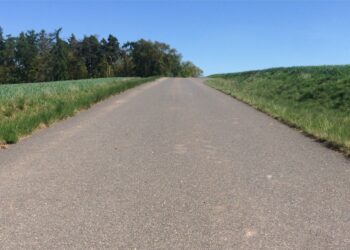
“According to condition monitoring by pavement experts in 2025, the laid pavement was technically in good condition, without thermal cracking or permanent deformation, even with the passage of heavy agricultural vehicles,” says Iterchimica.
The local access road where the 50% RAP mix was laid is in Siřem, Blšany, near Road 2218 in the Czech Republic. The mix was an AC 11 mm mixture placed as a surface course with PEN 50/70 paving bitumen. The penetration value of the bitumen from the RAP was 25mm and it had a softening point of 60 °C. The Iterlene ACF 2000 Green rejuvenating agent was used at a dose of 4% by weight of the aged binder.
For mixes containing higher proportions of recycled asphalt planings (RAP), rejuvenating agents are needed to restore some of the properties of the aged binder in the RAP. The binder in RAP is more brittle than virgin bitumen which can lead to early cracking and failure of a pavement without rejuvenation. However, rejuvenating agents do not all act in the same way.
According to EN 12597:2024 – Bitumens and bituminous binders, rejuvenating agents can be classed as flux oils or rejuvenators. Whereas both flux oils and rejuvenators modify the physical properties of aged bitumen, rejuvenators also alter the chemical composition of the bitumen so that the effect is long term – rather than long enough to lay and compact the road. Iterchimica argues that rejuvenators, rather than oils, are needed for high-RAP content mixes to ensure the sort of durability achieved for the road in the Czech Republic.