
Options are being considered for the project to build a new bridge over the Delaware River in the US, linking New Jersey and Pennsylvania. Two options are being considered, having been proposed by the Pennsylvania Turnpike Commission and New Jersey Turnpike Authority.
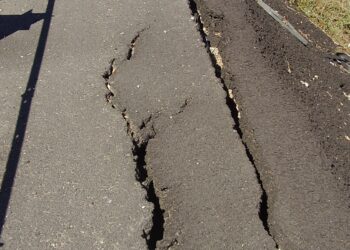
A new bridge is required as traffic volumes are increasing and the existing link is no longer able to cope with demand. With just two lanes in either direction, there is heavy congestion on the bridge at peak periods that can lead to long delays for drivers. Built around 70 years ago, the bridge is ageing rapidly and a crack in one of the approach trusses highlighted concerns over its structural condition.
Before an interchange with I-965 opened in 2018, the bridge was handling around 42,000 vehicles/day. It now has to cope with around 67,000 vehicles/day, with traffic volumes expected to grow to around 90,000 vehicles/day by 2050. Given the age of the bridge, the facts that it only has two lanes in either direction and is already struggling to cope with the vehicle traffic it has to carry, it is clear a replacement is required.
The new bridge will be a result of a joint project between the Pennsylvania Turnpike Commission and the New Jersey Turnpike Authority. A total of nine options have been considered, with two now being put forward for further review.
One proposal is for the construction of a bridge around 23m to the north of the existing structure over a four-year period. This design would feature three lanes of traffic in either direction, separated around 4.6m apart. Once complete, traffic would be rerouted onto the new structure, with the old bridge then being demolished and removed.
The other proposal is for the construction of a bridge 12m to the north of the existing link over an eight-year period. This would be built in two stages. The first half of the span would be built and when ready, it would carry four (narrow) lanes of traffic on a temporary basis. The old bridge would then be demolished and removed, with work then being carried out for the second parallel span. As with the other proposal, the final design would be for three traffic lanes in either direction.
Replacement of the existing bridge was first considered 30-years ago, with design proposals having originally been put forward in 2003. Plans then included upgrading the existing bridge but concerns over its structural condition now mean it will have to be demolished. As a result, the proposals and original environmental study will now have to be reviewed to meet the latest requirements.