TrafFix Devices showcased its latest compact crash cushion, the SLED mini-E, at the recent Intertraffic exhibition in Amsterdam.
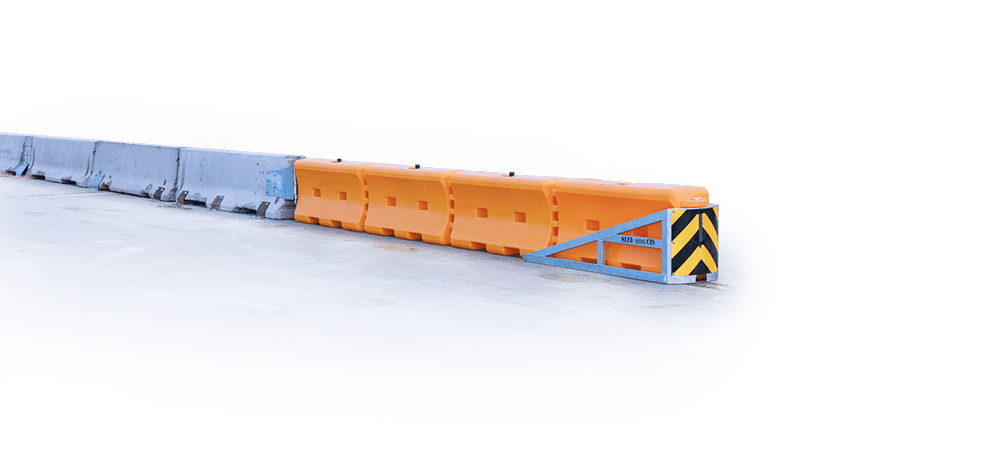
SLED mini-E is an EN1317-3-tested crash cushion engineered to protect workers and motorists in confined, lower-speed European work zones up to 80kph. It is designed as a narrow, gating, non-redirective system. The SLED mini-E shields the ends of rigid barriers while minimising debris, preventing vehicle vaulting and reducing the severity of impacts.
The TrafFix-developed SLED mini-E for work zones has passed testing to EN1317-3 with Impact Severity Level A at 80kph when connected to concrete or steel barriers. This supports compliance with European roadside-safety requirements.
With an overall width of around 584mm, the SLED mini-E offers a compact footprint for confined work zones and lower-speed applications where space is limited. The system’s effective length of 7.4m provides a tested length of protection in front of the rigid object being shielded, allowing designers to plan layouts accurately. An overall height of 825mm aligns with typical barrier and vehicle impact heights.
TrafFix said its SLED mini-E is designed for quick setup, helping contractors minimise worker exposure in active work zones. Because no foundation anchoring is required and the complete system is free-standing, crews can avoid drilling into pavement and benefit from faster deployment and removal on a variety of surfaces. When empty, the SLED mini-E weighs 45.35kg for efficient handling and, once filled, it reaches 485.35kg to provide the mass and stability needed to resist movement under impact.
At the heart of the SLED mini-E is the structural-steel Containment Impact Sled positioned at the front of the system. This manages debris and vehicle interaction during a frontal impact and helps protect work-zone personnel and motorists from secondary hazards. The system combines structural steel and plastic polyethylene components to balance strength, energy absorption and long-term durability.
The SLED mini-E employs plastic modules with three permanently molded-in wire rope cables for internal reinforcement and energy management, and modules connect with steel t-pins for a stable assembly and proper transition to concrete or steel barriers.