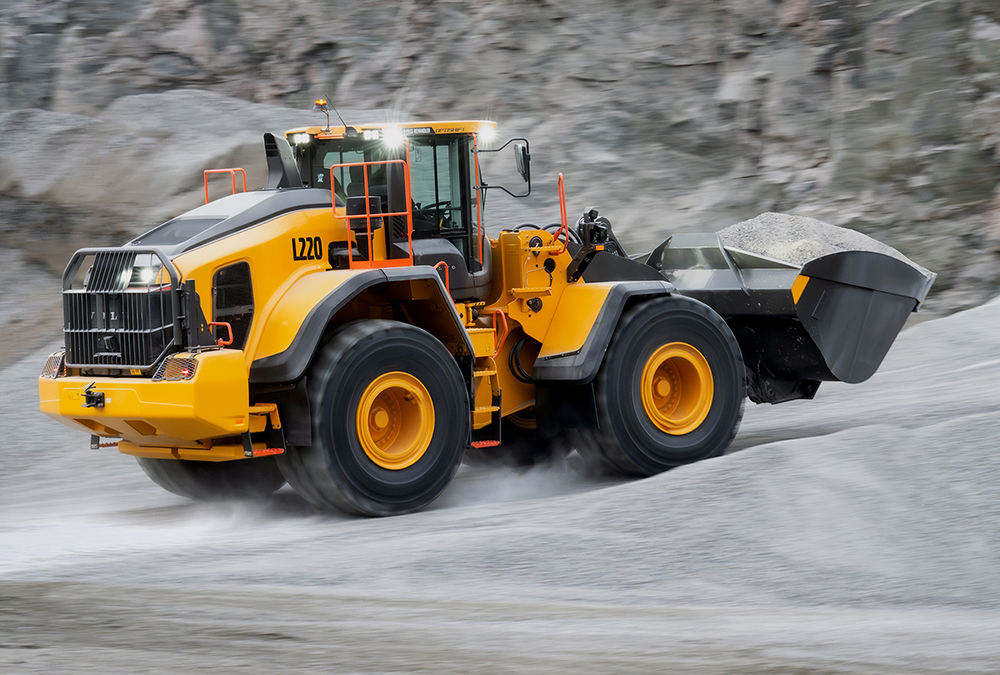
With global population growth and rapid urbanisation, the demand for construction – whether roads, housing, or infrastructure – is on the rise. However, Volvo CE understands the critical need to employ more sustainable ways of working to minimise the environmental impact of the construction industry. Approximately 90% of the sector’s climate impact comes from the operation of its machines, and this is exactly why this should be a key area of focus for sustainability efforts.
Embracing a multi-technology strategy
While battery-electric machines have a pivotal role to play, Volvo CE firmly believes that no single solution can decarbonise the industry. Different customers, markets, segments, and regions will require diverse solutions. Recognising this, Volvo CE has committed to a multi-technology approach that includes:
• battery-electric machines,
• grid-connected technologies,
• hybrid solutions,
• hydrogen fuel cells,
• internal combustion engines powered by renewable fuels, and more.
This strategy also recognises that customers are at varying stages in their sustainability journey, emphasising the importance of offering a variety of solutions to meet their specific needs and challenges.
Expanding battery-electric solutions
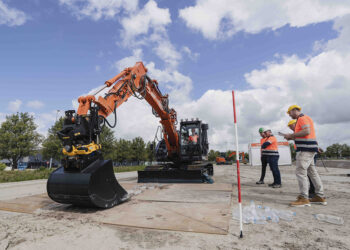
Since launching its first compact electric machines in 2019, Volvo CE has continued to lead the way with an ever-expanding range of electric machines. Today, this growing portfolio includes compact electric excavators and wheeled loaders, mid-size electric excavators, large electric wheeled loaders and an electric wheeled excavator.
Volvo CE has recently added its largest battery-electric machines to date: the A30 Electric and A40 Electric articulated haulers, the first of their size class in the world.
And to accelerate the transition to electric power, Volvo CE offers a variety of charging solutions, including mobile power units for reliable on-site energy access for both Volvo and non-Volvo equipment.
Battery-electric machines offer a readily available solution for customers looking to cut carbon emissions. In fact, many of Volvo CE’s electric machines are already being used successfully in a wide variety of applications – from urban construction and agriculture to indoor operations, large-scale building, demolition and industrial-machine handling – delivering zero-emission, quiet, efficient, and low-vibration performance for a safer working environment for operators and the public.
Grid-connected solutions eliminate downtime
For static, repetitive tasks such as material handling in the waste and recycling industry, grid-connected machines provide an ideal solution.
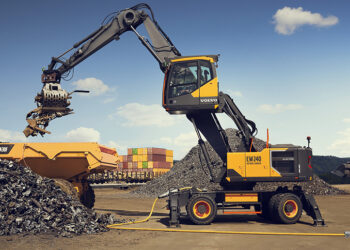
Machines like the EW240 Electric Material Handler connect directly to the grid via a cable, eliminating the downtime associated with refuelling or recharging and enabling continuous operation.
Like their battery-electric counterparts, grid-connected machines substantially lower noise, vibrations, and heat, while eliminating exhaust emissions. This can open the door for new business opportunities because they are perfect for noise-sensitive areas, both outdoor and indoor, low-carbon zones, and for operation during unsociable hours.
The continued role of internal combustion engines
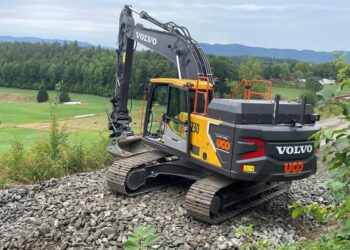
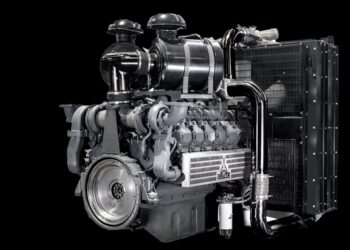
While Volvo CE envisions a future dominated by zero-emission technologies, internal combustion engines still have a role to play, especially in remote areas lacking grid access. Here, engines powered by renewable fuels like biodiesel and HVO (hydrogenated vegetable oils) are viable alternatives.
Volvo CE’s machines can operate on these biofuels with no modifications, proving a solution today that enables customers to significantly reduce their greenhouse gas emissions. Biofuels, derived from renewable sources like plants and waste, offer a lower carbon footprint compared to traditional fossil fuels.
With its largest product-portfolio overhaul in decades, Volvo CE has also improved the fuel efficiency of models like the new-generation Volvo excavators, which are up to 15% more fuel-efficient.
Hybrid models offer increased efficiency
Moreover, Volvo CE is expanding its portfolio of hybrid models, including the new-generation EC260 Hybrid and EC500 Hybrid excavators. These new models deliver up to 20% better fuel efficiency and a 15% reduction in CO2 emissions thanks to pioneering hydraulic hybrid technology that harnesses and stores energy generated by boom movement for reuse.
For greater efficiency across all solutions, Volvo CE’s machines utilise motion-energy recuperation and efficiency, for example when the operator is decelerating, helping to recover energy that can be re-used.
Exploring hydrogen fuel cells for heavy-duty applications
In scenarios demanding heavy-duty solutions, where batteries may not be the right power source due to the sheer number and weight needed to supply sufficient power, Volvo CE is exploring hydrogen fuel cell technology. Unlike batteries that store electricity, fuel cells make their own electricity onboard via an electrochemical process using stored hydrogen. While a promising complement to battery technology, advancing hydrogen infrastructure, particularly green hydrogen supply, will be key to harnessing its full potential.
The construction industry is undergoing transformative change. The journey is underway, but faster progress is needed. With its multi-technology strategy, Volvo CE is spearheading this transition, providing a diverse range of solutions to meet the demands of today, while preparing for the challenges of tomorrow, supporting customers at every step of their sustainability journey.