• About
  • Advertise
  • Contact
Thursday, July 16, 2026
Newsletter
Global Highways
  • News
  • Products
  • Features
  • Categories
    • Asphalt Milling, Paving & Compaction
    • Concrete Milling, Paving & Compaction
    • Connected Construction
    • Earthmoving & Soil Compaction
    • Engines, Components & Tyres
    • Finance & Funding
    • Highway & Network Management
    • Maintenance
    • Materials
    • Recycling
    • Road Markings, Barriers & Workzone Protection
    • Road Structures
  • Events
    • Events Calendar
    • CONEXPO-CON/AGG 2026
    • Intertraffic Amsterdam 2026
    • bauma 2025
  • Latest Magazine
  • Videos
No Results
View All Results
  • News
  • Products
  • Features
  • Categories
    • Asphalt Milling, Paving & Compaction
    • Concrete Milling, Paving & Compaction
    • Connected Construction
    • Earthmoving & Soil Compaction
    • Engines, Components & Tyres
    • Finance & Funding
    • Highway & Network Management
    • Maintenance
    • Materials
    • Recycling
    • Road Markings, Barriers & Workzone Protection
    • Road Structures
  • Events
    • Events Calendar
    • CONEXPO-CON/AGG 2026
    • Intertraffic Amsterdam 2026
    • bauma 2025
  • Latest Magazine
  • Videos
No Results
View All Results
Home News Future road safety progress may be slow

Future road safety progress may be slow

Future progress on road safety could be slower than hoped, according to the European Transport Safety Commission (ETSC). It warns that the high profile development of autonomous vehicles could restrain moves to improve road safety around the world. With road deaths killing up to 1.25 million people/year, lowering the casualty rate is seen as a priority. But a much sharper awareness of how to reduce the number of deaths and injuries is required.

by Sarah Biswell
March 9, 2018
in News
Reading Time: 3 mins read
A A

Future progress on road safety could be slower than hoped, according to the European Transport Safety Commission (ETSC). It warns that the high profile development of autonomous vehicles could restrain moves to improve road safety around the world. With road deaths killing up to 1.25 million people/year, lowering the casualty rate is seen as a priority. But a much sharper awareness of how to reduce the number of deaths and injuries is required.

Estimates suggest that by 2030, several million self-driving cars may be in use globally. However the ETSC cautions that there will be over 1 billion cars still in use without this sophisticated technology. According to the ETSC, many of those vehicles operating in 2030 will be ones rolling off the production lines during this year and the next few years. A major cause for concern is that both policymakers and auto manufacturers are focussing on the future benefits of autonomous driving and are ignoring many of the causes of road crashes. But these collisions that could be avoided through the use of existing, affordable technologies.

The ETSC points out that systems such as autonomous emergency braking (AEB), intelligent speed assistance (ISA) and lane keeping systems (LKS) could prove as effective in reducing road deaths as the seatbelt. But as with the seatbelt, the biggest safety gains will only be seen when all cars are fitted with AEB, ISA and LKS technology. Offering these systems either as optional extras or on premium models only will have limited benefit.

Although the EU has delayed action on improving the minimum safety standards of vehicles for almost a decade, a major new proposal is expected shortly. But there is a risk that EU member states will allow auto makers an easy ride. The manufacturers may argue that as full vehicle autonomy is just around the corner there is no need to require all new vehicles to feature these safety systems.

However the ETSC cautions that AEB, ISA and LKS technologies are essential tools in improving safety. Requiring these systems to be fitted now means that even as autonomous vehicles begin to proliferate, the existing vehicles in use will still feature key safety technology.

It is worth noting that many models available in developing nations are not equipped with many safety features as required in the developed markets of Europe or the US, such as airbags. As a result, there can be marked difference in the crash protection offered by the same models for different markets, with those available in the developing world offering far lower safety ratings. Manufacturers also tend to continue selling older generation models in developing markets because these are cheap to produce and require no development costs long after they have become defunct in Europe or the US.

The ETSC warns that pressure is needed now to ensure auto markets start fitting these proven safety technologies. And it is clear that these systems should not just be fitted to vehicles for developed markets such as the US and Europe, but for truly global sales. Focussing on autonomous vehicles as the way to reduce road deaths does not provide a quick answer to casualty reduction. And the ETSC warns that with many obstacles in the way to the development and deployment of autonomous vehicles, it makes sense to require auto makers to utilise proven safety technology now.

Promoted Content Header
European Transport Safety Commission VIEW COMPANY
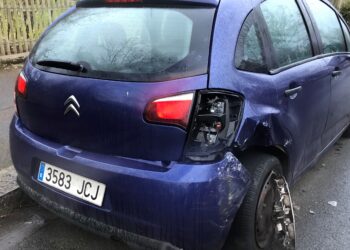
Data recorders could help with effective crash analysis, but rules will have to be amended to allow this - image © courtesy of Mike Woof
News

Road safety concern for Europe highlighted

March 8, 2022
News

Europe’s roads are safer, but concerns continue

July 16, 2019
News

Europe’s drive for safer roads sets new targets

January 10, 2019

Related Posts

A new highway link connects Basrah in Iraq with Faw Port – (image: Dynamoland/Dreamstime.com)

Key Iraq highway link complete

by Mike Woof
July 15, 2026

A key stage of the $17 billion road link between Iraq and Turkey is complete

A new stretch of road in the Czech Republic will improve traffic flow around the capital Prague – (image: Micka/Dreamstime.com)

23 bridges for Czech highway project

by MJ woof
July 14, 2026

A new highway in the Czech Republic is benefiting from the construction of 23 bridges

Subsidence stemming from climate change presents a major risk to key infrastructure – (image: Prime Global Publishing)

Subsidence from climate change threatens key infrastructure

by Mike Woof
July 14, 2026

Climate change is causing subsidence and threatening key infrastructure

Join our newsletter

The mission of Global Highways is to cover the latest technologies and best practices in all areas of road, bridge and tunnel construction and maintenance, as well as their safe operation and management.

Subscribe to our newsletter

About Us

  • About Us
  • Advertise
  • Contact
  • Terms & Conditions
  • Privacy Collection Notice
  • Privacy Policy

Popular Topics

  • News
  • Features
  • Products
  • Videos
  • Events
  • CONEXPO-CON/AGG 2026
  • Intertraffic Amsterdam 2026
  • bauma 2025

© 2026 All Rights Reserved. All content published on this site is the property of Prime Creative Media. Unauthorised reproduction is prohibited

No Results
View All Results
NEWSLETTER
  • News
  • Products
  • Features
  • Categories
    • Asphalt Milling, Paving & Compaction
    • Concrete Milling, Paving & Compaction
    • Connected Construction
    • Earthmoving & Soil Compaction
    • Engines, Components & Tyres
    • Finance & Funding
    • Highway & Network Management
    • Maintenance
    • Materials
    • Recycling
    • Road Markings, Barriers & Workzone Protection
    • Road Structures
  • Events
    • Events Calendar
    • CONEXPO-CON/AGG
    • Intertraffic Amsterdam 2026
    • bauma 2022
  • Latest Magazine
  • Videos
  • About
  • Advertise
  • Contact

© 2026 All Rights Reserved. All content published on this site is the property of Prime Creative Media. Unauthorised reproduction is prohibited