
The need for decarbonisation continues to grow and manufacturers around the world are focused on creating future-ready power technologies. In construction, potential zero-emission solutions include battery-electric drivetrains and hydrogen fuel cells. But these technologies don’t come without their own unique challenges in application, largely around varying levels of available infrastructure and costs.
Against this context, Cummins and other manufacturers have seen a continued demand for engines grow globally across different construction markets.
In many ways, this is unsurprising. Internal combustion engines continue to play a critical role in construction around the world, with many original equipment manufacturers (OEMs) and end users still depending on engine power to deliver projects. However, these are not the same old diesel engines that have been running for the last 100 years.
To understand why engines are so popular, it is important to consider how combustion technology has evolved and continues to do so, to become more efficient in its current generation than ever before and with abilities to utilise alternative fuels. It is also important to appreciate the legislative requirements for those within the construction industry.
Powering towards an energy transition
As we can see from the evolving CARB Tier 5 standards in the United States and EU Stage V legislation in Europe, ambitious targets are being set to reduce emissions like nitrogen oxides (NOx) and particulate matter (PM). These regulations require OEMs to cut engine emissions within defined timeframes, and can require changes across entire fleets.
In sectors like construction, where heavy-duty vehicles are an essential part of day-to-day operations, these regulatory pressures are aimed at driving OEMs toward alternative fuel solutions. So, why isn’t the industry simply transitioning to battery-electric or hydrogen fuel cell solutions?
While battery-electric and hydrogen fuel cell technologies are an option for decarbonising OEM vehicles, there are several factors adversely impacting this transition.
The need for fuel flexibility and operational continuity, especially in industries such as heavy-duty transport and construction, isn’t yet fully practical. Construction sectors often operate in remote environments, where charging or refuelling options for zero-emission vehicles are challenging.
Additionally, current infrastructure limitations, such as battery range, payload constraints, refuelling times and the different types of vehicles in a fleet, mean that a one-size-fits-all solution is difficult to find.
Next-generation advanced diesel
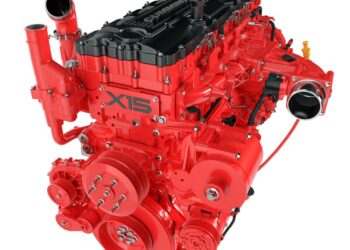
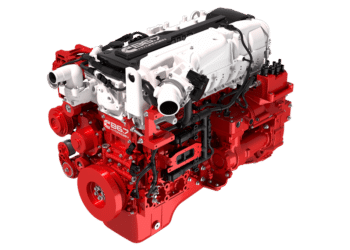
Developments in diesel engine technologies are already making their mark internationally. To see evidence of this, we can look at the performance of Cummins’ latest X15 and assess what these mean in practice. The Cummins X15 has 20+ ratings that range from 400-700 hp (298-522 kW) and peak torque up to 2360 lb.-ft. (3200 Nm), all achieved in a smaller housing and with 10% better fuel economy than previous generations.
The X15’s fuel injection delivers precision and combustion control at ultra-high pressures, which in tandem with the newly optimised HE550 Wastegate turbocharger creates a dependable transient response and increased altitude capabilities for vehicles.
With a maintenance-free breather and no exhaust-gas recirculation system, OEMs can expect up to 1000-hour service intervals from the X15, which means less overall maintenance costs being required. Coupled with a better design, whereby its fuel filter and oil drain now both share the same replacement interval, common service items can occur simultaneously, which results in less downtime and improved maintenance planning for fleets.
Capabilities to support remote monitoring and diagnostics also reduce maintenance downtime, with over-the-air (OTA) software updates helping to maintain engine health in a cost-effective way.
In summary, the argument for contemporary diesel engine technology is a compelling one for construction OEMs: here is a dependable power solution, that can operate in any application around the world, with performance and fuel-economy benefits that end users demand.
From an emissions perspective, these latest generation products are also compliant with European Stage V standards and with better fuel economy comes an accompanying emissions reduction. Looking ahead, how then can combustion technology continue to develop further and generate greater emissions savings?
Taking the HELM™
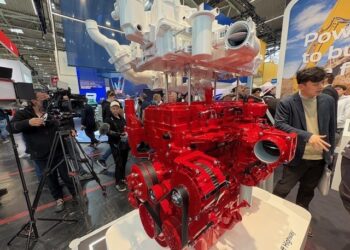
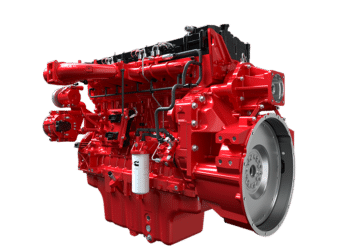
A key advancement in combustion technology can be seen in the development of fuel-agnostic engine platforms. These platforms, such as the Cummins HELM™ series, are designed to run on a range of fuels; including diesel, HVO/biodiesel, natural gas and hydrogen.
These engines share a common base engine design and require only minor adjustments on the assembly line to be tweaked for use with different fuels. The Cummins HELM™ and other fuel-agnostic engine platforms offer a familiar technology and viable solution for OEMs to facilitate an energy transition, without the need for radical vehicle redesign or large order commitments.
Taking the Cummins B6.7H as example, this engine delivers up to 290hp (216 kW) with a 1200 Nm peak torque using the same transmission, cooling and hydraulic systems as today’s modern diesel engines, but utilising hydrogen as fuel. The B6.7H shares a huge amount of commonality with diesel engine equivalents, reducing install complexity for OEMs, but with hugely significant emissions savings.
Even when not used for hydrogen, this fuel-agnostic range can generate benefits. Using HVO as fuel, obtained by processing lipids such as vegetable oil, tallow, or used cooking oil, can deliver significant reductions in greenhouse gas emissions compared to diesel ‘from well-to-wheel’. Contemporary engine aftertreatment can also ensure Stage V compliance and air-quality improvements compared to previous diesel generations.
Cummins believes fuel-agnostic combustion engines have great potential as part of the global energy transition. In support of that, the manufacturer is committing to develop its B, L and X engine platforms to be compatible with a variety of current, and future, low- and zero-carbon fuels.
Fuel-agnostic approach to power
The fuel-agnostic approach taken in the HELM™ platform reflects a wider belief across Cummins about the future of power solutions. This belief is that a fuel-agnostic, tech-neutral approach is required for an effective energy transition across all global industries.
There is no single solution that can decarbonise every application around the world. Instead, what we need is a diverse portfolio of available solutions that can facilitate different demands and different stages of energy transition.
Within the construction sector, we see this philosophy manifest in the types of applications that are adopting new technologies sooner than others.
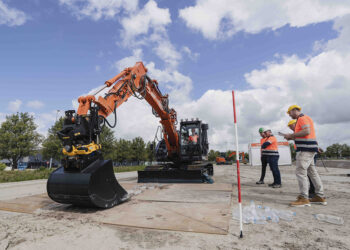
It’s clear that modern battery-electric solutions can be suitable for inner-city mini-excavator applications, but this same technology might not yet be suitable for heavy-duty applications – with heavier duty cycles and less access to regular charging infrastructure.
Likewise, hydrogen fuel cells provide high power density and zero emissions, but require very stable operating conditions to work most effectively, as well as suitable supply chains domestically in countries of operation to fully benefit from sustainable fuel production – therefore vehicles operating in dusty, bumpy and isolated operating conditions might struggle today in application.
These technologies will improve over time the more they are used, and so too will the associated costs and accessibility. Combustion engines can play their part in this transition too whilst powering essential industries. For example, hydrogen combustion engines provide diesel-like performance and the more these engines are used, the more available hydrogen fuel will become at a more affordable price – this benefits both hydrogen combustion engines and fuel cell uptake across the industry in the long term, as barriers to entry are reduced.