A recent report by Ground Engineering magazine said a spokesperson for the client Femern A/S, a subsidiary of Sund & Bælt, said the vessels arrived on site late which pushed back the testing schedule. Completion is set for some time in 2029 and Femern estimates that eventually more than 100 trains and 12,000 cars will use it daily.
The 18km-long immersed Fehmarnbelt Tunnel project in the North Sea will connect the Danish island of Lolland and the German island of Fehmarn. The first precast concrete elements – tunnel sections that are being precast on site – were finished in June last year. The ships – “highly complex custom-built vessels” – that will tow them out to sea require much testing to ensure they are safe to operate, according to the spokesperson.
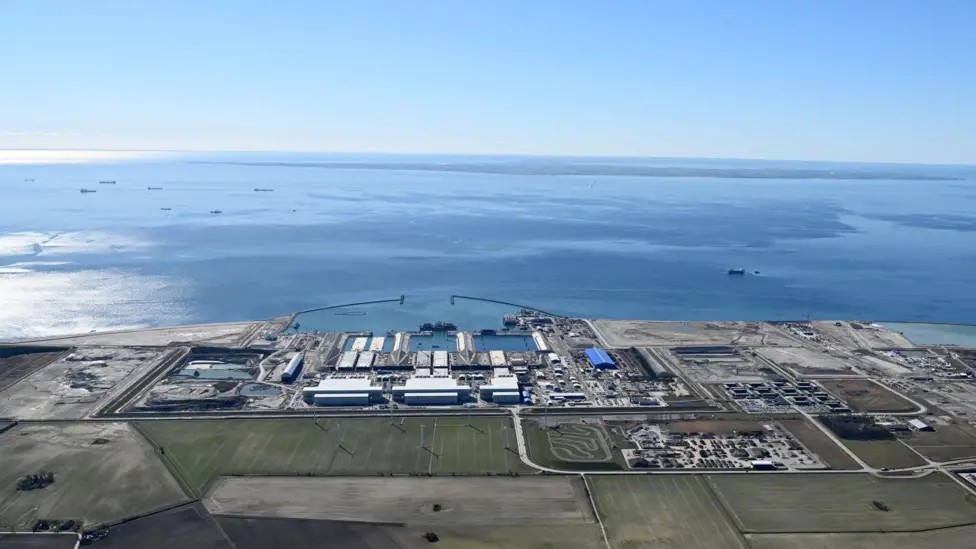
The tunnel will have two electrified rail tracks and four lanes for vehicles. The finished tunnel will comprise 79 large 217m-long tunnel elements and 10 special 24m-long concrete elements, all built at the facility at Rødbyhavn – the largest construction site in northern Europe – on the Danish island of Lolland. A 217m-long element – composed of nine segments 24m long – weighs 73,500 tonnes.
Work at sea began in June 2020 which included dredging a trench along the seabed. According to the Femern website, the contractor will use a number of purpose-built vessels for the immersion of the tunnel elements in the tunnel trench. These vessels are in the process of testing the equipment prior to the first immersion.
The multi-purpose pontoon Maya will lay out an even gravel bed upon which the tunnel elements will be placed. Immersion pontoons Ivy 1 and Ivy 2, are designed to support the tunnel elements during their journey from the work harbour to the tunnel trench. They will also immerse the elements into the tunnel trench.
Meanwhile, spreader pontoon NP460 will put stones and gravel along the sides of the tunnel element to lock it into position. Finally, protection layer pontoon Wismar will lay out a protective layer of stone on top of the element.
Femern A/S, a subsidiary of the Danish state-owned transport management firm Sund & Bælt, is overseeing the megaproject. Tunnel design and construction is by the consortium Femern Link Contractors (FLC), consisting of Vinci, Aarsleff, Wayss & Freytag, Max Bögl, CFE, Solétanche Bachy, Bam Infra, Bam International and Dredging International.