• About
  • Advertise
  • Contact
Friday, July 17, 2026
Newsletter
Global Highways
  • News
  • Products
  • Features
  • Categories
    • Asphalt Milling, Paving & Compaction
    • Concrete Milling, Paving & Compaction
    • Connected Construction
    • Earthmoving & Soil Compaction
    • Engines, Components & Tyres
    • Finance & Funding
    • Highway & Network Management
    • Maintenance
    • Materials
    • Recycling
    • Road Markings, Barriers & Workzone Protection
    • Road Structures
  • Events
    • Events Calendar
    • CONEXPO-CON/AGG 2026
    • Intertraffic Amsterdam 2026
    • bauma 2025
  • Latest Magazine
  • Videos
No Results
View All Results
  • News
  • Products
  • Features
  • Categories
    • Asphalt Milling, Paving & Compaction
    • Concrete Milling, Paving & Compaction
    • Connected Construction
    • Earthmoving & Soil Compaction
    • Engines, Components & Tyres
    • Finance & Funding
    • Highway & Network Management
    • Maintenance
    • Materials
    • Recycling
    • Road Markings, Barriers & Workzone Protection
    • Road Structures
  • Events
    • Events Calendar
    • CONEXPO-CON/AGG 2026
    • Intertraffic Amsterdam 2026
    • bauma 2025
  • Latest Magazine
  • Videos
No Results
View All Results
Home News Decarbonising off-highway machines in Europe

Decarbonising off-highway machines in Europe

CECE and CEMA are issuing a joint statement on decarbonising off-highway machines in Europe.

by Mike Woof
June 5, 2025
in News
Reading Time: 3 mins read
A A
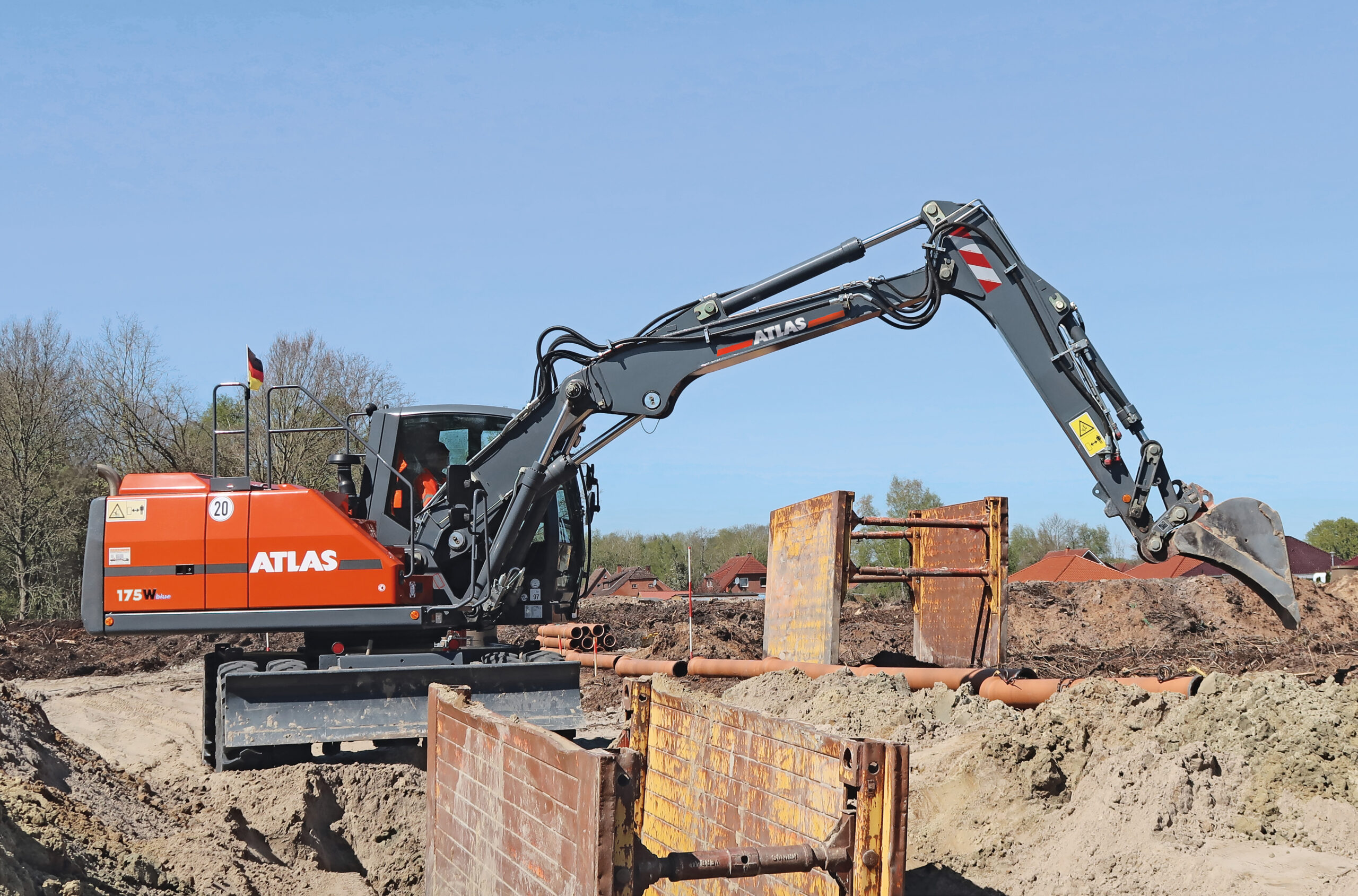
Off-highway machines operate in complex environments and decarbonising operations poses challenges

Off-highway machines operate in complex environments and decarbonising operations poses challenges

The industry bodies CECE and CEMA are releasing a joint statement on the role of construction and agricultural machinery in decarbonising Europe.CECE is the association for construction machinery manufacturers in Europe, while CEMA has that role for makers of agricultural machines.

The two bodies say that construction and agriculture are key European industries that rely on machinery from roads to hospitals and to provide food for the population. The evolution of that machinery and the way in which it is used will consequently contribute to decarbonising Europe, but there is no single technical solution that will be effective in all cases. On the contrary, when developing policy, it is essential to follow the principle of technology neutrality and consider the unique characteristics of the construction and agricultural sectors. For construction and agricultural machinery manufacturers the key for success in decarbonisation is a stable, long-term, globally aligned framework that enables continued evolution of machinery and the way in which it is used to fulfil the needs of end-users.

Construction and agricultural machinery operate in a more complex environments than the automotive sector, necessitating a distinct approach. Unlike automotive, which primarily focusses on transporting passengers and goods along existing infrastructure, machinery perform diverse, constantly changing operations, often in harsh environments without a convenient energy infrastructure.

In the case of the automotive sector, the Draghi report highlighted that, to the detriment of competitiveness, the technological neutrality principle – a guiding principle of the EU legislation – has not always been applied. The EU Competitiveness Compass subsequently confirmed the need to include a broader range of technologies than simply focusing on electrification. This is even more important for construction and agricultural machinery. Technology neutrality in relation to the off-road machinery industry requires a broader perspective. This involves going beyond tailpipe emissions to include an assessment of the balance between captured and emitted CO₂, particularly in relation to renewable fuels, the so called ‘Well to Wheel’ principle. Various alternative technical solutions exist, each with unique benefits and challenges. Furthermore, the emissions resulting from machinery are comparatively low in relation to those of the finished goods whose production they enable and should therefore be evaluated within a broader context.

End-users in agriculture and construction are professional business customers who are already incentivised through the existing legislation. Policies such as emission ETS2 (emission trading system), CSRD (corporate sustainability reporting), and ETD (energy taxation directive) already lead end-users away from fossil fuels. However, they face significant challenges to reduce CO2 related to costs, logistics, and infrastructure.

Machinery manufacturers act as technology providers, enabling end-users to identify and apply the most suitable solutions for their specific needs. Various technical options already exist, including market-ready machines running on alternative fuels. Decarbonising remains challenging, with limited short-term electrification options.

Categories: Engines, Components & Tyres
Promoted Content Header
CECE VIEW COMPANY
Demand was healthy for Italian construction machinery exports in 2025, while the upcoming SaMoTer 2026 event in verona will attracted high exhibitor and visitor numbers as in previous years – image courtesy of Mike Woof
News

Italian construction machinery exports steady at €3.2 billion

April 6, 2026
Regulations are being developed for off-road construction machines in Europe
News

New technical requirements for off-road machines

January 1, 2025
Speakers at the CECE 2024 Congress in Madrid
News

Outlook from CECE 2024 congress

October 24, 2024
Paving, the Italian way (image © Irina Ukrainets/Dreamstime)
News

Paving Show set for Verona ahead of SaMoTer

August 8, 2024

Related Posts

Sustainable road construction from Heidelberg Materials for North Yorkshire

Low carbon road repairs in North Yorkshire

by Mike Woof
July 17, 2026

Innovative road materials from Heidelberg Materials help improve roads in the UK.

A TBM will drive a new tunnel under the the River Thames from Tilbury

Biggest Herrenknecht TBM for £11 billion UK project

by MJ woof
July 16, 2026

The UK's £11 billion Lower Thames Crossing project will use a 5,000tonne TBM supplied by Herrenknecht, the largest of its...

Cape Fear in North Carolina needs a new bridge

$1.1 billion for Cape Fear Bridge replacement

by Mike Woof
July 16, 2026

A new bridge is being planned for Cape Fear in North Carolina.

Join our newsletter

The mission of Global Highways is to cover the latest technologies and best practices in all areas of road, bridge and tunnel construction and maintenance, as well as their safe operation and management.

Subscribe to our newsletter

About Us

  • About Us
  • Advertise
  • Contact
  • Terms & Conditions
  • Privacy Collection Notice
  • Privacy Policy

Popular Topics

  • News
  • Features
  • Products
  • Videos
  • Events
  • CONEXPO-CON/AGG 2026
  • Intertraffic Amsterdam 2026
  • bauma 2025

© 2026 All Rights Reserved. All content published on this site is the property of Prime Creative Media. Unauthorised reproduction is prohibited

No Results
View All Results
NEWSLETTER
  • News
  • Products
  • Features
  • Categories
    • Asphalt Milling, Paving & Compaction
    • Concrete Milling, Paving & Compaction
    • Connected Construction
    • Earthmoving & Soil Compaction
    • Engines, Components & Tyres
    • Finance & Funding
    • Highway & Network Management
    • Maintenance
    • Materials
    • Recycling
    • Road Markings, Barriers & Workzone Protection
    • Road Structures
  • Events
    • Events Calendar
    • CONEXPO-CON/AGG
    • Intertraffic Amsterdam 2026
    • bauma 2022
  • Latest Magazine
  • Videos
  • About
  • Advertise
  • Contact

© 2026 All Rights Reserved. All content published on this site is the property of Prime Creative Media. Unauthorised reproduction is prohibited