• About
  • Advertise
  • Contact
Thursday, July 16, 2026
Newsletter
Global Highways
  • News
  • Products
  • Features
  • Categories
    • Asphalt Milling, Paving & Compaction
    • Concrete Milling, Paving & Compaction
    • Connected Construction
    • Earthmoving & Soil Compaction
    • Engines, Components & Tyres
    • Finance & Funding
    • Highway & Network Management
    • Maintenance
    • Materials
    • Recycling
    • Road Markings, Barriers & Workzone Protection
    • Road Structures
  • Events
    • Events Calendar
    • CONEXPO-CON/AGG 2026
    • Intertraffic Amsterdam 2026
    • bauma 2025
  • Latest Magazine
  • Videos
No Results
View All Results
  • News
  • Products
  • Features
  • Categories
    • Asphalt Milling, Paving & Compaction
    • Concrete Milling, Paving & Compaction
    • Connected Construction
    • Earthmoving & Soil Compaction
    • Engines, Components & Tyres
    • Finance & Funding
    • Highway & Network Management
    • Maintenance
    • Materials
    • Recycling
    • Road Markings, Barriers & Workzone Protection
    • Road Structures
  • Events
    • Events Calendar
    • CONEXPO-CON/AGG 2026
    • Intertraffic Amsterdam 2026
    • bauma 2025
  • Latest Magazine
  • Videos
No Results
View All Results
Home Features Data and best practices on Africa’s response to impacts of COVID-19 on transport

Data and best practices on Africa’s response to impacts of COVID-19 on transport

The final results of the HVT-funded project on the impact of the COVID-19 response on transport and mobility in seven countries in Africa were presented on 27th May at a webinar hosted by the IRF and the Global Alliance of NGOs for Road Safety.

by Sarah Biswell
August 23, 2021
in Features
Reading Time: 3 mins read
A A
IRF HVT Webinar

The report addresses the COVID-19 measures implemented in the focus countries, providing background and insights into the transport-related restrictions such as those affecting international travel, public transport, and urban and inter-urban travel restrictions. The report assesses the impact of these measures on transport. It specifically looks at the impact on individual mobility to various locations such as public transport stations, workplaces, and residential areas, prior to providing insights into the detailed qualitative findings derived from interviews and focus group discussions. Lastly, detailed case studies for all seven countries are put forward, prior to key findings and recommendations being presented.

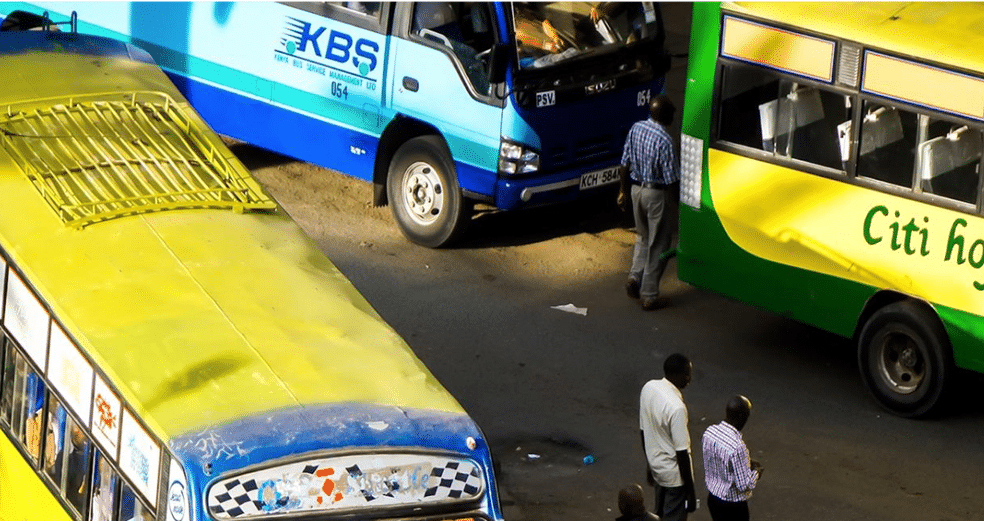
In response to the COVID-19 pandemic, governments in the seven focus countries applied a wide range of measures. These have spanned from restrictions on public gatherings, curfews, closures of establishments such as restaurants, as well as to significant restrictions on international and national travel and transport more generally. Once the first cases were confirmed, all countries eventually imposed the highest level of restrictions for international travel, meaning that international incoming and outgoing flights were banned, and borders were closed. However, the longevity of these measures varied significantly, as well as how countries chose to continue operating thereafter. Importantly, the severity of the restrictions did not always coincide with the rate of virus spread within the countries. Many countries reopened their borders despite rising case numbers for fear of the severe negative impacts on their economy.
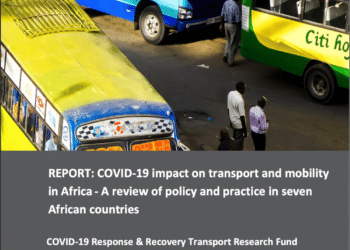
IRF HVT Webinar

Comparing mobility behaviour across all countries and locations between the first and second COVID-19 waves (wave one being defined as March to June 2020; wave two as September to December 2020) it can be observed that the reduction of mobility was generally much larger during the first wave than during the second.

The report findings constitute the emergent best practices, aggregated and based on the data collected and analysed using both top-down and bottom-up approaches to policy formulation, implementation process and community behaviour in the seven countries. The report findings centre around the importance of:

  1. Creating a national taskforce with regular consultations and follow-up meetings to allow time-sensitive and extensive collaboration among the various actors;
  2. Integrating representatives of the informal transportation sector;
  3. Fostering dialogue and harmonising cross-border SOPs, such as for testing strategies at land borders, which can mitigate the complications for cross-border traffic;
  4. Enforcing and implementing a thorough M&E process at all levels;
  5. Improving coordination within the transport sector;
  6. Encouraging a more rapid and effective development of user-friendly and safe transport infrastructure environments;
  7. Implementing stable pricing policies to maintain public transport affordable.

The report concludes by drawing out four key policy recommendations for transport stakeholders that can provide a way forward during the “new normal”. ■

• Access the report and recordings of the webinar on: www.irfnet.ch

Promoted Content Header
IRF (Geneva, Switzerland) VIEW COMPANY
IRF president Mandalozis (on screen, top right) speaks at a UN session (image courtesy IRF)
News

Digitalisation essential for road resilience, says IRF

February 24, 2026
The expected 30,000 attendees from over 140 countries this year will discover innovations and solutions from more than 900 exhibiting companies (image courtesy of Intertraffic)
News

Global Highways: ‘Infra Stage’ at Intertraffic Amsterdam

January 21, 2026
Features

The IRF 2025 Awards reveal change-making projects

September 2, 2025
RF acting director general, Gonzalo Alcaraz, met with ITF secretary-general Young Tae Kim on the final day of this year’s Summit to advance the collaboration
Features

The IRF joined global transport leaders at the ITF 2025 Summit

July 21, 2025

Related Posts

One of the tasks involved flipping bottles up from the ground (Image: Hitachi Construction Machinery Europe/HCME)

Europe’s best operators get ready for the LANDCROS Operator Challenge Final

by Sarah Biswell
July 10, 2026

More than 90 of Europe's most skilled excavator operators have showcased their skills in recent months by taking part in...

Road repairs work

The importance of road maintenance

by Staff Writer
July 10, 2026

Gülay Malkoc discusses the importance of investing in road maintenance.

The new 24litre engine from DEUTZ is designed for high-load genset applications - (image: Deutz)

High power generation from Deutz

by Mike Woof
July 8, 2026

Deutz is offering a rugged new engine to suit challenging power generation installations

Join our newsletter

The mission of Global Highways is to cover the latest technologies and best practices in all areas of road, bridge and tunnel construction and maintenance, as well as their safe operation and management.

Subscribe to our newsletter

About Us

  • About Us
  • Advertise
  • Contact
  • Terms & Conditions
  • Privacy Collection Notice
  • Privacy Policy

Popular Topics

  • News
  • Features
  • Products
  • Videos
  • Events
  • CONEXPO-CON/AGG 2026
  • Intertraffic Amsterdam 2026
  • bauma 2025

© 2026 All Rights Reserved. All content published on this site is the property of Prime Creative Media. Unauthorised reproduction is prohibited

No Results
View All Results
NEWSLETTER
  • News
  • Products
  • Features
  • Categories
    • Asphalt Milling, Paving & Compaction
    • Concrete Milling, Paving & Compaction
    • Connected Construction
    • Earthmoving & Soil Compaction
    • Engines, Components & Tyres
    • Finance & Funding
    • Highway & Network Management
    • Maintenance
    • Materials
    • Recycling
    • Road Markings, Barriers & Workzone Protection
    • Road Structures
  • Events
    • Events Calendar
    • CONEXPO-CON/AGG
    • Intertraffic Amsterdam 2026
    • bauma 2022
  • Latest Magazine
  • Videos
  • About
  • Advertise
  • Contact

© 2026 All Rights Reserved. All content published on this site is the property of Prime Creative Media. Unauthorised reproduction is prohibited