
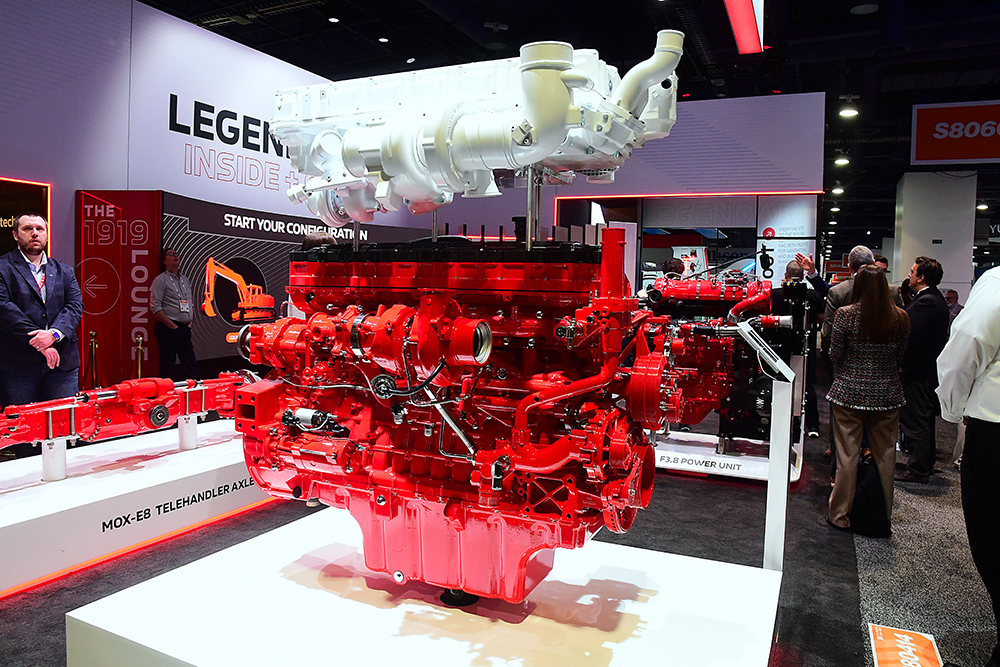
HELM Platforms – higher efficiency, lower emissions and multiple fuels – are Cummins engines designed to help its customers reach their sustainability goals while getting the job done on site.
HELM is a critical part of Cummins’ broader ‘Destination Zero’ strategy that states the company wants to achieve net-zero emissions across company facilities and operations, as well as deliver low-carbon and zero-emissions technologies across all markets the company serves, by 2050. The company’s recently launched 15L hydrogen ICE and 15L natural gas engines are just one more example of how Cummins intends to achieve ‘Destination Zero’.
In particular, the X15 series Cummins HELM line-up will include a natural gas, advanced diesel and hydrogen engine. Hydrogen engines share many similar components to diesel engines, making them an efficient, familiar, and scalable alternative to traditional engines.
Hydrogen engines release nearly zero trace amounts of carbon dioxide, and fuel-cell electric vehicles produce no emissions other than water vapour. Unlike electric vehicles, which are off the road for extended times to charge, hydrogen engines offer quick refuelling times and diesel-like performance, durability and reliability.
Because hydrogen-fuelled engines are similar in design to diesel, Cummins has designed an attachment that sits atop the diesel engine that converts the engine to burning hydrogen. But this is still in the future, when the market for hydrogen engines begins to pick up again after its current slump, according to the company.
Stand S-80414