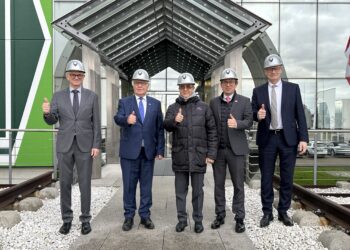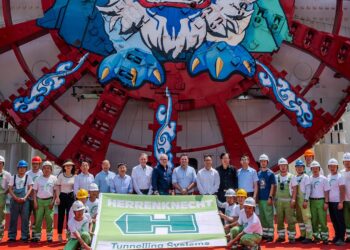
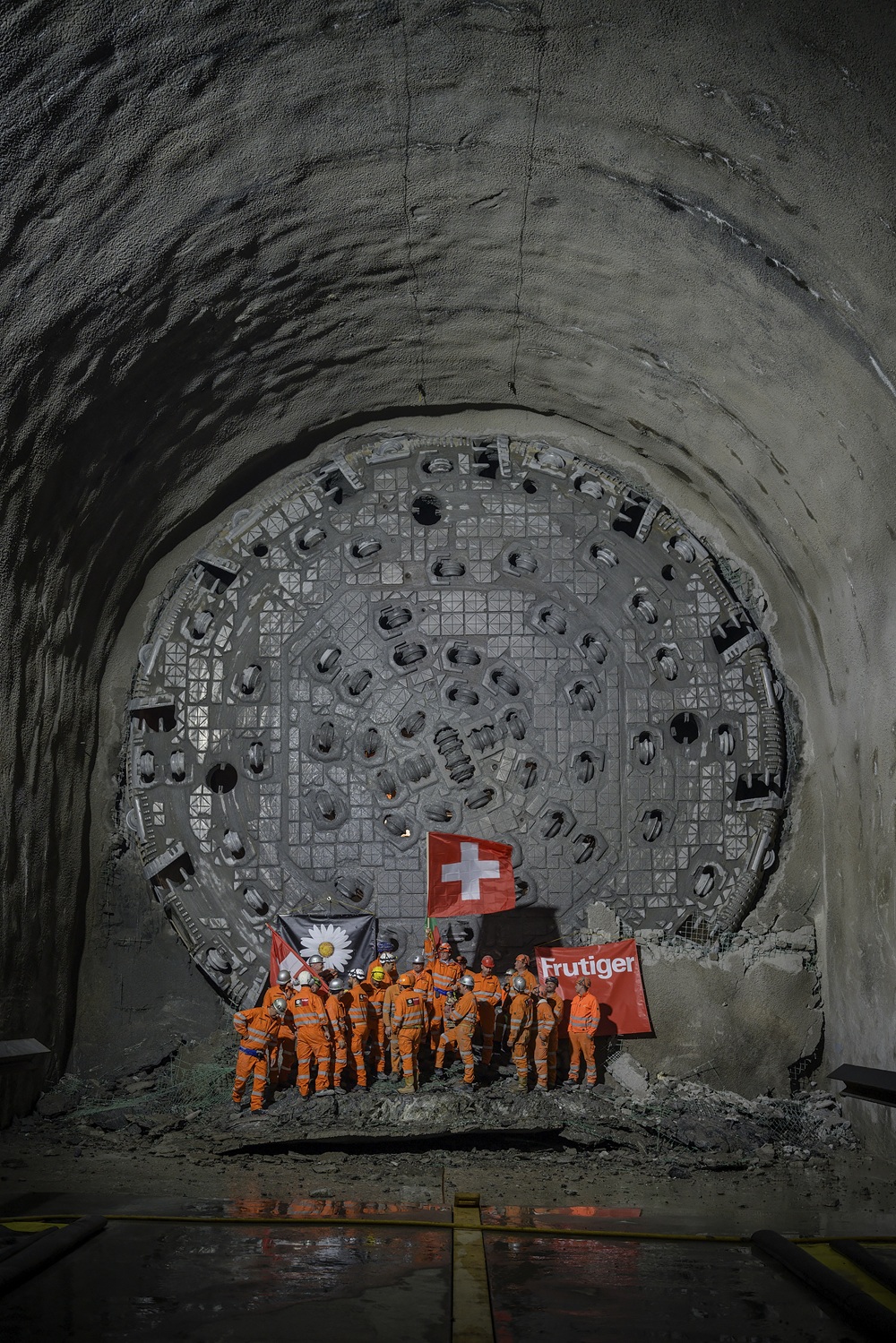
The construction crew working on the new Gotthard road tunnel bore has achieved breakthrough for the first stage of the drive, into an area excavated previously. Using a TBM from German firm Herrenknecht, the workers have so far driven a 3.8km bore through challenging geological conditions. In places the rock has been extremely hard with zones featuring quartz or granite and in other stretches, it has been very brittle.
The TBM broke through into a section of the northern fault zone that had been prepared earlier. This 400m stretch had been excavated using conventional methods as the rock conditions were not suitable for the TBM to operate efficiently. Maintenance work will be carried out for the 100m-long TBM before it is moved inside the tunnel to begin the next drive. The crew will then use the TBM to drive a further 4km under the Alps.
Work to drive the second tube of the Gotthard Tunnel commenced in February 2025, in Göschenen in the Swiss canton of Uri. The second bore runs parallel to the original link, which opened to traffic in 1980. Once the new bore is ready for traffic, the original bore will be closed for maintenance and upgrade work.
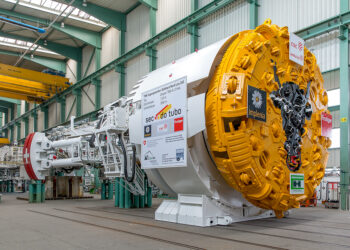
The TBM being used for the project, named Alessandra, features a shield diameter of 12.25m and features 15 motors delivering a total power output of 5,250kW and a torque of 26,767kNm. The single shield machine features hydraulic thrust cylinders that press the rotating cutterhead against the rock face with a force of up to 95,000kN.
Progress has been good using the TBM and is expected to remain so for the second stage of the drive. “Up to 32m/day – that’s a remarkable achievement by the tunneling crews in the extremely hard Gotthard rock.” Dr-Ing EH Martin Herrenknecht, CEO of Herrenknecht AG commented.
The new tube is needed due to the growth in traffic since the original bore was built. Around 16,000 vehicle/days pass through the 16.9km Gotthard road tunnel. It is a key link for European north-south traffic through the Alps. It runs between Göschenen in the Swiss canton of Uri and Airolo in the canton of Ticino. The project has been prepared well in advance by ASTRA, with the planning including the upgrade to the original bore and installing the latest safety and traffic control technology once the new tube is complete.