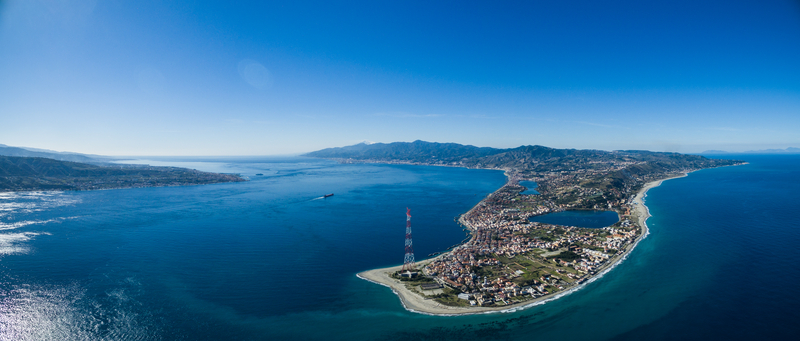
Official approval has been given in Italy for the massive Messina Strait bridge connecting Calabria with the island of Sicily. The approval was given by the CIPESS.
Pietro Salini, chief Executive of Webuild, said, “We are particularly proud to be part of the Bridge project – strongly promoted by the Ministry of Infrastructures and Transport and the Italian Government, and firmly supported by the concessionaire company Stretto di Messina– as leader of the general contractor, Eurolink, working together with the world’s best engineering talent and a vast and excellent Italian supply chain from the north to the south of the country.”
The bridge will feature the longest suspended span in the world, crossing the treacherous Messina Strait and providing a road and rail link that will boost the economies of Calabria and Sicily.Building the suspension bridge to span the Messina Strait could cost €13.5 billion according to estimates.
The bridge would have to contend with the severe earthquakes that affect the region as well as strong tidal effects and potentially tough weather conditions. It would also have to meet strict environmental requirements as it lies in a protected area due to its marine life.
Construction could take until 2032 to complete. The design features twin rail lines in the centre, with three lanes for road traffic in either direction. Facilities for cyclists and pedestrians will be included in the design. The towers will need to be 400m high, taller than the 310m of the Eiffel Tower, while the bridge will be 3.6km-long.
Salini said, “The Bridge will bring about a great infrastructure project spread out across many work sites contemporaneously. It will stimulate growth, employment and lawfulness across southern Italy. The project will be fitted with the most advanced technologies for safety and maintenance. It will also be built according to the highest international engineering standards.”
The bridge will be the major components in an integrated infrastructure system. This will include over 40km of new roads and rail lines, three underground train stations, around 10 viaducts and various tunnels, and an advanced control centre.
Bridging the Messina Strait has been suggested since Roman times, 2,000 years ago. Many proposals have been put forward over the millennia.