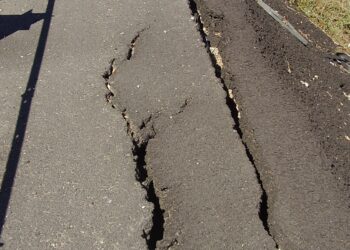

California’s iconic Golden Gate Bridge is to benefit from $1 billion worth of improvement works. The upgrade is required to ensure that the historic bridge is better able to cope with seismic events. Sitting on the San Andreas fault line California is known for its periodic earthquakes, which can be severe.
The iconic Golden Gate bridge opened to traffic in 1937 and has been seen as an emblem of the city of San Francisco and of US engineering excellence. Constructed to a high standard and heavily over-engineered, the bridge has coped well with the years, although it has benefited from regular maintenance and upgrades during its working life. The suspender ropes were replaced in the mid-1970s while the bridge deck was replaced in mid-1980s for example.
Planning for the new work to make the bridge better able to cope with major earthquakes has taken years to plan by the Golden Gate Bridge, Highway and Transportation District. Phase 1 and Phase 2 of the seismic retrofit work were carried out between 1997 and 2008. Phase 3A of the project was completed in 2014.
Phase 3BI of the seismic retrofit work is scheduled to commence in 2026 and will take 11 years to complete. The 1,965m deck and both 227m support towers will benefit from reinforcement. Steel reinforcement 12m-high and 50mm-thick will be fixed to the towers while a new steel lattice will be installed under the deck. Massive shock absorbers will also be installed to the bridge.
The work is being funded jointly by the California Department of Transportation, federal sources and the state. A $400 million grant is being provided by the US Department of Transportation via the Federal Highway Administration (FHWA).