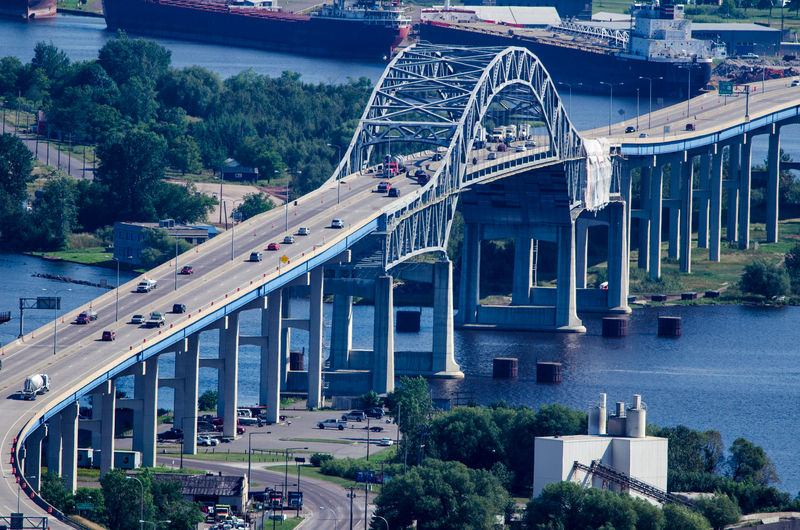
The US Department of Transportation is delivering over $1.05 billion to replace an ageing bridge linking Minnesota and Wisconsin. The Blatnik Bridge is now 65-years old and no longer meets transport requirements for this important transport route. The bridge carries I-535 across the St Louis Bay, linking Duluth, Minnesota, and Superior, Wisconsin and the important Twin Ports area.
The Blatnik Bridge carries around 33,000 vehicles/day on average, providing a vital transport link between the two sides of the Twin Ports area. The bridge is jointly owned and managed by the Minnesota Department of Transportation (MnDOT) and the Wisconsin Department of Transportation (WisDOT). It is Minnesota’s second longest bridge and was first opened to traffic in 1961 but there have been concerns over the structure in recent years. In early 2024, the two agencies were allotted more than $1 billion in federal funding to replace the ageing bridge, although this was then delayed.
Both states are contributing funding for the project and are keen for the replacement to go ahead, having worked together closely during the planning process. Of the two DoTs, MnDOT will lead the bridge replacement project, which will improve safety and better accommodate oversize/overweight loads.
The bridge provides a key freight corridor, carrying more than $3.7 billion in goods/year between the Twin Ports. However, the bridge is currently rated in poor condition, featuring weight restrictions as well as safety concerns and it is clearly nearing the end of its service life.
Replacing the Blatnik Bridge between Duluth and Superior, Wisconsin will be the largest public works project in Minnesota history. “The Blatnik Bridge project is the top priority project for the Minnesota Department of Transportation, and securing this grant means the project can continue without delay,” said MnDOT Commissioner Nancy Daubenberger.“This project is happening because of a strong partnership between Minnesota, Wisconsin, local, tribal, and federal officials, our industry partners and our building trades. We look forward to continuing to work with our partners as we get closer to breaking ground and replacing this bridge.”
The replacement project is estimated to cost $1.8 billion and Minnesota and Wisconsin have each committed $400 million in state funding.