Banks Construction is no stranger to paving excellence. Work by the Charleston, South Carolina, company is regularly on the South Carolina Asphalt Paving Association’s list of award-winning projects. Banks is, in fact, one of the region’s most in-demand asphalt-paving specialists.
One major interstate-resurfacing project, in 2023, was of particular importance for the company, more for the sense of accomplishment than for the accolades. Banks – never a business to shy away from adopting the latest technology – used a paving solution touted as ‘intelligent’. Some key team members were sceptical at the outset. Regardless, the company put the solution to the test on one of Charleston’s highest profile thoroughfares. By project’s end, the sceptics were true believers in the new paving approach.
The project was 32-lane/miles of resurfacing that included seven bridges along an eight-mile section of the heavily travelled I-526 loop around Charleston. Even before securing the bid for the job, a serious concern was noted, according to Banks’s survey manager Trey Cox, an accredited PLS – Professional Land Surveyor.
“We had completed a similar job for the department of transportation a while back and, because of the way we had to do it, it proved a disappointment for everyone,” he said. “That was a two-stage milling operation which called for the surface to be milled, then surveyed to get the design needed for correction, then milled again to match that correction. The problem in this part of the country is that, once you mill a surface – even when you micro-mill it – between the moisture and the cold temperatures we can get, the milled surface tends to crumble. That increases the risk of motorist claims, which we always want to avoid. We knew we couldn’t tackle the I-526 job using the same techniques.”
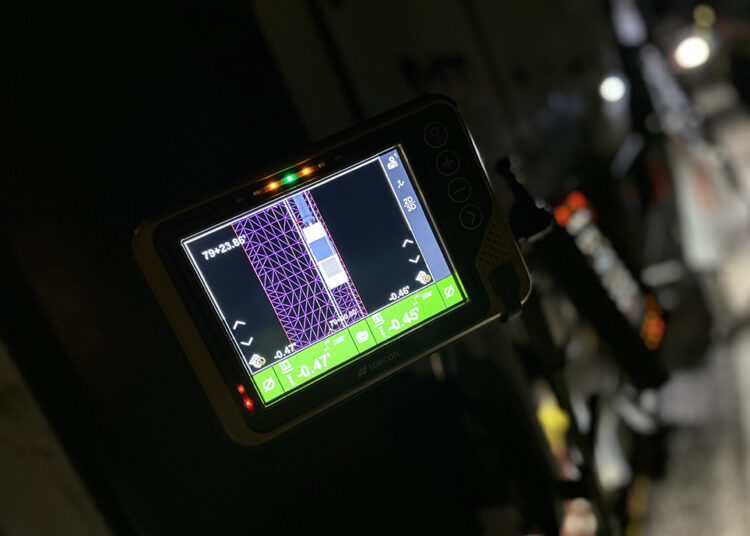
Banks turned to a revolutionary solution from Topcon Positioning Systems called SmoothRide, which the company had seen at CONEXPO-CON/AGG, the triennial construction trade show in Las Vegas*.
Because it would enhance the entire workflow of their asphalt operation, from highway-speed road scanning to variable-depth milling to 3D paving and more, Banks’s management felt it was the solution it needed.
A true convert
Cox was initially sceptical about SmoothRide, specifically about its ability to provide a profitable result on the project. But Banks’s management felt it was the right move to make. With its blessing, Cox and his team set to proving it out.
“We had Justin Thompson, one of Topcon’s intelligent paving specialists, come to our office where we talked a bit about the system, used the Topcon RD-M1 to scan a portion of I-26 and set a time for a demonstration,” said Cox. “We had 25 trucks lined up, two mills and a full paving crew. Even though we did a very basic scanning session and job setup, it worked to perfection. At that point, I was all in for the 526 job.”
Banks went back to the DoT with a bid, now substantially lower because of the savings they knew they could reap by streamlining the workflow.
“Because the full milling operation can be done at the same time as paving, the cost savings are substantial,” said Cox. “You’ve reduced milling time, minimised the need for traffic-control trucks, etc. And less time on the interstate reduces our safety exposures. So, we had DoT engineers come down, showed them the technology, and laid out what we planned for the project. One point of contention was that some of the specs called for actual true elevations rather than relative ones. However, with a simple update to SmoothRide’s software, we pulled that info directly from either a control file or the Geoide file. They walked away happy, knowing they were saving money, and we would get the job done quickly.”
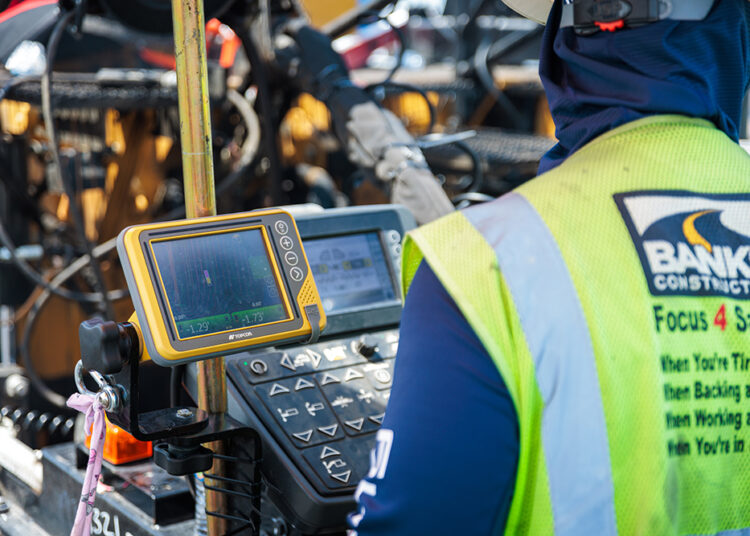
While Cox values every facet of the SmoothRide process, he finds particular appeal in the scanning aspect. This is where Banks has found most benefits. “SmoothRide provides what the paving industry has been wanting for years, the ability to see what we are going to get into before getting into it,” he said.
“A company like ours can get a milling job or a slope-correction project and survey it, giving us a pretty good idea of what’s needed. But we can never really know exactly what will happen until we get out there. This technology changes all that. We could go in and, once we set up our parameters – max mill of four inches, minimum mill of one inch – we could go through the design and see areas where we were either going to be deep or ‘daylighting’, then modify those areas to fix them.”
SmoothRide has already proven itself to be an outstanding milling and paving solution that, to date, has hardly scratched the surface of what can be done. “With the RD-M1 scanner, which is the initial step in the SmoothRide process, we see a real benefit in scanning roads for as-built information,” he said.
“We regularly bid on jobs that were surveyed and designed five or six years previously. In that time, that road’s already been overlaid maybe a couple times but needs to be resurveyed because the design says, ‘match existing’. Using the RD-M1 to do that, not only eliminates the cost of lane closures but keeps a survey crew off the road. The safety factor it provides was almost as important in our decision-making process as streamlining the workflow.”
Return on investment
The savings realised through the elimination of one complete milling run on an eight-mile, four-lane project can be substantial. This was proven on the I-526 resurfacing. “First and foremost, we cut 20 shifts out of the job by not having to mill ahead of time,” he said. “That’s a significant saving in per-night costs. Being able to gather as-built data while out there, rather than at the end of the project, was also huge. And there’s simply not a way to put a number on the safety and liability. I don’t believe we had a single claim on this job, which is almost unheard of for an Interstate project. Given all that, our owners believe SmoothRide was well worth the investment.”
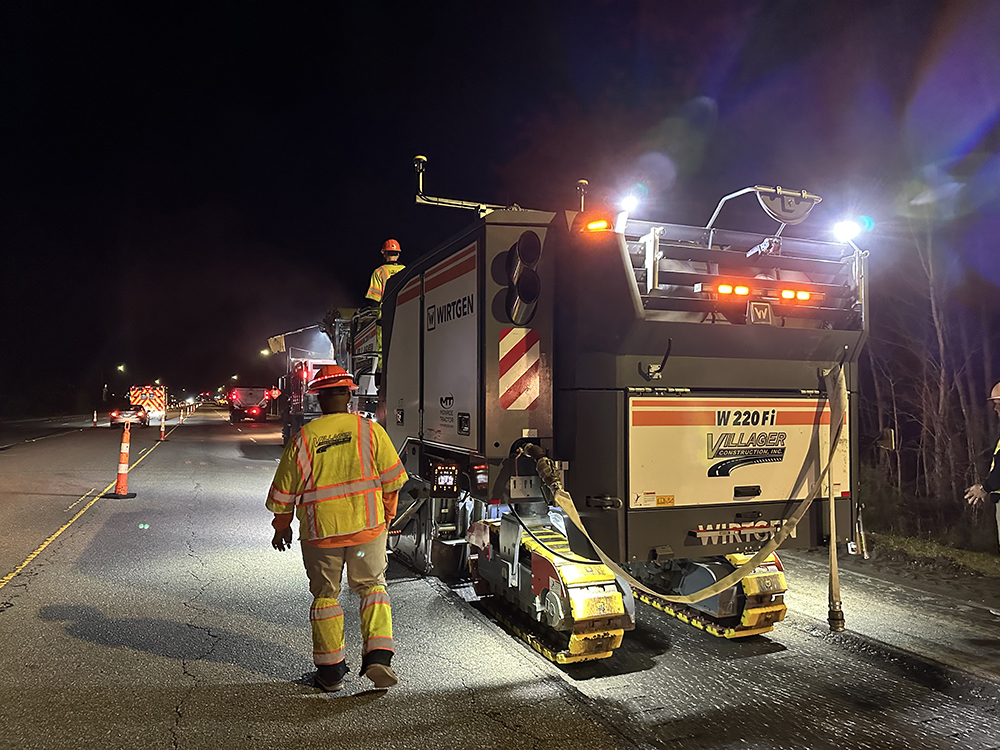
Though it’s sometimes overlooked, a reduction in environmental impact by streamlining a project’s workflow can be quite compelling. According to Cox, those savings were literally across the board on the I-526 project. “Each one of the 20 tri-axle trucks working for us probably burns 25 gallons of diesel fuel per night and that was with a shorter discharge run,” he said.
“That’s easily 10,000 gallons of fuel that wasn’t used and which didn’t create emissions. And a Wirtgen 220 mill uses its fair share of diesel as well, adding to that consumption total. When you can cut days or shifts off of a job, the impacts in so many areas can be just staggering.”
As cited in Banks’s South Carolina Asphalt Paving Association award, by the time the I-526 resurfacing project was completed in October 2023, 42,826 tons of asphalt had been placed over the eight-mile section of the project. SmoothRide benefits read like a laundry list, according to the award notes, saying that the Banks team used new technology for all the work to be performed in one operation. This resulted in significant savings for the DoT.
In addition, the scope-change significantly reduced project time and eliminated any exposure to a milled surface, both of which minimised the overall impact on the travelling public. The final results were an average rideability improvement of around 30%.
“What the award doesn’t show is that we had to meet some very stringent cross-slope correction specifications,” said Cox. “I’m extremely proud of the work our team did on the I-526 job and am glad that they were able to share in this award. We, as a company, are also very grateful for the support we get from Randall Brown at Georgia Surveyors Exchange, our Topcon dealer. And we can’t say enough about Topcon and the solutions they continue to provide. Performing a job in 300 days, when it was bid for 360 days, significantly enhances the safety of our employees and that of the travelling public. That’s another reason we’ve partnered with Topcon for some 16 years now.”
As to who were the real winners of the award, Cox is adamant. “I’d have to say it’s the Charleston-area residents who regularly travel the I-526 daily. They’ve got something they’ve missed for some time – a truly, truly smooth ride.”
*The next CONEXPO-CON/AGG will take place in Las Vegas in the US state of Nevada, from March 3-7, 2026: