Flexible lane use adds or optimises capacity on existing roads during high demand periods. It is especially effective in constrained corridors such as bridges, tunnels and urban connectors where right of way is limited and user delay costs are high. This active traffic-management strategy can be applied shorter term or temporarily to maintain mobility through work zones.
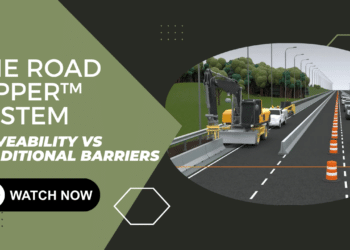
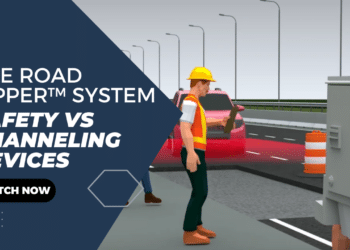
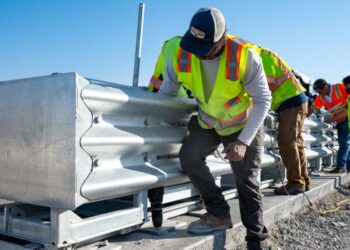
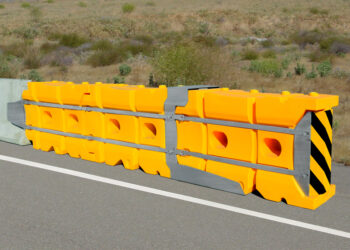
Work zones often rely on pavement markings and channelising devices for temporary lane shifts. But crashworthy, moveable barriers provide stronger protection by maintaining positive separation between opposing traffic and reducing worker exposure during lane changes. Using real world examples, this article highlights lessons from construction projects that used Lindsay’s Road Zipper moveable barrier system to implement flexible lane management.
Tunnel rehabilitation, Italy
Starting in 2022 and through 2025, Autostrade per l’Italia (ASPI) planned and carried out modernisation works on multiple tunnels on the A26 Genova Voltri-Gravellona Toce Motorway. The rehabilitation project required the complete closure of the tunnel (or one direction of the roadway) for several months. Because the A26 motorway section is a critical freight corridor for the region, to and from the port of Genoa, all roadway/lane closures had to be carefully planned to optimise traffic flow, including heavy or oversized commercial traffic, and to maintain traffic and worker safety.
Traditionally, for work zones where one carriageway or tunnel is completely closed to traffic and all traffic uses the other tunnel, ASPI would plan the open-to-traffic tunnel-lane configuration to include one lane in each direction and a so-called buffer lane as a safety gap between opposing traffic. The opposing traffic flows were separated by a plastic delineation device. This allows for quick lane reconfiguration in order that the buffer lane be used in specific cases like congestion mitigation, crash-related queuing, and for wider freight and commercial traffic.
While dynamic lane use was necessary for ASPI to maintain traffic mobility in the corridor, traffic safety was compromised when using plastic delineation. Because the A26 is a mobility-critical corridor, ASPI worked in collaboration with Tecne and Amplia Infrastructures (both companies of the ASPI Group) to proactively address safety concerns and manage traffic flow. ASPI implemented the Road Zipper moveable barrier system on Manfreida and Lagoscuro projects, including six tunnels and two viaducts. With one carriageway completely closed to traffic, ASPI faced the risk of severe congestion, freight delays and increased crash potential. Flexible, positive protection using the Road Zipper provides additional safety compared to channelising-device lane closures and also allows for quick lane reconfiguration.
Travel lanes were reconfigured using a data driven approach to maximise throughput during peak periods. The Manfreida project used a 2km-long moveable barrier section and the Lagoscuro project used an 8km-long section. At a transfer speed of 8km/h, the Road Zipper shifted lanes twice daily on the Lagoscuro project and four to five days each week on the Manfreida project to match traffic patterns and inbound and outbound freight flows.
As compared to the standard or conventional work zone, the Dynamic Road Zipper-based work zone allowed construction phases to be completed in continuity by reducing work-zone deactivations to maintain traffic flow, as well as eliminating manual traffic control by ground crew. The results were:
• project completion 15 months ahead of schedule;
• 63% fewer staff hours of roadside personnel exposure;
• 23% fewer staff hours of security and access exposure;
• significant reduction in the likelihood of head-on and rear-end collisions.
Warringah Freeway, Australia
Strategic traffic management and maintenance of traffic planning during project scoping and planning stages is critical to avoid traffic gridlock and a resulting community outrage. The Warringah Freeway Upgrade Project by Transport for New South Wales in Australia is an example of innovation for efficient traffic management to improve work-zone and traffic safety.
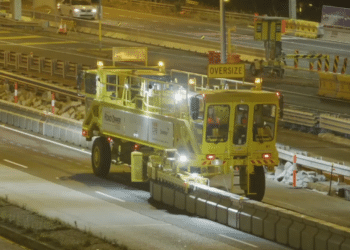
The Warringah Freeway, with daily traffic volumes of around 250,000 vehicles, is one of the busiest roads in the city of Sydney, connecting the northern suburbs to the city centre via the Sydney Harbour Bridge. In 2022-2024, the Warringah Freeway underwent a major overhaul. This included, but was not limited to, utility work, inspection, gantry work, retaining wall, earth and drainage work and pavement rehabilitation.
Key challenges for the project included reducing work-zone impacts for road users and ensuring the overall safety of the construction project. A shared commitment to finding innovative mobility and safety solutions led the project team to adopt the Road Zipper moveable barrier system based on a flexible lane configuration.
The upgrade of a 4km section required nightly lane closures to allow for construction work without interruption to peak travel times. The construction was carried out more efficiently and safely by using the Road Zipper for overnight lane closures. This was also the first time in Australia where the Road Zipper solution was adopted for a construction project. It helped improve worker safety while enabling the contractors to reduce construction duration by a year and a half.
The Road Zipper-based dynamic-lane reconfiguration allowed for up to three extra hours of construction time on each nightly construction shift compared to the conventional lane closure and work-zone protection strategies. Steven Clark, project director for Warringah Freeway Upgrade Project, CPB Contractors and T Infrastructure Joint Venture, said that during the 2023-2024 Christmas break, Road Zipper technology helped them complete 16 weeks-worth of traditional construction work in only two weeks. Work-zone efficiency was maximised by creating a distraction-free, wide and positively separated work zone rather than having workers exposed to live traffic.
Knik River Bridges, Alaska
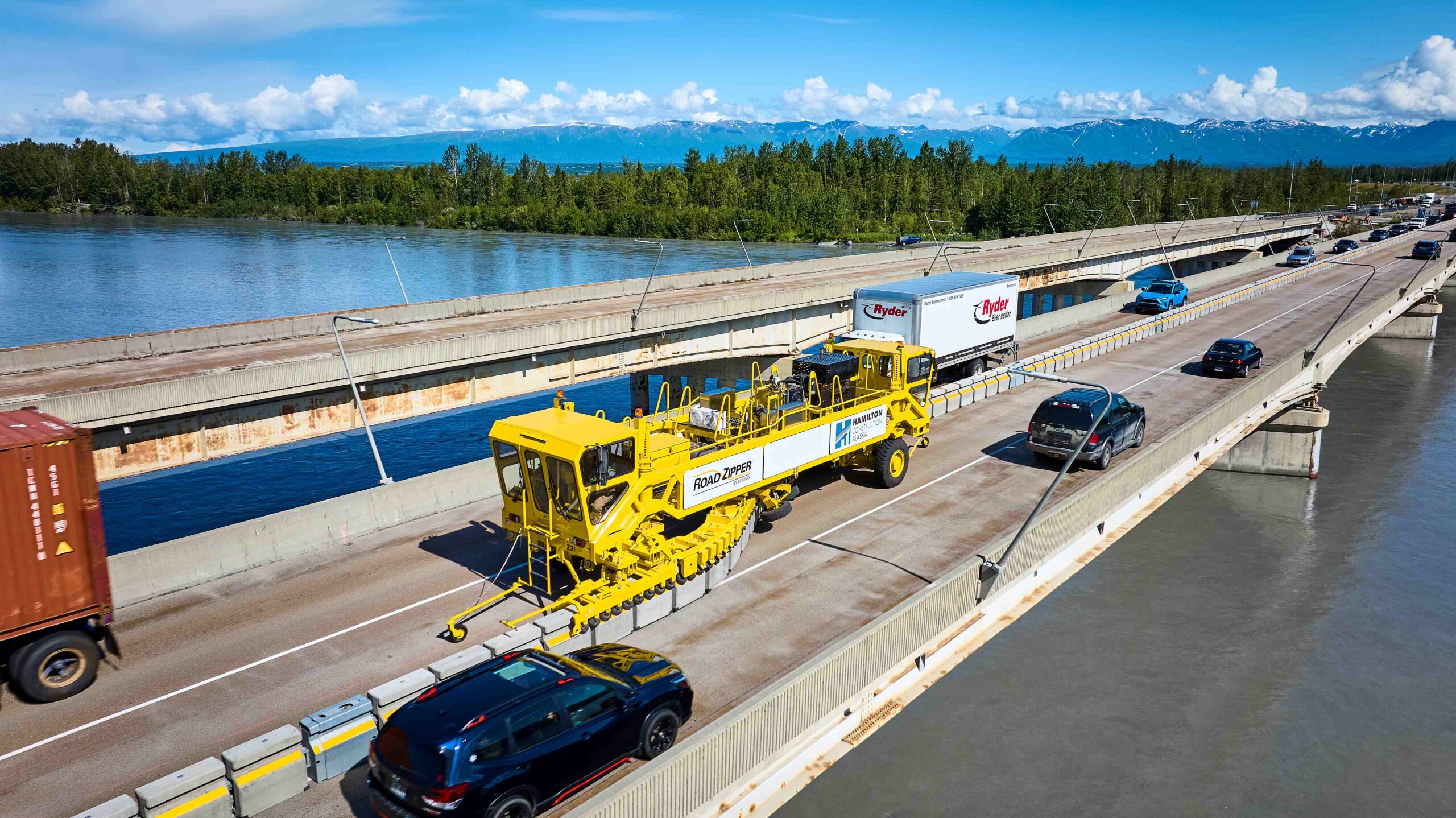
The 60-year-old northbound bridge and the 30-year-old southbound Knik River Bridges on Glenn Highway in Alaska serve around 31,000 drivers daily. The structures are vital connectors for commuters, freight and emergency services. In April 2024, the Alaska Department of Transportation started a major ‘first-of-its-kind’ rehabilitation and deck-preservation project to extend the service lives of the bridges, reduce maintenance costs and enhance safety.
The Knik River Bridge Project included resurfacing both bridge spans, installing new approach slabs at each end and replacing expansion joints. Because of this, complete closure of each bridge was needed for at least 30 days. However, with one span fully closed, Alaska DOT faced the risk of severe traffic congestion and delays, as well as increased risk of vehicle crashes between Anchorage and the Matanuska-Susitna Valley.
To address these challenges, Alaska DOT considered several options. These included placing temporary concrete barriers down the middle lane of the (open-to-traffic) bridge to separate bi-directional traffic. But this alternative limited the traffic flow to one lane per direction, causing significant congestion and delays for commuters. Another option was to install a temporary bridge, but the costs involved were prohibitive.
Alaska DOT’s partner on the project, Hamilton Construction, chose to implement a flexible lane configuration, or moveable median strategy, using the Road Zipper moveable barrier system. Crashworthy Road Zipper barriers have offered the following benefits during the long-term closure and the ongoing rehabilitation of the bridges:
• maximised traffic flow by dynamically reconfiguring travel lanes, especially during peak periods;
• positive protection between bi-directional traffic to enhance traffic safety;
• an efficient, distraction-free and separated work zone;
• minimised driver confusion and delays during an extended construction schedule in the harsh Alaskan weather;
• a cost-effective and low-carbon footprint traffic-control alternative that avoided major infrastructure expansion, temporary detours and/or widening projects.
Conclusion
Many projects have paired the Road Zipper Maintenance of Traffic solution with accelerated bridge and tunnel construction to shorten staging, cut project duration and reduce mobility and safety impacts. These, and many other projects during the past four decades, have shown how safety focused strategies can increase network capacity to better match travel demand.
The Road Zipper system, crash tested to MASH TL 3/TL 4 and EN 1317 N2/H2 standards, provides a flexible, safety enhancing option for dynamic lane management for both work-zone maintenance of traffic and reversible/managed lane solutions.
Additional resources can be found by clicking here.