As road networks expand worldwide, so do the challenges of keeping them safe, smooth and cost-effective. Aging infrastructure, heavier traffic and limited budgets have pushed organisations to find new ways to more efficiently inspect and prioritise interventions to maintain their assets without disrupting operations.
For decades, the standard approach was reactive: fix what fails. But this ‘wait until it breaks’ mentality has proven unsustainable. Emergency repairs are more expensive, dangerous for field crews and disruptive for drivers. Now, a quiet revolution is changing this approach.
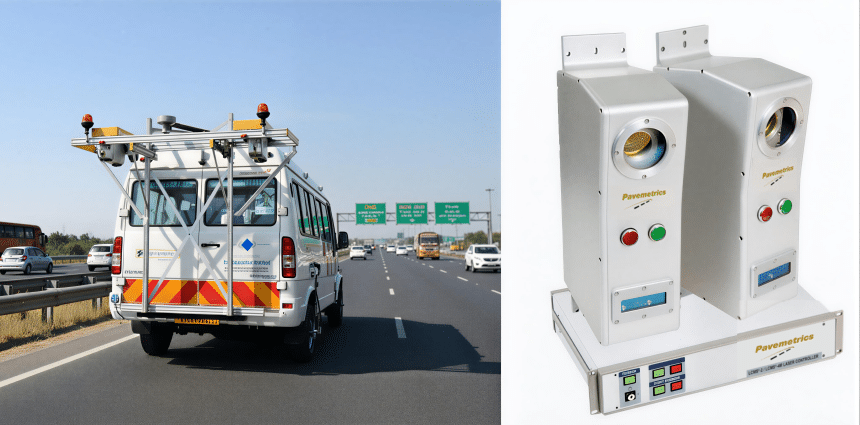
Instead of reacting to failures, road owners and operators are now predicting them – thanks to a new generation of 3D laser imaging technologies that allow for precise, repeatable and objective pavement assessments at traffic speed. Among these, Pavemetrics’ Laser Crack Measurement System (LCMS) ( see figure 1, above), has emerged as a trusted benchmark, used by transportation organisations and service providers in more than 55 countries.
The principle behind this shift is simple but powerful: you can’t manage what you can’t see. When organisations see better – through clearer, certified pavement imaging – they gain the confidence to make data-driven decisions, optimise maintenance strategies and maximise inspection ROI, return on investment.
The leap from 2D to 3D
Traditionally, pavement inspections relied on manual surveys or 2D imaging systems. Inspectors would walk stretches of road, taking notes and photographs to aggregate all the results back at the office. These methods were subjective and highly affected by lighting conditions, human error and low data-density. Two inspectors could observe the same section and produce entirely different assessments.
Later, single-point lasers became available and were used to measure longitudinal profiles of the road, such as roughness. These sensors then incorporated more lasers – now close to a few dozen – in order to also measure rutting. While this technology is still in use today and can provide accurate measurements for roughness and macrotexture, its capabilities become very limited when pavement distresses, including cracks and accurate rutting, are needed.
Full-lane 3D laser scanning changed that. The LCMS uses line-laser triangulation ( see figure 2, below) to project a laser line across the pavement. It captures up to 28,000 transverse profiles per second. Each profile consists of more than 4,000 points compared to 21 points for some of the most sophisticated profilers.
This creates a continuous 3D surface model with sub-millimeter precision for both depth and width. It reveals every crack, rut, pothole, patch or texture irregularity. Because the system collects both range (depth) and intensity (imagery) data, it works day or night and in any lighting condition. Its capabilities are far beyond what 2D imaging can offer ( see figure 3, below)
Unlike conventional cameras, LCMS doesn’t just capture what the surface looks like. It measures what it actually is. And unlike profilers or LiDAR systems that are limited in terms of resolution, LCMS can survey every millimeter of pavement at highway speed, detecting hairline cracks and very small defects that wouldn’t be visible otherwise.
This quality of imaging combined with the depth information enables accurate calculation of crack width, depth and volume which is highly valuable when estimating sealant requirements. It also calculates rut cross-sectional area, pothole volume, macrotexture parameters and, of course, roughness over longitudinal profiles measurements. These are essential not only for identifying visible damage but also for understanding the mechanisms behind it. Highway authorities are able to see where water will accumulate, where deformation begins and which sections are most at risk of failure.
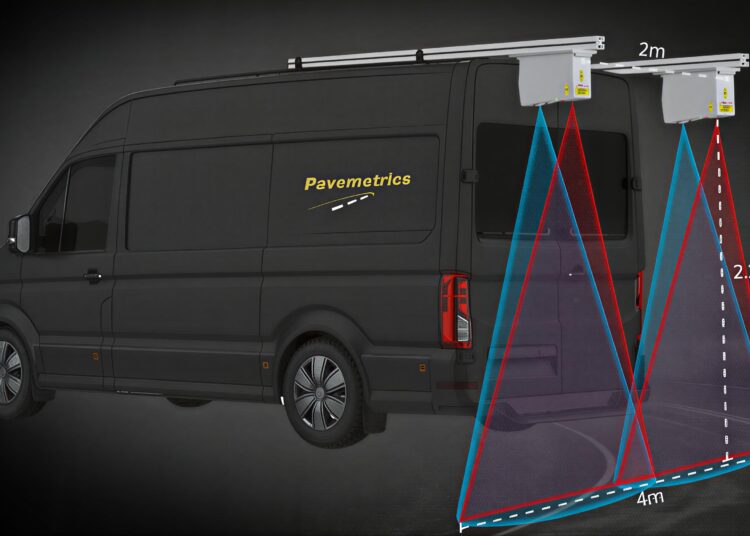
Figure 2: Typical mounting geometry of Pavemetrics’ LCMS sensors
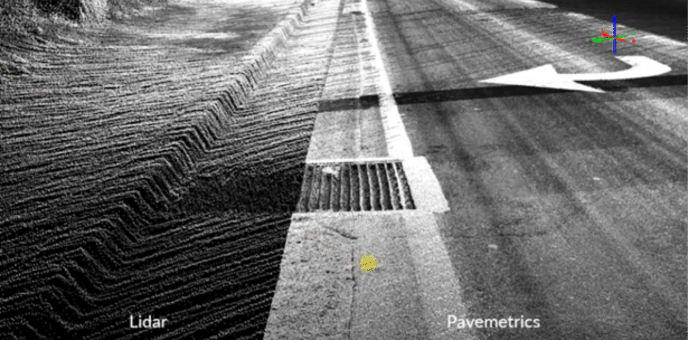
Figure 3: Comparison between LiDAR and Pavemetrics 3D imaging
Beyond inspection, toward prediction
High-resolution data means nothing without reliability. That’s why Pavemetrics designed the LCMS to comply with internationally recognised standards, including ASTM, AASHTO and equivalent global frameworks. This ensures interoperability and consistent data quality worldwide.
What truly differentiates 3D scanning from older inspection methods is its proven repeatability. The LCMS can revisit the same section of road months later and reproduce results with more than 95% accuracy. This level of consistency builds real confidence in the data over time.
When combined with advanced algorithms, the system automatically detects and classifies defects such as cracks (sealed and unsealed), rutting, roughness (IRI), raveling, bleeding, joint damage and more. It does so across both asphalt and concrete surfaces ( see figure 4, below). It even identifies man-made features such as lane markings, curbs and manholes to prevent false positives.
The result is a complete, data-driven view of network conditions, one that replaces subjective opinions with measurable reality. Surveying the network year after year with consistent data will allow users to create degradation models, hence moving from reactive maintenance to a more proactive one.
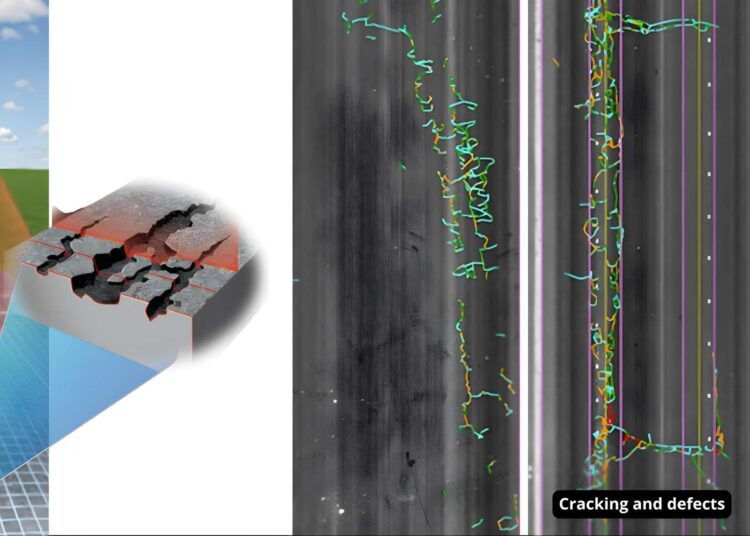
Figure 4: Automated detection of pavement distresses with the LCMS
The integrator advantage
Behind every LCMS-equipped vehicle, there’s a story of collaboration. Pavemetrics designs and builds the sensors and processing software. However, it is through experienced integration partners around the world that these technologies become fully operational multifunctional systems They are complete, field-proven platforms ready to perform in demanding inspection environments ( see figure 5, below).
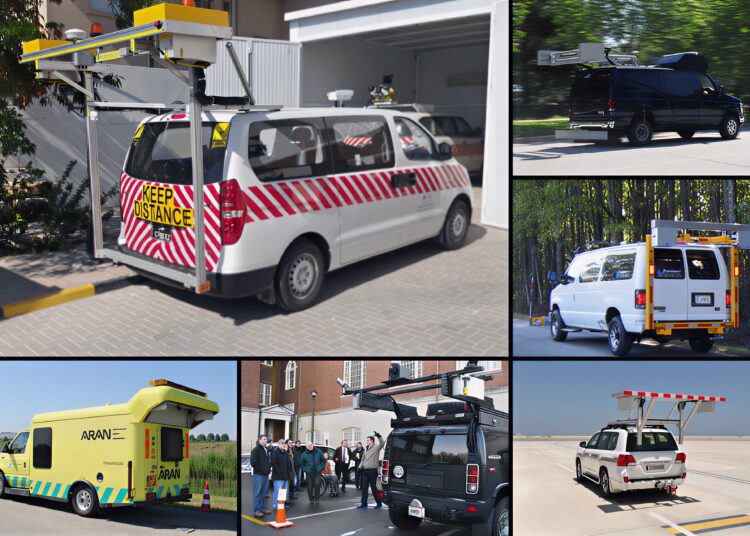
Figure 5: Examples of LCMS-integrated vehicles operating around the world
In fact, these partners do much more than assembling components. They refine every detail: mounting geometry, trigger synchronisation, power and thermal regulation, data pipelines that keep everything running smoothly at highway speed and user interfaces that really help you understand the data behind relevant insights. Each system comes pre-configured and calibrated, allowing users to get up and running quickly and spend more time collecting data instead of troubleshooting. Modern data acquisition vehicles are often equipped with a multitude of sensors (cameras, LiDAR, Ground Penetrating Radar (GPR), GPS, profilers) that allow the collection of all the essential data in one go.
Combining these systems into one seamless solution requires expertise and the integrator approach makes a large difference in the field. Projects start faster, data quality stays consistent and operational risks drop dramatically. With one point of contact for hardware, software and support, users no longer have to juggle multiple vendors or chase compatibility issues. It is a streamlined experience from deployment to data delivery.
In the end, this integration model lets pavement professionals focus on what matters most – interpreting results, planning maintenance and making confident, informed decisions. Meanwhile, while trusted partners take care of the technical complexity behind the scenes.
Proven in the field
The advantages of this technology are no longer theoretical. Around the globe, hundreds of systems are already transforming how roads and runways are maintained. In the US, LCMS units are trusted by numerous departments of transportation for statewide pavement monitoring. In Europe, contractors use it for national concession networks. In Asia and Oceania, it’s used across several major expressway projects for compliance testing and design validation.
A notable case is in New Zealand. Before laying the final asphalt layer of a four-lane expressway, engineers performed a high-speed LCMS survey to analyse not just rut depth but rut cross-sectional areas. By calculating the volume of deformation along each lane, they precisely estimated how much asphalt was needed to level the surface, saving significant material costs and avoiding unnecessary rework.
Such insights go far beyond what traditional single-point lasers or 2D cameras can provide. The level of granularity in LCMS data makes it possible to quantify every cubic millimeter of change. This information can be used for predictive maintenance, budget optimisation and safety improvement.
From data to ROI
Beyond technical performance, the LCMS offers organisations a strong return on investment. By enabling proactive maintenance, it extends pavement life, minimises emergency interventions and reduces the need for costly traffic management setups.
Because the system operates at highway speeds and captures full-lane coverage without lane closures (see figure 6, below), it also dramatically improves worker safety and minimises disruption to the public. Hundreds of kilometers can be surveyed per day, generating terabytes of data that are processed automatically. Thanks to ongoing software updates, users continually gain access to new algorithms and metrics which increases long-term value without additional hardware investment.
For road owners and engineering firms, the equation is simple: better imaging leads to better insights, which leads to better roads and a higher return on every inspection.
Paradoxically, investing in higher-quality inspections can lower overall maintenance costs. This is because better data leads to better treatment decisions. In contrast, low-cost imaging systems can end up driving higher expenses, such as full-section repaving when inaccurate results lead to poor or delayed interventions.

Figure 6: Example of full-lane coverage from Pavemetrics’ LCMS system
A smarter path forward
The global shift from reactive to proactive pavement management is accelerating and full-lane 3D laser scanning is at the center of this shift. The ability to capture certified, repeatable and comprehensive pavement data in a single pass is transforming how infrastructure networks are monitored and maintained.
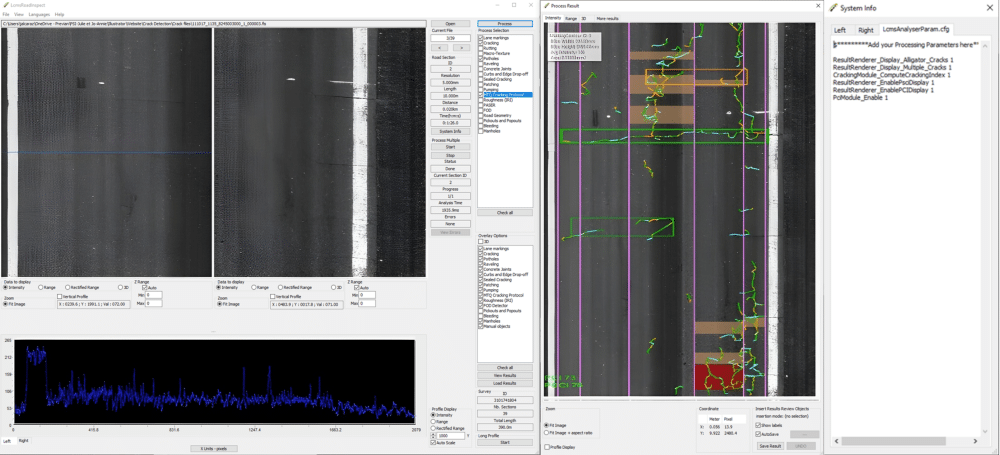
What makes this transformation truly powerful is the way LCMS technology turns high-resolution imaging into actionable insight ( see figure 7, below). By combining precision, repeatability and automation, it enables road owners and engineers to make confident, data-driven decisions that extend asset life and maximise inspection return on investment.
As performance-based maintenance and data-driven asset management become the industry standard, LCMS is proving essential. It provides the clear, objective evidence needed to justify budgets, prioritise repairs and plan investment with confidence.
From municipal roads to national highways and from airport runways to military bases, Pavemetrics’ LCMS technology has shown that precision, efficiency and safety can coexist. It’s not just a tool; it’s a smarter way to manage pavement.
The road ahead is safer, more sustainable and built on data you can trust. Learn more about Pavemetrics’ LCMS technology or find a trusted integration partner at www.pavemetrics.com.
Content produced in association with Pavemetrics