This fire red performance car features a familiar prancing animal logo and is aimed atMore collaboration is needed to reduce the impact of highways on the environment, particularly air quality. The technology already exists, argue Bram Miller* and Martin Broderick*
The European Environment Agency produced a report showing that a slow improvement in air quality has been observed across Europe. However, 9% of urban Europeans were exposed to nitrogen dioxide emissions in excess of the EU’s annual maximum limit in 2015. Meanwhile, associations between highways and the environment tend to be negative, whether through the construction of new roads or, more particularly, the impacts associated with road vehicles. This negativity will likely remain until there are very substantive shifts towards ultra-low emissions vehicles (ULEVs). The highways sector needs to seek ways to effectively operate road networks while reducing emissions.
Clearly, policy initiatives can target vehicles emissions and improve air quality. London’s upcoming ultra-low emissions zone is one example. The London mayor’s Toxicity Charge, the T-Charge, which came into effect in October, is another. The levy is expected to affect up to 10,000 vehicles that do not meet Euro 4 standards. Older polluting vehicles pay an extra €11.35 daily on top of the daily congestion charge to drive within London’s Congestion Charge Zone.
Outside Europe, Singapore announced that from next year it will allow zero growth in the number of privately owned cars.
But road operators and designers of highway networks don’t make government policy; they must act in other ways to accomplish the same ends. As such, highways contractors and operators are already exploring many innovative designs. Examples include environmental barriers that absorb pollutants and canopy structures that increase dispersion of air. Such mitigation measures warrant further investigation.
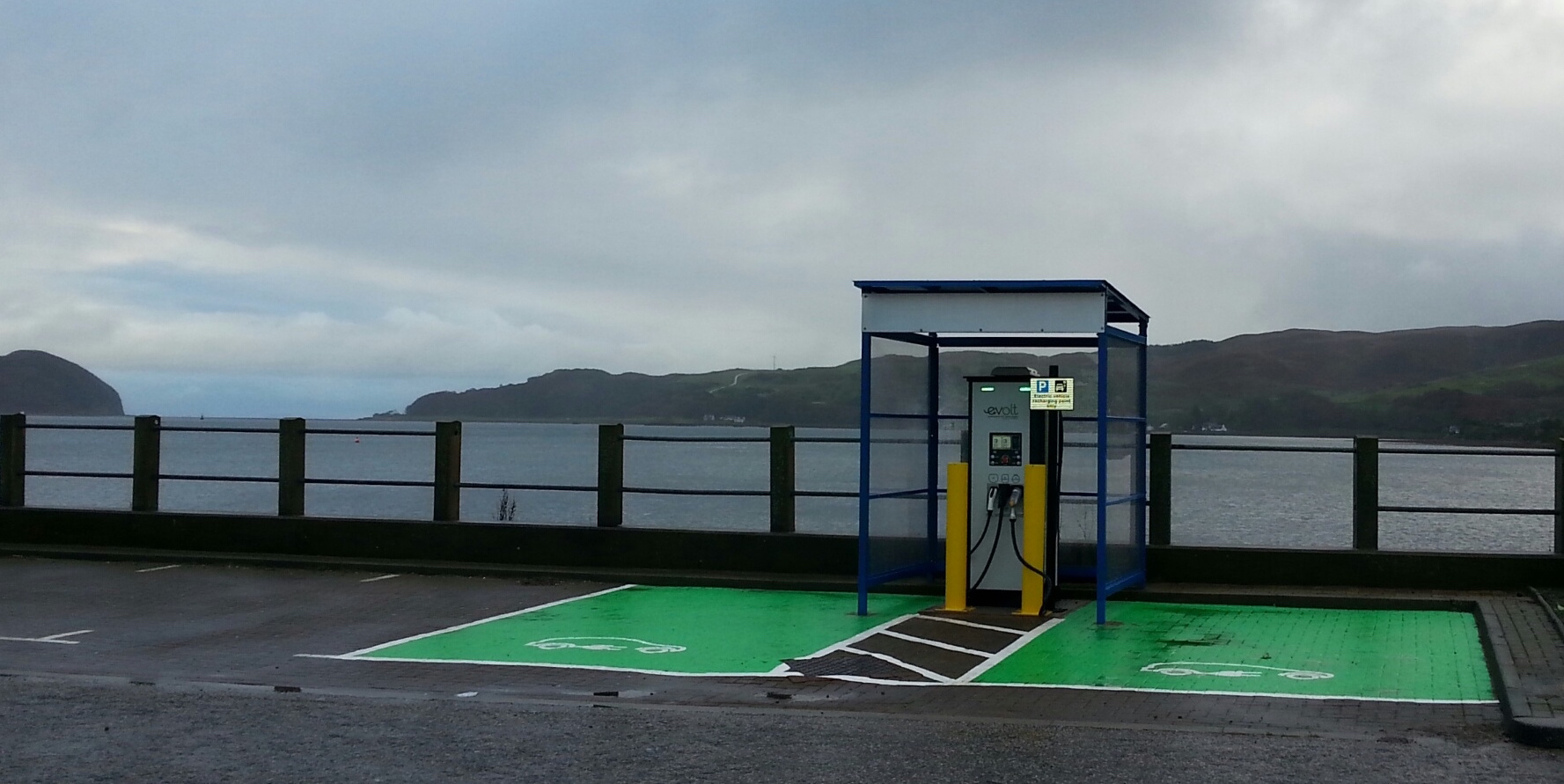
But managing the types of vehicle using highways ultimately offers greater potential for making a difference. The highways sector can aid acceleration of the uptake of ULEVs by more – and more frequent – charging points on existing and new highways. ULEV drivers must be able to make journeys easily and conveniently. This means that charging points should be critical design requirements. Also, importantly, to make this work effectively, operators of different road networks, such as national and local, need to work together to provide a seamless charging network.
Similarly, driverless vehicles offer highly efficient driving and emissions reduction potential. Highway operators should consider retrofits of networks or design of new highways to allow these vehicles to work effectively.
Big data and the internet-of-things can provide highway operators with yet more tools to drive emissions downwards. Live air quality monitoring can be linked to variable messaging signage; when air quality is poorest the VMS will flash up new speed limits accordingly.
Even so, the relationship between vehicle speed and emissions is complex and is being researched further. But this does have the potential to reduce emissions, both through the direct effect of controlling speeds and through smoothing congestion which is associated with higher emissions.
A potential danger of the speed-control approach is that it could alter driver behaviour, pushing them on to other highways with no such speed control. In effect, this would be simply shifting the problem to where there are fewer or no systems for mitigating emissions.
However, this issue highlights another potential approach: in the same way that internet-based mapping and satnav systems already use data from vehicles to identify congestion, systems could divert drivers away from areas of high emissions.
To achieve a holistic solution to reduce emissions across large areas, such as whole cities, there would be a need for good air quality monitoring systems to allow the prediction of emissions levels. Such an approach is already being used successfully in some cities including Beijing.
Finally, highways can also contribute renewable energy. Photo-voltaic noise barriers – already commercially available – or solar roads, as being tested in France, are but two examples.
With a sufficiently integrated approach – as well as greater foresight – there is an opportunity for highway operators to play a positive role in improving air quality in our towns and cities.