Pirelli and Swedish company Univrses have agreed to integrate Unirses’ 3DAI technologies into the Pirelli Cyber Tyre system of AI‑based computer-vision technologies.
Meanwhile, Univrses’ 3DAI technologies will be integrated into Pirelli’s Cyber Tyre system solutions. The companies said that the combination of the technologies developed by Univrses and Pirelli will deliver vehicles that are safer and better performing. They will also have potential applications in ADAS – advanced driver-assistance systems – as well as autonomous driving systems and will deliver timely, relevant and actionable data, seamlessly for a range of road management uses. Insights will enable road authorities to make better decisions and deploy resources more effectively which could reduce road-related accidents.
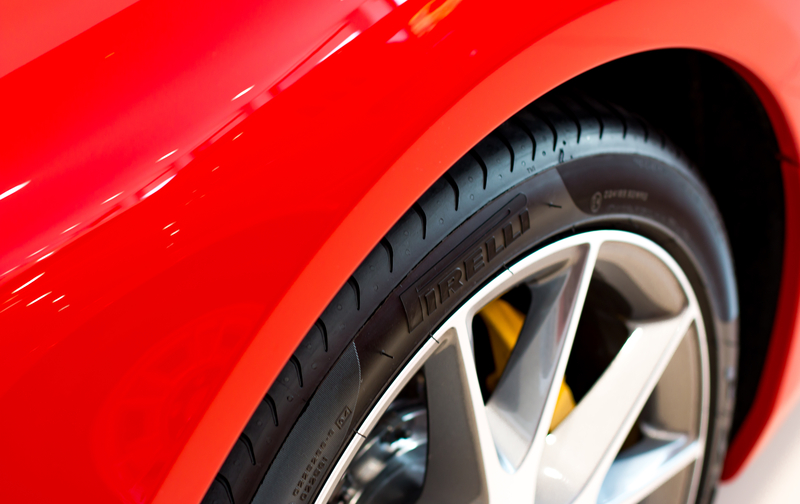
The technologies permit the use of onboard cameras and tyres to collect data that provides vital feedback on road conditions. Pirelli said that its Cyber Tyre is the world’s first integrated hardware and software system capable of collecting data from sensors inside the tyres. The system will then process the information collected using Pirelli’s proprietary software and algorithms and communicate in real time with the vehicle’s electronics and with the cloud. This in turn will enhance the car safety systems.
Founded in 2015, Univrses is a Stockholm-based company specialising in computer vision and AI. The company’s systems were originally developed to give cars the ability to make sense of their surroundings. It has now been adapted to turn vehicles into AI-enabled road monitoring agents. The company’s 3DAI platform transforms regular vehicles into sophisticated sensors, providing real-time infrastructure data to help road authorities and automotive partners operate more effectively and safely.
Univrses’ 3DAITM Engine is software that gives autonomous vehicles perception capability via 3D Positioning, 3D Mapping, spatial deep learning. It digitises city and roadside infrastructure, fed by the data from sensors, such as cameras, which are installed on vehicles.
A first project is already underway in Italy. In 2025, Pirelli and the Puglia Regional authority launched a monitoring system for the road network to create an up-to-date map of infrastructure conditions. The system provides analyses based on data collected by tyres and processed through the Cyber Tyre platform, together with visual data collected via cameras and interpreted using Univrses technology.
Andrea Casaluci, Pirelli chief executive, said that the agreement with Univrses further enhances Pirelli’s Cyber Tyre platform, thanks to advanced AI‑based artificial vision technologies. “The collaboration between Pirelli and Univrses will make a significant contribution to the ongoing transformation of cars into true software‑defined vehicles.”
Jonathan Selbie, chief executive of Univrses, noted that continuous monitoring and data are becoming the new foundation for infrastructure asset management. Univrses technology is able to provide powerful analytical capabilities based on reliable and frequently updated data. “In this context, we are pleased to welcome Pirelli as an investor and to take our partnership to the next level. We will join forces to deliver increasingly advanced services and products.”
Over the past seven years, Univrses has worked with leading vehicle manufacturers to develop advanced AD/ADAS functionality, with its software already integrated into flagship models from several global brands. By adapting this core technology for road assessment, the company now supports authorities at all levels across Europe – including Sweden’s road agency Trafikverket and the National Highways agency in England – to deliver high-fidelity infrastructure intelligence.
Univrses transforms raw sensor data from cameras integrated into regular vehicles into actionable insights on road conditions, traffic signs, street lighting, roadworks and other public assets. In the Netherlands, Univrses has recently joined the Road Monitor (ROMO) project, an initiative for European road management which includes Dutch government ministries and agencies, a number of automotive suppliers, including Stellantis and Mercedes-Benz, and the European Union. ROMO converts anonymised vehicle data into valuable insights for road authorities, improving key functions such as asset and weather management, plus road safety.