• About
  • Advertise
  • Contact
Thursday, July 16, 2026
Newsletter
Global Highways
  • News
  • Products
  • Features
  • Categories
    • Asphalt Milling, Paving & Compaction
    • Concrete Milling, Paving & Compaction
    • Connected Construction
    • Earthmoving & Soil Compaction
    • Engines, Components & Tyres
    • Finance & Funding
    • Highway & Network Management
    • Maintenance
    • Materials
    • Recycling
    • Road Markings, Barriers & Workzone Protection
    • Road Structures
  • Events
    • Events Calendar
    • CONEXPO-CON/AGG 2026
    • Intertraffic Amsterdam 2026
    • bauma 2025
  • Latest Magazine
  • Videos
No Results
View All Results
  • News
  • Products
  • Features
  • Categories
    • Asphalt Milling, Paving & Compaction
    • Concrete Milling, Paving & Compaction
    • Connected Construction
    • Earthmoving & Soil Compaction
    • Engines, Components & Tyres
    • Finance & Funding
    • Highway & Network Management
    • Maintenance
    • Materials
    • Recycling
    • Road Markings, Barriers & Workzone Protection
    • Road Structures
  • Events
    • Events Calendar
    • CONEXPO-CON/AGG 2026
    • Intertraffic Amsterdam 2026
    • bauma 2025
  • Latest Magazine
  • Videos
No Results
View All Results
Home Features Parsons, i-Probe in Proactive Roadway Maintenance pilot

Parsons, i-Probe in Proactive Roadway Maintenance pilot

The two-year Proactive Roadway Maintenance System project in the US was led by Honda and funded by the Ohio Department of Transportation (ODOT), in collaboration with i-Probe, Parsons and the University of Cincinnati.

by David Arminas
February 18, 2026
in Features
Reading Time: 4 mins read
A A
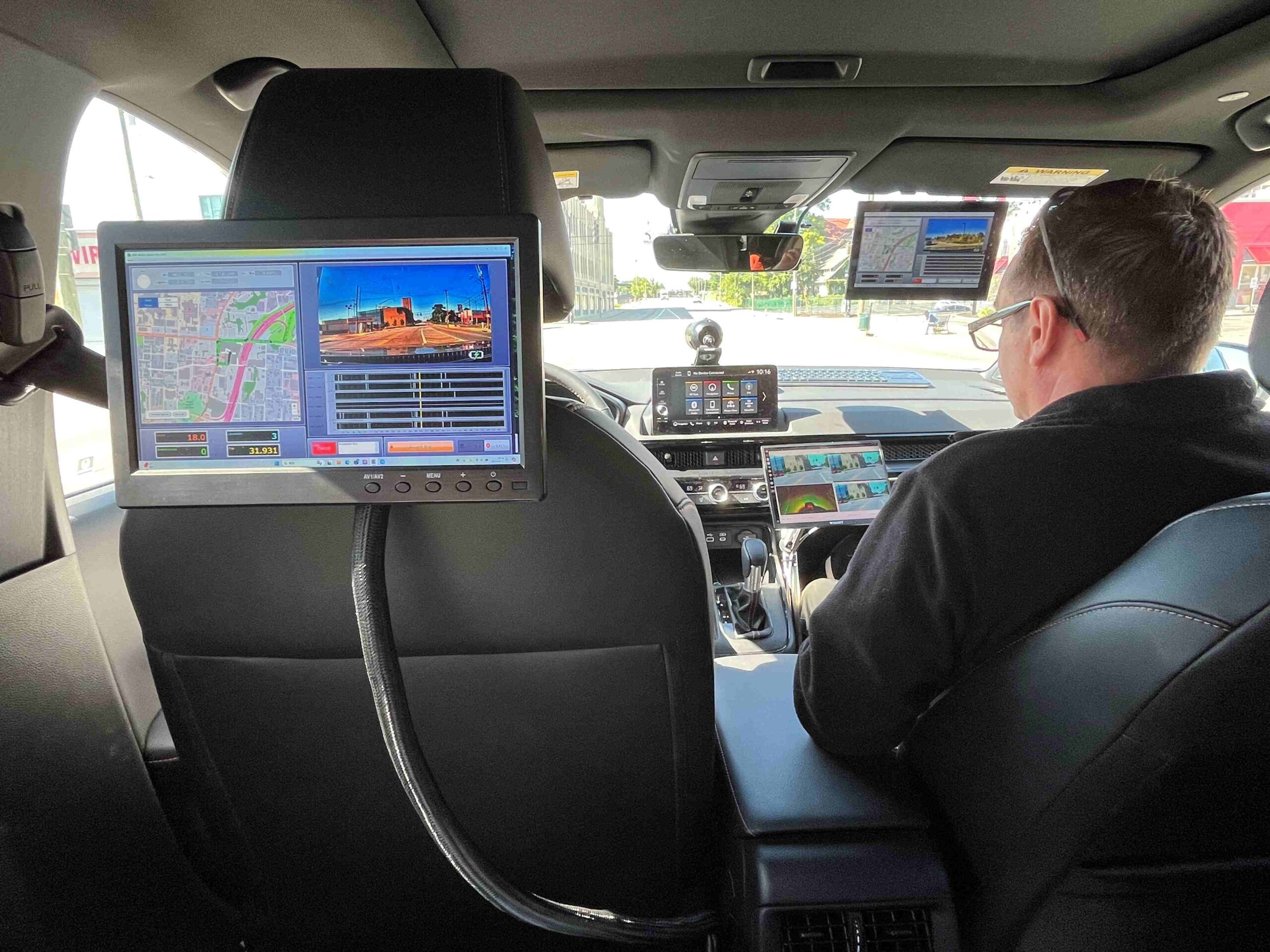
During the pilot, ODOT team members drove Honda test vehicles, equipped with advanced vision and LiDAR sensors, to monitor nearly 5,000km of roads in central and southeastern Ohio

During the pilot, ODOT team members drove Honda test vehicles, equipped with advanced vision and LiDAR sensors, to monitor nearly 5,000km of roads in central and southeastern Ohio

A collaborative US pilot project has shown it can detect road condition and damaged street furniture, including guardrails and shoulder drop-offs, with extremely high accuracy.

The prototype Proactive Roadway Maintenance System in the state of Ohio is said to have achieved 99% accuracy for detecting damaged and obstructed signs and 93% accuracy for damaged guardrails.

Car maker Honda and DriveOhio, the smart mobility hub of the Ohio Department of Transportation (ODOT), said the project is a first-of-its-kind to demonstrate how real-time, vehicle-generated data can detect and report road deficiencies. The pilot was conducted in collaboration with technology partners i-Probe, consulting engineering firm Parsons and the University of Cincinnati. The two-year pilot verified the feasibility of an automated road-condition management and reporting system to help departments of transportation around the US to proactively optimise maintenance while reducing costs and creating safer roadways.

Honda said it has been developing its prototype Proactive Roadway Maintenance System since 2021. During the pilot, ODOT team members drove Honda test vehicles, equipped with advanced vision and LiDAR sensors, to monitor around nearly 5,000km (3,000 miles) of roads in central and southeastern Ohio. The vehicles operated under a wide range of real-world conditions, including multiple road types in rural and urban environments, varied weather and different times of the day.

The Proactive Roadway Maintenance System detected road conditions and infrastructure deficiencies. Some of the conditions detected were worn or obstructed road signs, damaged guardrails and cable road barriers, potholes and shoulder drops, including percentage and depth of drop-off. Even the road’s ride quality was detected.

As the Honda test vehicles detected the condition of critical roadway surfaces, pavement markings and roadside assets, ODOT operators were able to review the deficiencies in real time through web dashboards developed by Honda and Parsons. ODOT used the data to cross-reference its regular visual inspections.

Data collected by the vehicles was processed using edge AI models, transmitted to a Honda cloud platform for analysis and integrated into Parsons iNET Asset Guardian system. This allowed for automatically generated, prioritised work orders for ODOT maintenance teams. Work orders can be grouped by severity and proximity, with the iNET Asset Guardian system streamlining workflows to enhance efficiencies across field-maintenance operations.
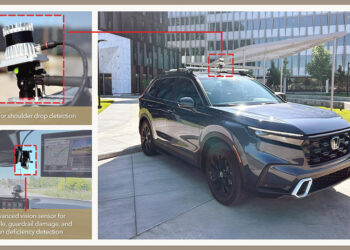
The Proactive Roadway Maintenance System detected road conditions and infrastructure deficiencies, such as worn or obstructed road signs, damaged guardrails and cable road barriers, potholes and shoulder drops

Data validation was provided by i-Probe, as well as analysis expertise for road roughness and lane-marking conditions. The University of Cincinnati helped Honda integrate the sensors on the test vehicles and led the damage-detection-feature development including potholes, guardrails, signs and shoulder drops. Honda also provided system-maintenance service to the ODOT during the trial operation.

Pilot results

The pilot programme showed a 99% accuracy for identifying damaged or obstructed road signs, a 93% accuracy for damaged guardrails and an 89% average accuracy for detecting potholes. Importantly, an AI-feedback loop pipeline was built that enabled ODOT team members to flag misdetections, helping the system learn and improve over time.

Insights showed that only a small percentage of roads had insufficient lane markings, suggesting that restriping schedules could be optimised.

Vehicle-sensor data also reliably measured road-roughness levels and provided valuable insights for maintenance planning. The Proactive Roadway Maintenance System further detected high‑severity shoulder drop‑offs that were difficult to identify through routine visual inspection.

By reducing the need for manual inspections, the system enhances safety for maintenance crews and minimises their exposure to traffic hazards. The project team estimates that automated road-condition detection could save ODOT more than $4.5 million annually through less manual inspection time, optimised maintenance schedules and prevention of costly deferred repairs through proactive inspection.

As part of the next phase of testing, the project team is exploring ways to scale the prototype Proactive Roadway Maintenance System for real-world operations. In the future, Honda aims to empower its customers to contribute to safer, better roads through anonymised data sharing from their vehicles. This community-focused approach creates a sense of shared ownership at the road-operation level, enabling drivers to move from simply using the roadways to actively improving them.

More information on the project team is available from Honda by clicking here.

For a video explanation of the project,click here.

Categories: Maintenance
Promoted Content Header
Parsons Parsons Transportation Group

Related Posts

One of the tasks involved flipping bottles up from the ground (Image: Hitachi Construction Machinery Europe/HCME)

Europe’s best operators get ready for the LANDCROS Operator Challenge Final

by Sarah Biswell
July 10, 2026

More than 90 of Europe's most skilled excavator operators have showcased their skills in recent months by taking part in...

Road repairs work

The importance of road maintenance

by Staff Writer
July 10, 2026

Gülay Malkoc discusses the importance of investing in road maintenance.

The new 24litre engine from DEUTZ is designed for high-load genset applications - (image: Deutz)

High power generation from Deutz

by Mike Woof
July 8, 2026

Deutz is offering a rugged new engine to suit challenging power generation installations

Join our newsletter

The mission of Global Highways is to cover the latest technologies and best practices in all areas of road, bridge and tunnel construction and maintenance, as well as their safe operation and management.

Subscribe to our newsletter

About Us

  • About Us
  • Advertise
  • Contact
  • Terms & Conditions
  • Privacy Collection Notice
  • Privacy Policy

Popular Topics

  • News
  • Features
  • Products
  • Videos
  • Events
  • CONEXPO-CON/AGG 2026
  • Intertraffic Amsterdam 2026
  • bauma 2025

© 2026 All Rights Reserved. All content published on this site is the property of Prime Creative Media. Unauthorised reproduction is prohibited

No Results
View All Results
NEWSLETTER
  • News
  • Products
  • Features
  • Categories
    • Asphalt Milling, Paving & Compaction
    • Concrete Milling, Paving & Compaction
    • Connected Construction
    • Earthmoving & Soil Compaction
    • Engines, Components & Tyres
    • Finance & Funding
    • Highway & Network Management
    • Maintenance
    • Materials
    • Recycling
    • Road Markings, Barriers & Workzone Protection
    • Road Structures
  • Events
    • Events Calendar
    • CONEXPO-CON/AGG
    • Intertraffic Amsterdam 2026
    • bauma 2022
  • Latest Magazine
  • Videos
  • About
  • Advertise
  • Contact

© 2026 All Rights Reserved. All content published on this site is the property of Prime Creative Media. Unauthorised reproduction is prohibited