Digitalization is changing the construction industry faster than expected. Automation, additional sensors and the networking of machines make it possible to exploit optimization potential and noticeably increase productivity. However, despite innovative working methods and digitization, the road construction process is still mainly based on one medium: paper.
Paper can be used for a wide variety of purposes and offers unlimited flexibility. Construction schedules, work schedules, work sheets, mix orders and requirement slips are still created manually and then printed more often than ever before. Although there are software systems such as BPO for digitizing all processes in civil engineering companies, organizations still find it difficult to connect administrative processes and make them paperless. Paper consumption can also serve as an indicator for measuring office efficiency. The higher the paper consumption, the more frequently employees are busy processing data, which in many cases means manually typing in existing documents. Analyses show that companies still use a large part of their working time to create lists, enter data manually and forward data. And that’s exactly what costs a lot of time and money. Most of today’s office processes can be automated and significantly accelerated by modern IT systems.
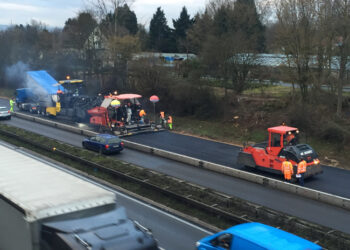
What about the construction site? In some cases, the savings potential in offices is higher than in processes on the construction site. This also makes sense. After all, the digital transformation of road construction processes began in 2014. These processes have only recently begun in the construction office. But although the construction of asphalt roads has been supported by digital assistance systems for several years now, there is still this one paper that has so far effectively defended itself against all attempts at optimization: The paper delivery note.
At a first glance, it is quite harmless. An often DINA4-sized document that contains all the data for each asphalt delivery and documents the transfer of ownership process from the mixing plant to the contractor. But what is so negative about a paper delivery note – especially if a QR code is printed on it? Quite simple: paper delivery notes are lost, they are not always legible after a hard day’s work, they have to be signed manually, forwarded and, last but not least, often digitized again or typed manually. This means a not inconsiderable effort for the administration. The QR code is only the optimization of the manual process. Typing is replaced, handling and scanning remain. The transition from manual data processing to the automated process landscape is not achieved by the QR code.
Potentials through the digital delivery note
An alternative would be to use status signals such as full weighing and unloading collected by digital systems such as BPO. The first step is to automate the accounting process between the mixing plant and the construction company – only then can the process be harmonized with the customer. But in order to make this process reliable, it would be necessary to support all deliveries through a digital medium. Immediately after loading, the mixing plant would send the data set of the delivery note in real time to the tablet PC on the construction site. There the unloading would be confirmed at the push of a button and optionally also by signature. This status would be sent back to the asphalt mixing plant in real time and the accepted delivery note would be transferred to the accounting department. The construction company can check invoices digitally by comparing the databases. It would automatically be possible to see which delivery notes were loaded, unloaded or rejected.
But this is no longer a future. Since 2016, this procedure has been available in BPO with digital signature on the construction site and has become reality. But in order to ensure a seamless digital process chain, it is necessary to digitally support all articles and all deliveries from the first unit or ton. To this end, it must be possible to network the mixing plant and construction site virtually automatically and with almost no additional effort. BPO Lite, which has been specially developed for construction companies and mixing plants in equal parts, meets precisely this requirement. All delivery note data is made available to the foreman in real time on the smartphone, which can confirm unloading.
Digital delivery note optimizes mixed material production
The digital delivery note offers a great advantage especially for mixing plants. A special software module was developed for this purpose for asphalt mixing plants. This allows mixing plants to increase the range of services offered to their customers and at the same time optimise the internal production process.
All production orders of all mixing plants in the company can be displayed graphically on an interactive sliding panel. Using a digital ordering system, external customers can also place orders and order mixes directly via app. Corresponding authorization and status systems support sales and disposition. For each mixing plant, orders are displayed separately in an interactive calendar. Delivery times and performance parameters are taken into account and flow per day into a cross-order timed schedule of all delivery and production orders. On this basis, a mixing sequence is generated that predicts when which material must be changed over to. Through the integration of BPO Lite, it is also possible for external customers to connect the construction site and logistics in real time. This allows the range of services to be expanded and the digital supply chain to be created and the digital delivery note to be implemented. In a further step, the real-time data flows back into the BPO logistics cockpit of the mixing plant, which in turn makes recommendations for optimal utilization of the production process.
The system modules for production process optimization, cross-order logistics timing, digital production planning and real-time networking of external construction sites have already been implemented at NWM Nordwestdeutsche Mischwerke GmbH & Co. KG: “BPO ORDER MANAGEMENT gives us the opportunity to see all orders for mixes at a glance at all production sites, always up-to-date. This makes it easier for us to react quickly to capacity bottlenecks,” says Friedhelm Döbber-Rüther, Head of Central Planning at NWM Nordwestdeutsche Mischwerke GmbH & Co. KG.
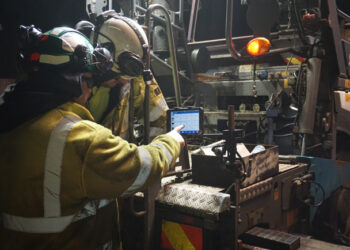
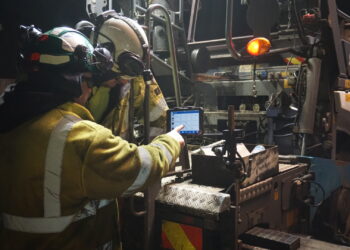
While 5 years ago it was still unthinkable to work with a Tablet PC in asphalt road construction, in many places this is already part of everyday life today. The result is a significant increase in paving performance, which even eclipses the productivity gains achieved by machine technology.
Author Photos
VOLZ CONSULTING GmbH
Industriestraße 112
75417 Mühlacker