Engineering and transportation consultancy Ramboll is urging cities to adopt standardised key performance indicators (KPIs) when trying to integrate micro-mobility into their transportation networks. By identifying tangible KPIs any city can better understand how successful they are in providing new mobility options such as bike sharing schemes, electric scooters and walkways to their communities.
While micro-mobility services have arrived at unprecedented speed and scale to cities, urban authorities are often ill-prepared to manage them, according to Ramboll in a new report called Achieving Sustainable Micro-mobility. This will also help allay the fears of opponents to micro-mobility schemes by helping them understand what is being planned and how its performance will be measured.
The report comes out as countries around the world are attempting to emerge from the COVID-19 crisis where national lockdowns have forced urban dwellers to do more walking and cycling. Once travel restrictions are fully lifted, it is likely that micro-mobility modes of transport will form a much larger part of daily city life.
As well as direct travel, for the health-conscious urban commuter micro-mobility offers safety and sustainability, both of which have shot up the public agenda in recent weeks, according to Ramboll.
But judging the success of this transportation needs effective benchmarking amid the setting of strategic goals for the systems. “Acceptance from the community at large, is one of the universal strategic goals identified in the report,” said Elad Eisenstein, cities and regeneration director at Ramboll UK. “Through the adoption of policies and infrastructure, for example, acceptance can be significantly improved by tackling areas of greatest concerns and at the same time offer emission-free and affordable ways of moving around.”
The 38-page report – available as a free download – proposes the establishment of 12 strategic goals within a generally defined set of common aims to make it easier to benchmark schemes. A large range of stakeholders have contributed to the development of the framework – 15 cities, public transit agencies, micro-mobility operators and regional expert organisations provided perspectives, anecdotes, experiences and data that underpins the report’s conclusions.
The report notes that in terms of volume and relevance, the two primary elements are clearly bike share and e-scooters. While the management of bike share services is well understood in many cities, e-scooters are still largely misunderstood and much more difficult to manage.
The number of micro-mobility trips has more than doubled since 2017 and most of the growth has come from an e-scooter market that was non-existent in 2017. Companies such as Lime and Spin that used to operate tens of thousands of shared, dock-less bicycles in the US have replaced their fleet mostly with shared e-scooters, notes the 2018 annual report of the US-based NACTO – National Association of Transportation Officials. For this reason, the report’s authors say there is an emphasis on e-scooters. But the outcomes are intended to apply to micro-mobility as a whole.
Cities are eager to gather more meaningful data, especially around the issue of micro-mobility crashes and injuries. If available at all, this data usually leads to concerns that there are suddenly many new crashes and injuries with this new mode, notes the report. If this crash data were reported in better context, such as the percentage of overall motor vehicle crashes, the public and even critics might not find the numbers so alarming. In this way, communities can be better informed and have a stronger understanding of the strengths and weaknesses of micro-mobility.
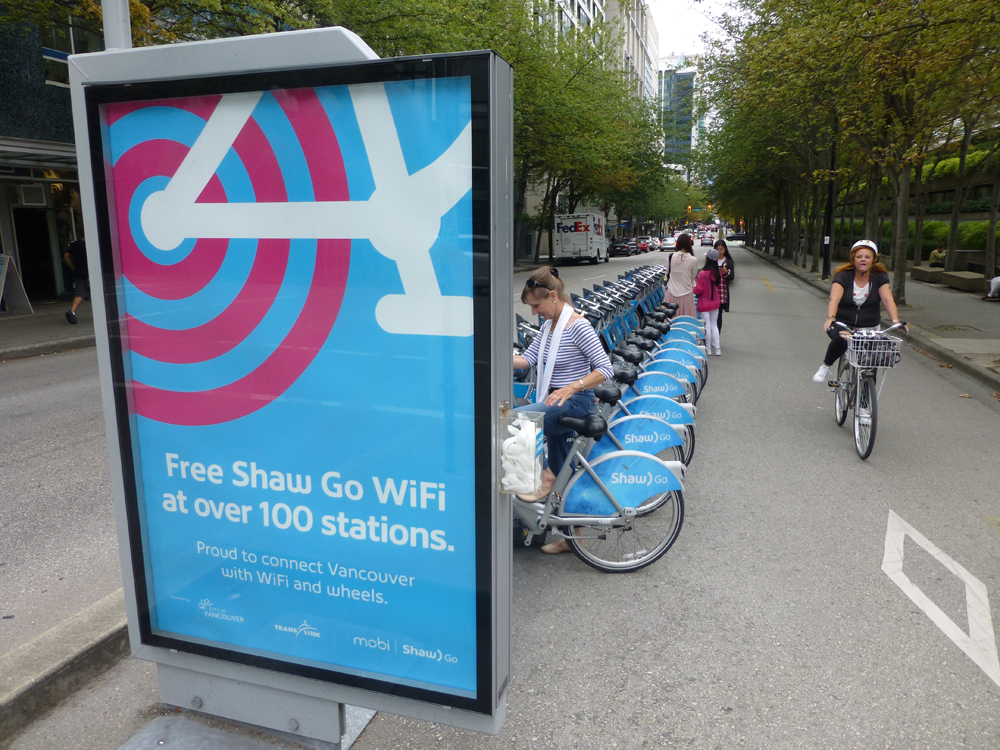
In Vancouver, Canada, with a population of 631,000, it is forbidden by provincial regulations from allowing e-scooters on public roads. However, the Pacific coast city has a bikeshare system provided by Mobi. The greater Vancouver region’s public transportation agency, TransLink, has been developing recommendations for a regional micro-mobility programme and participated in Ramboll’s study.
Hoboken, one of the most densely populated cities in the US, also participated in the study and operated a pilot programme for e-scooters in 2019. Hoboken’s e-scooter programme experienced the world’s highest ridership rates per vehicle, a service provide by Lime, a US-based international business. Lime runs e-scooter, e-bike, pedal bike and car sharing systems in more than 120 cities in more than 30 countries.
Many studies in cities such as Hoboken show that transportation infrastructure supports local mobility, such as walking and cycling, facilitates access to local businesses by nearby, repeat customers. But cities interviewed for the report had not yet considered measuring a direct link between micro-mobility and economic development.
Data from Hoboken e-scooter trips provided by Lime and analysed by Populus* show that the highest trip-start and trip-end densities occur along the main commercial corridors of the city. This kind of information is critical to understanding the benefit of micro-mobility to local businesses, says the report.