The UK’s construction machinery giant JCB is celebrating its 80th anniversary on October 23rd. The firm was established in 1945 by the late Joseph Cyril Bamford CBE in a garage in the market town of Uttoxeter.
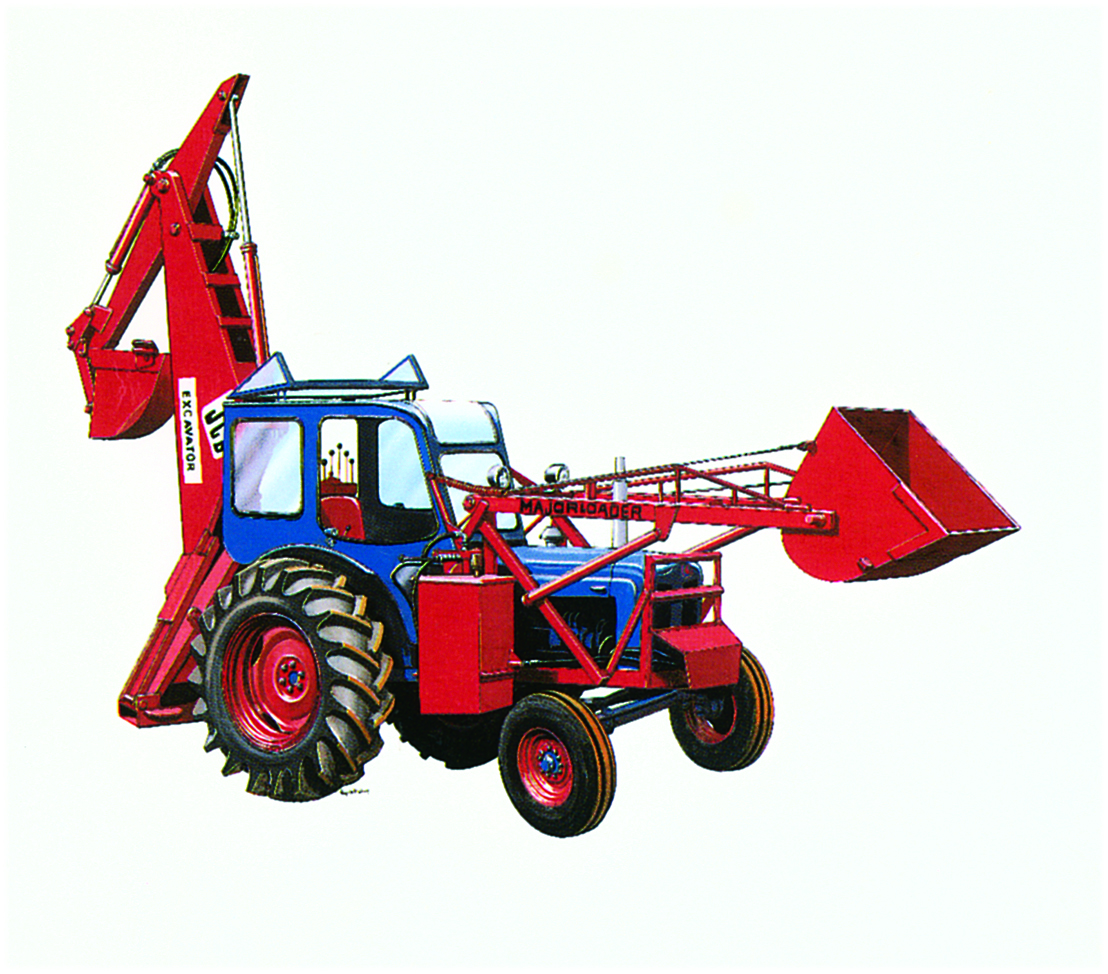
The firm’s first product was a tipping trailer made out of war time scrap, which sold for £45 at the town’s market. By 1947 the company was expanding and the firm moved to a nearby stable block at Crakemarsh Hall and by 1950 JCB moved again to the site of a former cheese factory in Rocester, where its HQ is based today. The firm introduced its first backhoe loader in 1953, the JCB Mk 1. This combined a Major Loadall tractor unit with JCB’s rear-mounted hydraulic arm. The firm later began making the whole backhoe loader machine in its own factory. To date, JCB has manufactured more than 1,000,000 backhoes and they are now made on three continents.
Between 1971 and 1973 turnover doubled to £40 million. In 1975 JCB’s founder retired, telling staff in a farewell message: “Anthony faces the tough job of moving JCB forward through the next decades into a new century.”
In 1977 the wraps came off the Loadall telescopic handler, a machine which revolutionised the way loads were handled. The Loadall has gone on to be one of the most successful products in JCB’s history.
But it was the decision to start manufacturing in India in 1979 that heralded a period of global expansion as Anthony Bamford spotted the potential of this market. Today JCB has factories in New Delhi, Pune, Jaipur and Vadodara and India is now JCB’s biggest market behind the UK. JCB India produced its 500,000th machine in 2023.