• About
  • Advertise
  • Contact
Friday, July 17, 2026
Newsletter
Global Highways
  • News
  • Products
  • Features
  • Categories
    • Asphalt Milling, Paving & Compaction
    • Concrete Milling, Paving & Compaction
    • Connected Construction
    • Earthmoving & Soil Compaction
    • Engines, Components & Tyres
    • Finance & Funding
    • Highway & Network Management
    • Maintenance
    • Materials
    • Recycling
    • Road Markings, Barriers & Workzone Protection
    • Road Structures
  • Events
    • Events Calendar
    • CONEXPO-CON/AGG 2026
    • Intertraffic Amsterdam 2026
    • bauma 2025
  • Latest Magazine
  • Videos
No Results
View All Results
  • News
  • Products
  • Features
  • Categories
    • Asphalt Milling, Paving & Compaction
    • Concrete Milling, Paving & Compaction
    • Connected Construction
    • Earthmoving & Soil Compaction
    • Engines, Components & Tyres
    • Finance & Funding
    • Highway & Network Management
    • Maintenance
    • Materials
    • Recycling
    • Road Markings, Barriers & Workzone Protection
    • Road Structures
  • Events
    • Events Calendar
    • CONEXPO-CON/AGG 2026
    • Intertraffic Amsterdam 2026
    • bauma 2025
  • Latest Magazine
  • Videos
No Results
View All Results
Home Features By invitation: Africa’s road funds are under pressure

By invitation: Africa’s road funds are under pressure

Ali Ipinge is CEO of the Road Fund Administration (RFA) of Namibia and, since early 2021, presides over the 35-member African Roads Maintenance Funds Association (ARMFA). Ahead of the 18th IRF World Meeting & Exhibition which he will be keynoting, Ipinge highlighted developments in the quest for sustainable road maintenance funding in the African continent

by Sarah Biswell
November 8, 2021
in Features
Reading Time: 3 mins read
A A
IRF1

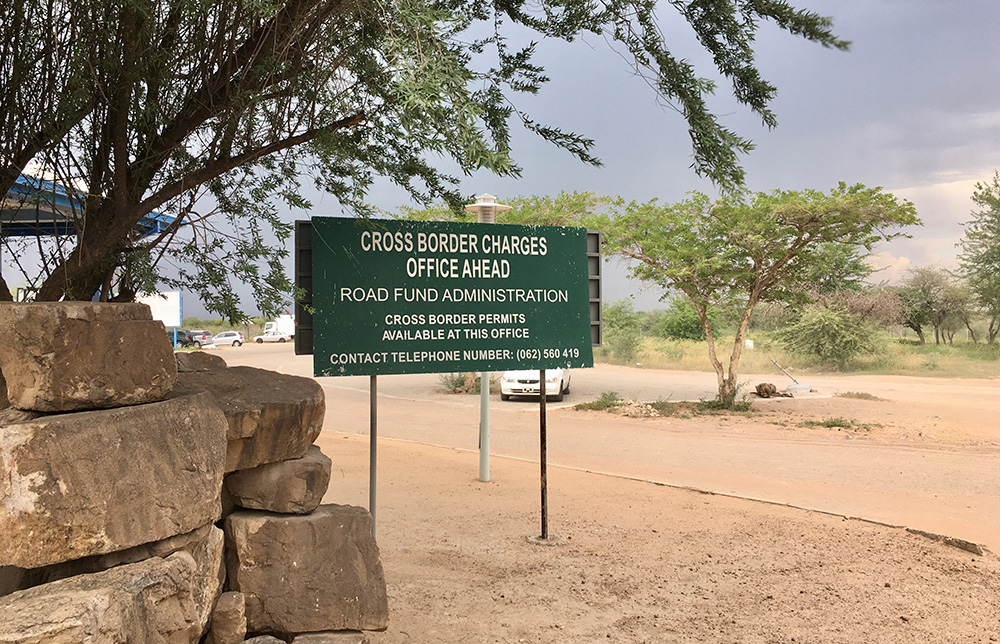
The traditional sources of funding for road maintenance projects and programmes in Africa has been confined to fuel levies, vehicle license and registration fees, road tolls, weight-distance charges, abnormal load charges and weighbridge fines, as well as cross border/ports of entry charges. Grants and loans from development partners are also accumulated as contributory funding. In some member states, Government subvention is provided from the central fiscus from tax revenue.

In the late 1980s a paradigm shift swept across the African continent, leading to the transformation of Government departments responsible for Infrastructure, Public Works and Transport. These changed into semi-commercial and autonomous entities dedicated to funding the provision and preservation of road infrastructure. With the reforms, the establishment of dedicated road funds sought to secure adequate funds based on road user-pay principles. Over the years, however, the erosion of the revenue base has rendered the funding inadequate – leading to rapid deterioration of the road networks on the continent.

The sustainability of traditional sources of road user charges revenue, specifically the fuel levy, necessitates strategies to seek alternative and long-term funding solutions for road maintenance. This comes against the backdrop of declining fuel consumption due to the introduction of e-vehicles and cleaner, more fuel-efficient vehicles.

If these alternative funding strategies are not explored, road construction and maintenance will be severely compromised on the continent. With funding being insufficient to provide for road maintenance needs, ARMFA member states require innovative strategies to be investigated and implemented.

Innovative and alternative sources of road financing on the African continent, such as tolling and distance-based road user charges, have been investigated and are in part being implemented.

Extensive literature is available on tolling and its history, technology and application across Africa. Zambia enacted the Toll Act of 2011 to provide for the establishment and operation of toll roads. Road tolling in Zambia today has progressed to the point where there are approximately 20 inland toll gates and an automated e-Toll payment system. The successful implementation of the Zambian toll model has seen increased revenue and enhanced efficiencies in the maintenance of its 67,671km road network.

IRF2

It is argued that a road user charge such as fuel levy is discriminatory, in the sense that it favours the well-off, being able to afford fuel efficient vehicles and travel more kilometres. New funding advances should be geared towards charging road users for the amount of road use and not the fuel consumed. Such a model would then require the capturing of distance travelled, the quality of road traversed and the vehicle mass. Tracking technology fitted onto vehicles with identifiers, readers and onboard units, will allow for the transmission and processing of key data to enable efficient calculation of road use and ultimately the billing thereto.

The probable, most equitable and sustainable method is a road charge based on distance as it allows road users the choice and decision on the need for the trip, and usage of the road asset provided.

The Paris Accord has implored the nations of the world to reduce carbon emissions. The developed nations have responded to the call to aggressively manufacture and produce hybrid and electric vehicles. It is incumbent upon Africa to follow suit and position itself accordingly, in anticipation of technological advancement in generating revenue for roads.


Promoted Content Header
Washington-based IRF Global VIEW COMPANY
Climate resiliency: beyond design and construction
Features

Climate resiliency: beyond design and construction

July 18, 2023
IRF Washington
Features

GRAA Winner Profile: Samuel De Champlain Bridge Corridor project

June 7, 2023
IRF Washington
Features

IRF Announces winners of 2022 Global Road Achievement Awards

February 9, 2023
IRF Washington
Features

Safety has no alternative

January 30, 2023

Related Posts

One of the tasks involved flipping bottles up from the ground (Image: Hitachi Construction Machinery Europe/HCME)

Europe’s best operators get ready for the LANDCROS Operator Challenge Final

by Sarah Biswell
July 10, 2026

More than 90 of Europe's most skilled excavator operators have showcased their skills in recent months by taking part in...

Road repairs work

The importance of road maintenance

by Staff Writer
July 10, 2026

Gülay Malkoc discusses the importance of investing in road maintenance.

The new 24litre engine from DEUTZ is designed for high-load genset applications - (image: Deutz)

High power generation from Deutz

by Mike Woof
July 8, 2026

Deutz is offering a rugged new engine to suit challenging power generation installations

Join our newsletter

The mission of Global Highways is to cover the latest technologies and best practices in all areas of road, bridge and tunnel construction and maintenance, as well as their safe operation and management.

Subscribe to our newsletter

About Us

  • About Us
  • Advertise
  • Contact
  • Terms & Conditions
  • Privacy Collection Notice
  • Privacy Policy

Popular Topics

  • News
  • Features
  • Products
  • Videos
  • Events
  • CONEXPO-CON/AGG 2026
  • Intertraffic Amsterdam 2026
  • bauma 2025

© 2026 All Rights Reserved. All content published on this site is the property of Prime Creative Media. Unauthorised reproduction is prohibited

No Results
View All Results
NEWSLETTER
  • News
  • Products
  • Features
  • Categories
    • Asphalt Milling, Paving & Compaction
    • Concrete Milling, Paving & Compaction
    • Connected Construction
    • Earthmoving & Soil Compaction
    • Engines, Components & Tyres
    • Finance & Funding
    • Highway & Network Management
    • Maintenance
    • Materials
    • Recycling
    • Road Markings, Barriers & Workzone Protection
    • Road Structures
  • Events
    • Events Calendar
    • CONEXPO-CON/AGG
    • Intertraffic Amsterdam 2026
    • bauma 2022
  • Latest Magazine
  • Videos
  • About
  • Advertise
  • Contact

© 2026 All Rights Reserved. All content published on this site is the property of Prime Creative Media. Unauthorised reproduction is prohibited