The facility will provide the firm’s customers with a reliable supply of high-quality recycled aggregates for use in projects, with a high percentage of the material being used in road repairs and construction. B&A Group is a leading construction soil and aggregate recycling company and became part of Heidelberg Materials in May 2024.
The firm says that the £8 million investment forms part of the company’s commitment to conserving natural materials and promoting the circular economy. The recycled materials produced can be used to replace primary aggregate in a range of products including concrete and asphalt.
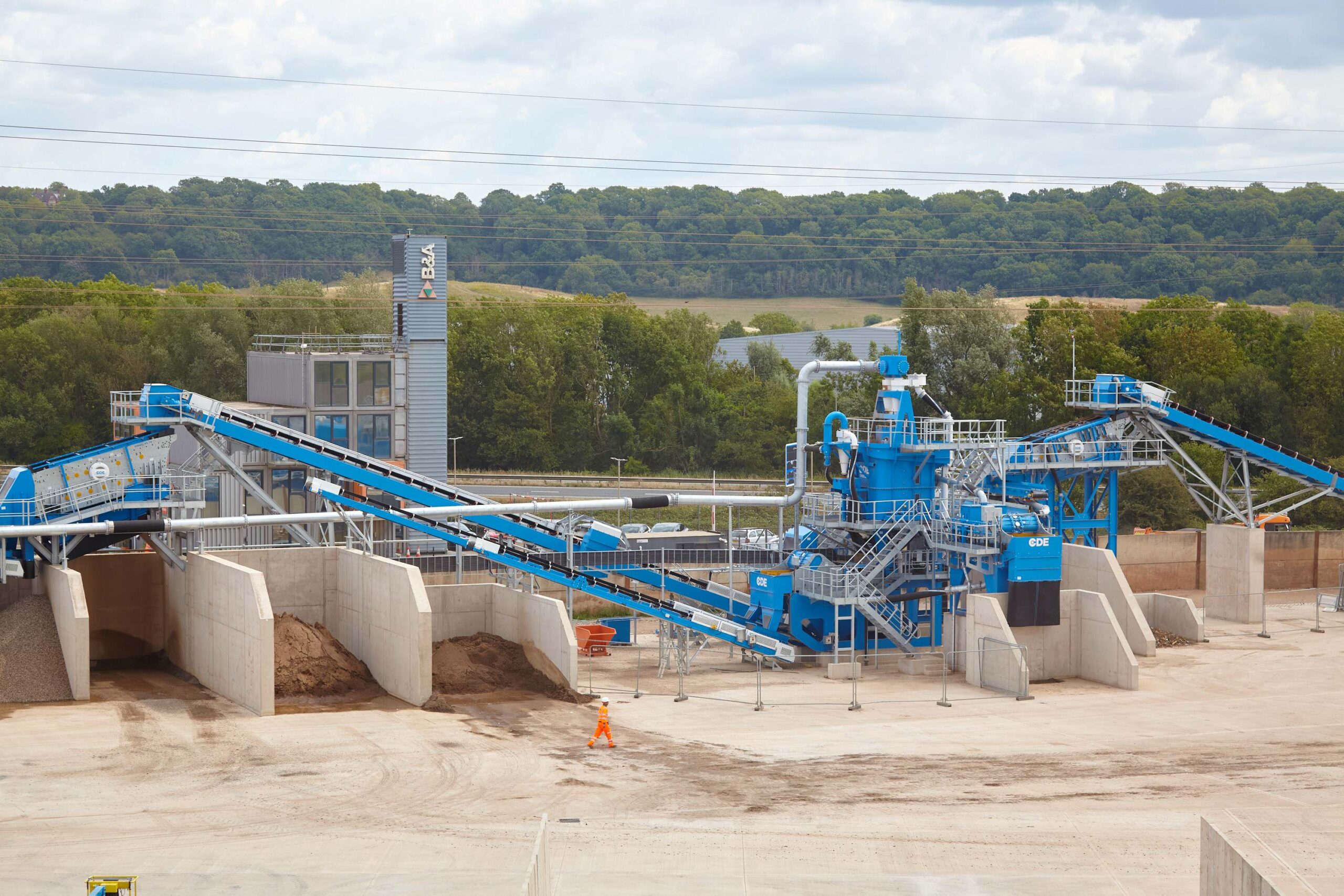
The new wash plant separates, washes and processes up to 400,000 tonnes of excavated waste/year from construction, demolition and industrial sites, public works and utility projects, to provide a reliable source of high-quality recycled aggregates. The plant is fitted with a drainage and water recovery system to capture and recirculate the water used, minimising its impact on the environment.
“Our new bespoke wash plant enables on-site recovery and washing of material, turning soil into recycled aggregates, helping meet increasing demand for more sustainable construction products,” said Helen Griffin, managing director at B&A Group. “It also diverts more material from landfill and on-site washing helps meet environmental permit standards and avoids contamination concerns, supporting regulatory compliance.”
The new plant can process inert soils into fine and coarse aggregates. The range of washed recycled aggregates produced by the plant can be used to replace primary aggregate in a range of products including concrete and asphalt.
“Our new recycling wash plant at B&A Group is the first of a number we have planned to enable us to increase our capacity of recycled products,” said Richard Wilcock, recycling director at Heidelberg Materials UK.
“It is part of our strategy to enable our customers to build more, with less and another step towards achieving our aim to deliver 50% of our revenue from sustainable products by 2030.”