
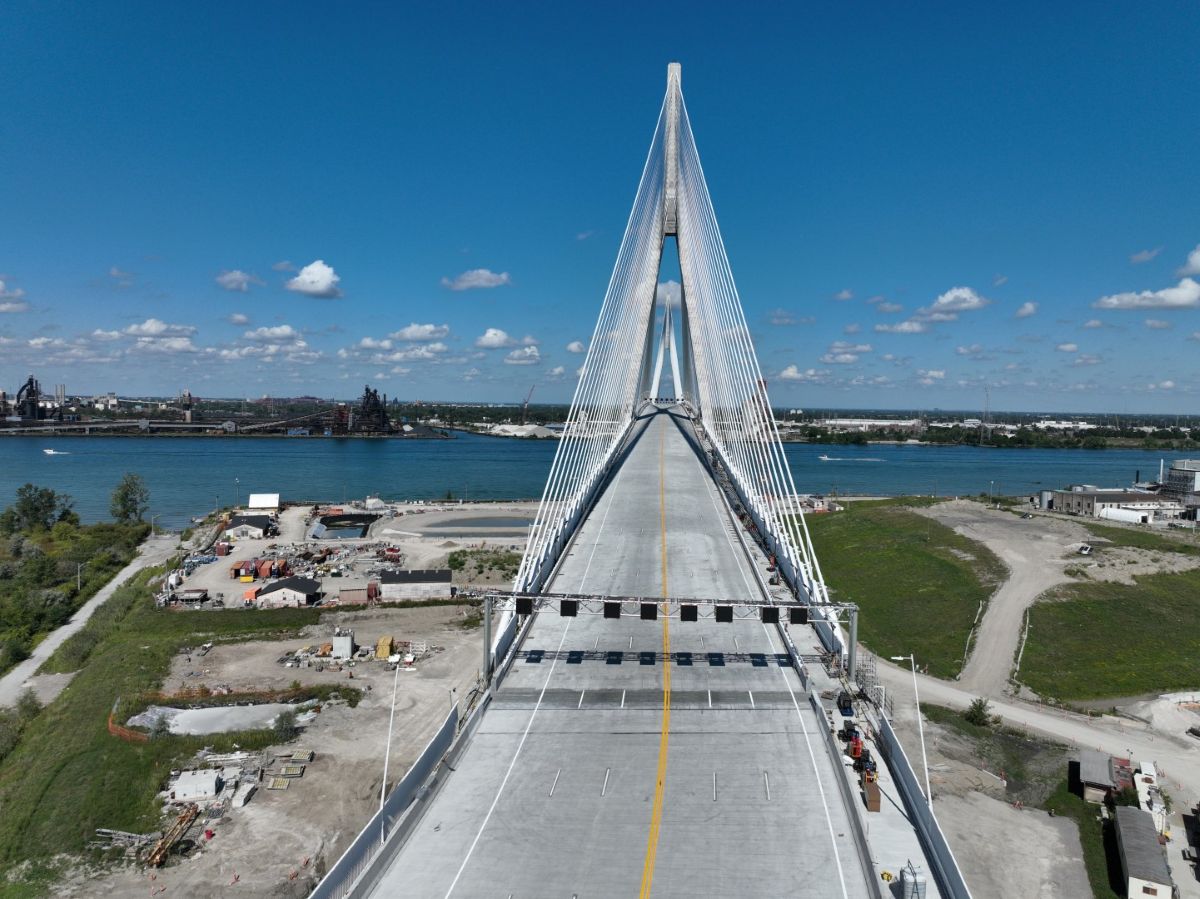
After weeks of delay, the Gordie Howe Bridge between Detroit in the US and Windsor in Canada will finally open July 27.
The bridge has been ready for traffic for weeks and was supposed to open in early June. But the US government held off its approval – the road connects to the US federal highway system – arguing that the original agreement was not a good deal for the US.
The government of Canada said on its website that the two countries had “agreed to a series of cooperative measures focused on toll governance and transparency”.
Media reports note that the US gets 50 percent of net revenues until 2041 and a say in setting the tolls.
The bridge is an agreement between the US state of Michigan, Ontario – across the river from Detroit – and the federal Canadian government. Cost of building the bridge was covered entirely by Canada, including that for the large customs areas on the US side of the bridge. In its most basic shape, the deal is that Canada will recoup construction and operating costs through tolls.
The new deal changes this. Tolling revenue will now be split for 15 years. The US monies will go into a regional economic development fund that should benefit the communities around it the structure. One such community is Delray whose residents had much of the construction on the US at their doorsteps.
When it does open, the bridge will be a 2.7km six-lane crossing of the Detroit River, bypassing Detroit and Windsor city centres to connect the I-75 in Detroit to Highway 401 in Canada. The project includes 2.5km-long cable-stayed bridge with six lanes (three Canadian-bound and three US-bound), and two approach bridges. There is a 130-acre Canadian port of entry and a 148-acre US port of entry.