The need for new technologies in construction became highly apparent during the depths of the pandemic, with a rapid take-up of newly available systems from the main technology suppliers. This permitted construction activity to continue, with remote working for team members, while machine operators received models to work from remotely. Effective control of projects could be achieved, without surveyors or engineers being onsite. According to Cameron Clark, earthmoving industry director, Trimble Construction, “Construction is not the same now as it was. Technology is moving fast and it’s constantly changing.”
Machines also have improved and new systems offer far higher levels of operator assistance than even a few years ago. Frederik Åkesson, application support engineer, Dynapac commented that machine solutions do not have to be fully autonomous to deliver major gains in efficiency. Some of the latest systems can take over the steering functions on machines, as with the new package being offered on soil compactors and this can deliver a big improvement in productivity of as much as 25%. He explained that while the machine control tools will not suit every task, “…you can take away the tedious work.”
The development of steering control is an important step and Clark said, “We can now automate a machine so that it stays in a straight line.” He explained that with soil compactors for example, guiding them accurately can be challenging even for an experienced operator and he added, “Because steering a compactor is difficult, people tend to overcompensate with the overlap.”
He said that this is why the autosteer function now being offered can deliver such gains in productivity. Using autosteer means the overlap is optimised, delivering a major gain in efficiency.
The construction industry has traditionally been conservative when it comes to adopting new technology and is ripe for change. Michael Helling, senior director of strategy, Trimble Autonomy commented, “Customers are doing things they’ve done a certain way for years. But when someone starts using technology, they see a huge advantage.”
Clark continued, “One of the biggest hurdles is customer expectation of technology.” However, he cautioned, “We’re not going to see robot machines tomorrow. Construction is different from the automotive sector.”
He explained that autonomy on a car allows it to navigate its way to a destination avoiding obstacles and following traffic laws, a comparatively simple operation. By comparison, construction machines work as a team onsite with multiple units operating at the same time, potentially in close proximity, and these actually change their working environment in doing so, providing a much more complex challenge for autonomous operation.
Meanwhile, introducing comparatively unproven technology into a complex industry such as construction would be difficult. Åkesson explained that technology has to be introduced on a step-by-step basis to the construction sector and said, “We are serving a market with high costs and low margins. If we introduce technology that doesn’t work, it’s a big risk.”
He said that the way the new technology is used also means firms often have to change the way they work. He said, “You might need to rethink your operations. You can’t work the way you used to. It’s not all at once. Find out what solution fits your job.”
Clark continued, “Don’t be afraid of automation. We’re here to help. Let the autonomous machines do the boring repetitive tasks and you can do the interesting jobs.”
He used the example of dozers and single drum rollers working together as an example. He said, “Understanding how the compactor works with a dozer is important. At the moment, the dozer operator will spread the material and then tell the compactor operator to come and compact the material.”
However, he explained that using new technology, the dozer operator can spread the material around the area as required and then switch on an autonomous compactor. The roller can operate in a closed off area, where there are no other items of equipment or personnel and can compact the material to the required grade as required.
Again, new technology helps deliver quality working such as with the latest single drum rollers. Åkesson said, “When you lay out the material you assume it is homogenous but even a standard number of passes might not be suitable.”
But the newly available machines can assess the response of the drum to the ground conditions and determine the compaction effect needed to optimise density. Åkesson added, “The next level is where you can ensure compaction is the same over the whole area.”
Similarly, new technology can deliver high-quality results when dozing. Clark explained that the automatics on the dozer can set the blade as required. The operator then benefits from the model (generated using survey data) to see the low and high spots on the site. The machine can then follow lines automatically to push material. He cautioned, “You’re still reliant on the intelligence of people.”
While machine control systems are now common for large projects, Clark said that there is still resistance to the use of machine control technology in smaller construction works. He said, “Only around 15% of construction machines that could have machine control technology actually do at present.”
He explained that this is understandable, with some firms having been put off by earlier generation tools. “Some of the systems in the past were difficult to use.”
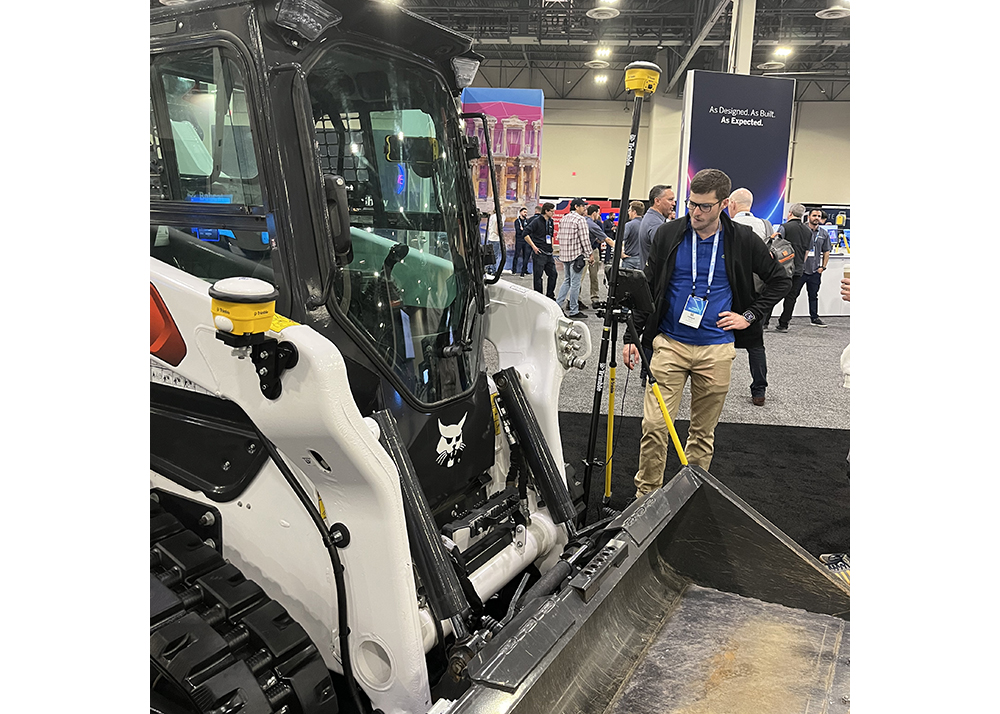
A significant barrier for the use of systems for smaller jobs has been loading models onto machines. But now there are compact machine control technologies that can be loaded using onsite scanning tools. These offer significant benefits and Åkesson commented that in some cases contractors use technology as it means they can show the client that work was carried out to specification.
Clark said, “All that data is recorded on the machine so you can go back and show what was done. That’s very important for liability issues.”
Being able to identify sections that may require remedial work is also important. Clark said that if areas are not completed to specification, they will be highlighted, allowing issues to be addressed later.