
• About
  • Advertise
  • Contact
Saturday, July 18, 2026
Newsletter
Global Highways
  • News
  • Products
  • Features
  • Categories
    • Asphalt Milling, Paving & Compaction
    • Concrete Milling, Paving & Compaction
    • Connected Construction
    • Earthmoving & Soil Compaction
    • Engines, Components & Tyres
    • Finance & Funding
    • Highway & Network Management
    • Maintenance
    • Materials
    • Recycling
    • Road Markings, Barriers & Workzone Protection
    • Road Structures
  • Events
    • Events Calendar
    • CONEXPO-CON/AGG 2026
    • Intertraffic Amsterdam 2026
    • bauma 2025
  • Latest Magazine
  • Videos
No Results
View All Results
  • News
  • Products
  • Features
  • Categories
    • Asphalt Milling, Paving & Compaction
    • Concrete Milling, Paving & Compaction
    • Connected Construction
    • Earthmoving & Soil Compaction
    • Engines, Components & Tyres
    • Finance & Funding
    • Highway & Network Management
    • Maintenance
    • Materials
    • Recycling
    • Road Markings, Barriers & Workzone Protection
    • Road Structures
  • Events
    • Events Calendar
    • CONEXPO-CON/AGG 2026
    • Intertraffic Amsterdam 2026
    • bauma 2025
  • Latest Magazine
  • Videos
No Results
View All Results
Home News Decarbonising the construction industry

Decarbonising the construction industry

Decarbonising the construction industry can yield rewards.

by Mike Woof
October 26, 2023
in News
Reading Time: 3 mins read
A A
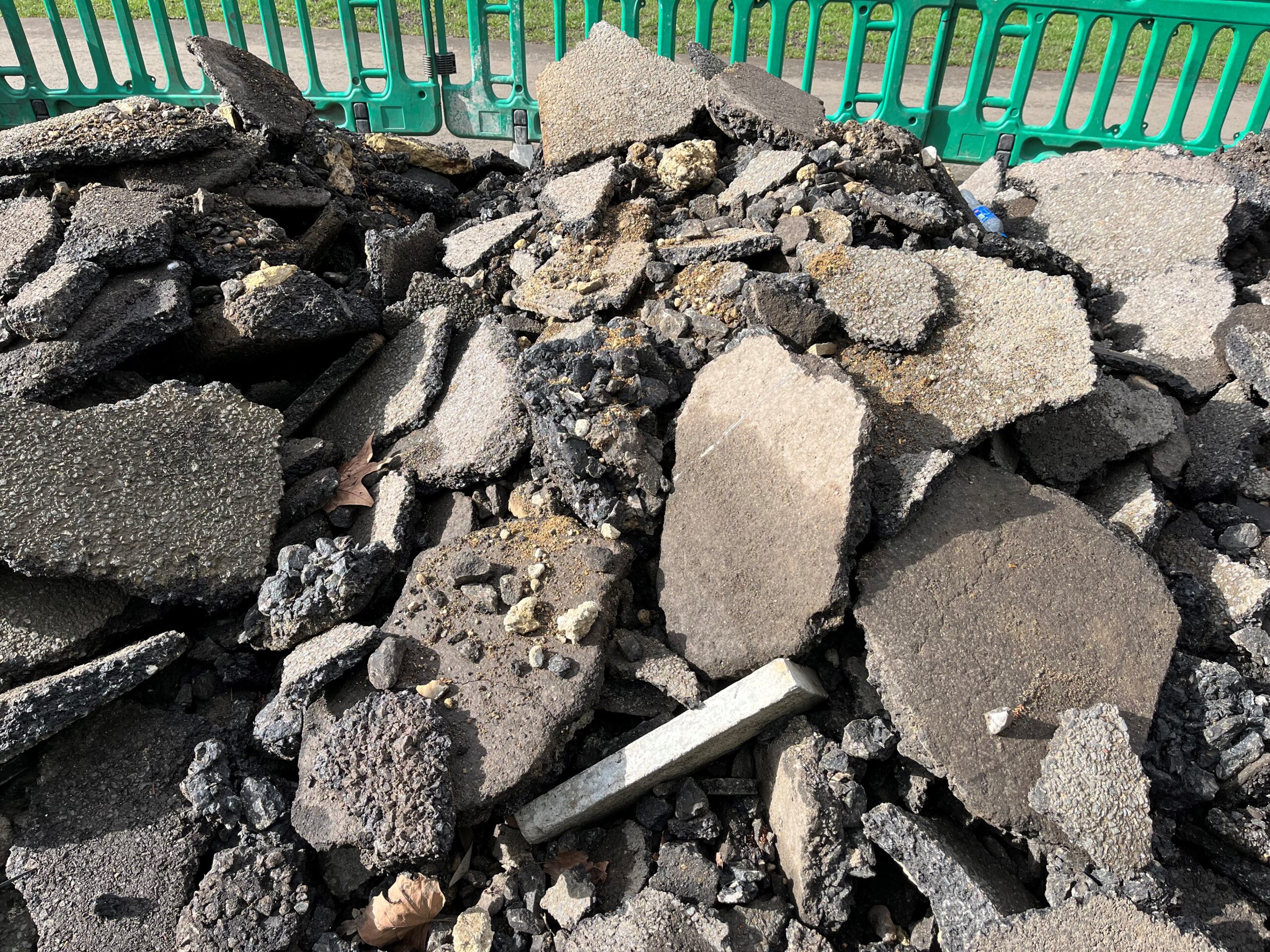
Reusing construction materials is one way to help reduce carbon emissions - image © courtesy of Mike Woof

Reusing construction materials is one way to help reduce carbon emissions - image © courtesy of Mike Woof

Construction leaders are advising that data is the strongest ally in decarbonising the built environment.

While the UK Government may be watering down its efforts to reach net zero, the construction industry must not let up on its commitment to reduce its impact on climate change. That is the call to action from a consortium of leading organisations and professional bodies as it launches the ground-breaking Built Environment Carbon Database (BECD).

The project, which has been developed and funded by the Building Cost Information Service (BCIS) over the last three years, is free-to-access and is designed to become the main source of carbon estimating and benchmarking for the industry. The BECD steering group, which is responsible for its conceptual development, promotion and adoption, includes representatives from BCIS, RICS, The Carbon Trust, IStructE, BRE, CIOB, the Environment Agency, CIBSE, ICE, RIBA, the UK Green Building Council and ACE.

For James Fiske, BCIS CEO and chair of the steering group, the need to measure and report carbon data has reached a critical point. He said: “With the government U-turning on green commitments, there has never been a more important time for the UK construction industry to take leadership on reducing its carbon emissions.

“With the recently updated RICS Professional Standard on Whole Life Carbon Assessment, which gives consistency to measuring environmental impact and is the net zero building carbon standard, we have the framework in place for us to do this.

“The other important part of the jigsaw is the data. Unless we have easy access to accurate and consistent carbon emissions data, and a place where we can share learning and experience, we will never truly understand if we are making the right decisions.”

The built environment is responsible for almost 40% of greenhouse gas emissions globally, which means the construction industry’s role to play in addressing the climate emergency cannot be understated.

However, a lack of unity in how the industry approaches the problem is the greatest barrier to finding effective solutions. The collaborative nature of BECD, using a consistent methodology and it being accessible to all parts of the industry, has been fundamental.

Fiske said: “It has been a real joint industry effort, with all of the organisations and people who have generously given up their time through working groups or consultations, to get us to this point. The key now is that we push forward. If we are truly going to reduce our environmental impact, we need the industry to come together to share data and experience through BECD.”

Fabrizio Varriale, Place and Space Analyst at RICS, is chair of the BECD’s working groups, tasked with technical development of the database.

He said: “Poor data quality and the lack of standardisation and transparency in reporting practices are acknowledged as major barriers to a wider uptake of carbon assessments in the built environment.

“BECD aims to help the industry by providing a platform to report and retrieve the results of building carbon assessments.

“This will allow data sharing across the industry and the harmonisation of reporting practices in alignment with the RICS Professional Standard on Whole Life Carbon Assessment.

“Over time, the granularity of the project data collected through BECD will enable the industry to produce accurate benchmarks for specific project types and stages. BECD will also help professionals who are conducting carbon assessments by providing a uniform catalogue of product data, bringing together different sources of product life cycle assessments and environmental product declarations.”

Visit www.becd.co.uk for more information about the database and the members of the steering and working groups. For more information about BCIS, visit the website at www.bcis.co.uk


Categories: Materials

Related Posts

A new bridge link will connect Oregon State and Washington State in the US

New $15 billion Interstate bridge between Oregon and Portland

by Mike Woof
July 17, 2026

A new $15 billion bridge will span the Columbia River in the US.

Sustainable road construction from Heidelberg Materials for North Yorkshire

Low carbon road repairs in North Yorkshire

by Mike Woof
July 17, 2026

Innovative road materials from Heidelberg Materials help improve roads in the UK.

A TBM will drive a new tunnel under the the River Thames from Tilbury

Biggest Herrenknecht TBM for £11 billion UK project

by MJ woof
July 16, 2026

The UK's £11 billion Lower Thames Crossing project will use a 5,000tonne TBM supplied by Herrenknecht, the largest of its...

Join our newsletter

The mission of Global Highways is to cover the latest technologies and best practices in all areas of road, bridge and tunnel construction and maintenance, as well as their safe operation and management.

Subscribe to our newsletter

About Us

  • About Us
  • Advertise
  • Contact
  • Terms & Conditions
  • Privacy Collection Notice
  • Privacy Policy

Popular Topics

  • News
  • Features
  • Products
  • Videos
  • Events
  • CONEXPO-CON/AGG 2026
  • Intertraffic Amsterdam 2026
  • bauma 2025

© 2026 All Rights Reserved. All content published on this site is the property of Prime Creative Media. Unauthorised reproduction is prohibited

No Results
View All Results
NEWSLETTER
  • News
  • Products
  • Features
  • Categories
    • Asphalt Milling, Paving & Compaction
    • Concrete Milling, Paving & Compaction
    • Connected Construction
    • Earthmoving & Soil Compaction
    • Engines, Components & Tyres
    • Finance & Funding
    • Highway & Network Management
    • Maintenance
    • Materials
    • Recycling
    • Road Markings, Barriers & Workzone Protection
    • Road Structures
  • Events
    • Events Calendar
    • CONEXPO-CON/AGG
    • Intertraffic Amsterdam 2026
    • bauma 2022
  • Latest Magazine
  • Videos
  • About
  • Advertise
  • Contact

© 2026 All Rights Reserved. All content published on this site is the property of Prime Creative Media. Unauthorised reproduction is prohibited