Out of nearly 615,000 bridges in the US, almost 40% are 50 years or older and just more than 9% are structurally deficient. The result is that every day 188 million vehicles pass over a structurally deficient bridge. A recent estimate suggested it would take US$123 billion to put this situation right.
To make matters more complicated, demolition sector contractors have seen worker shortages, increasing workers’ compensation accident claims and growing corporate insurance premiums. But because money and time are of the essence for contractors, the higher cost of the specialised demolition equipment starts to be less prohibitive for investment by contractors. As an example, innovative and sophisticated equipment for removing concrete around rebar is making economic sense rather than the use of handheld tools, mini excavators and backhoes.
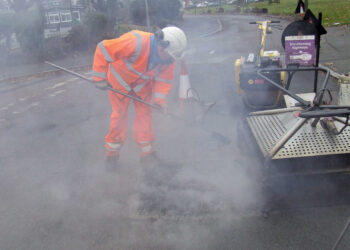
Traditional bridge deck work involves many workers using handheld pneumatic tools for breaking concrete to expose rebar. But a worker can’t apply nearly as much force into the tool or do so as consistently as can a remote-controlled demolition machine. Also, machines don’t suffer fatigue. Neither will a worker if he or she is operating a remote- control box fastened around their waist to control a robotic breaker.
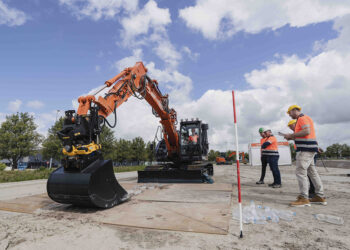
Remote-controlled demolition machines come in varying configurations and weights so that the most productive option can be matched to each job. Contractors can choose between electric- and diesel-powered models.

In certain cases, a remote-controlled unit equipped with a breaker attachment and controlled by an operator and one spotter can break up almost 1,900cm² of bridge deck concrete in 15 minutes. The same area in the same amount of time would require three workers with handheld tools. Labour costs are cut by a third while accomplishing the task in less time.
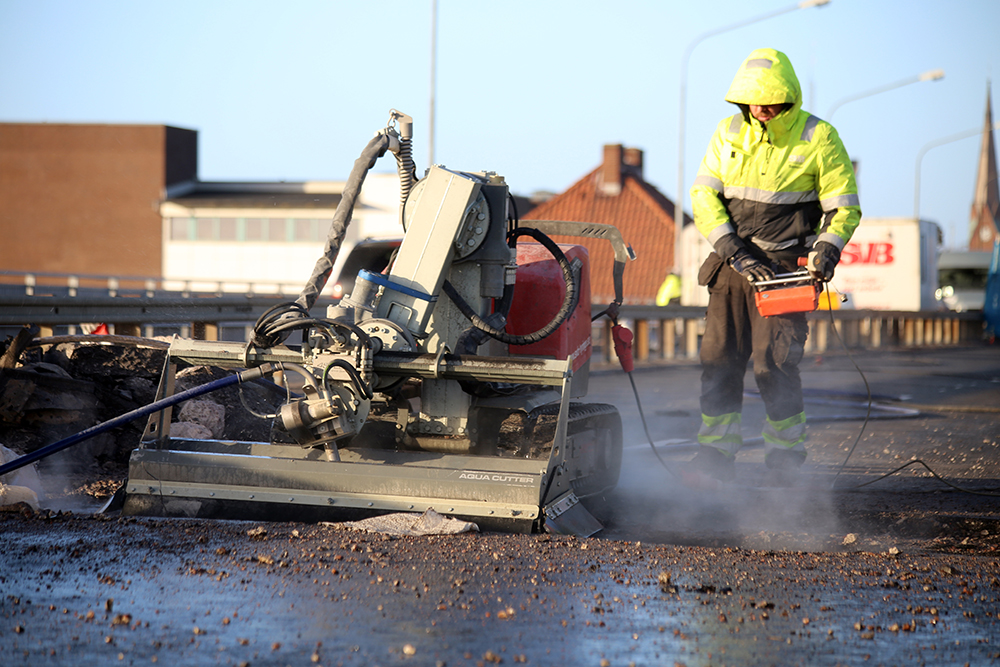
Innovative remote-controlled hydro-demolition robots are an emerging method offering similar benefits to the more established remote-controlled demolition machines. Some hydro-demolition models can remove nearly 75m² of bridge deck at a depth of 100mm an hour – a fraction of the time it would take a crew of workers with jackhammers.
Damage-free rebar
Precision and minimal micro-fracturing are consistently major considerations. Handheld tools combined with operator error simply don’t make the cut. Similarly, an excavator paired with demolition tools lacks the precision and can damage rebar. In this instance, hydro-demolition robots shine; the technology virtually eliminates unintended damage.
Typically, jets of water at pressures of about 1,380bar are directed at the deck surface to quickly remove layers of concrete but leave rebar unscathed and clean. Expensive rebar replacement before rehabilitation work is not needed. The method also doesn’t cause vibrations, eliminating the possibility of micro-fracturing that could threaten bridge stability.
In some applications limited in scope, remote-controlled demolition machines offer the ability to perform precise so-called dental work on bridge decks. Because the force of the breaker is matched to the robot and can be adjusted to meet concrete conditions, damage to underlying rebar during concrete removal is drastically reduced.
Even the most productive tool needs an operator. As the workforce ages, contractors are having difficulty recruiting younger workers pivotal to helping meet the infrastructure demands to come. Remote-controlled robots can help attract millennials by appealing to their keenness for higher technology and innovation and they are often fast-learners with the equipment. Improved safety from the high-tech equipment also helps recruit workers and retain employees. Remote-controlled demolition and hydro-demolition robots allow workers to monitor their progress from a safe distance from flying debris and the edges of a deck which could be some hundreds of metres above the ground. By not standing next to a deck’s edge, there is less need for sophisticated fall protection systems. In addition, where large equipment such as excavators require multiple lane closures, demolition robots typically require one lane closure, minimising traffic
disruption.
*Brokk is based in Skellefteå in northern Sweden around 200km south of the Arctic Circle and 800km north of Stockholm. Peter Bigwood is vice president of marketing for Brokk’s US subsidiary based in Monroe in the state of Washington and which is the US distributor for Aquajet Systems. He has more than 30 years in the industry and is on the boards of the National Demolition Association and Concrete Sawing and Drilling Association, both in the US. Aquajet Systems has its headquarters and production facilities in Holsbybrunn, Sweden.