• About
  • Advertise
  • Contact
Thursday, July 16, 2026
Newsletter
Global Highways
  • News
  • Products
  • Features
  • Categories
    • Asphalt Milling, Paving & Compaction
    • Concrete Milling, Paving & Compaction
    • Connected Construction
    • Earthmoving & Soil Compaction
    • Engines, Components & Tyres
    • Finance & Funding
    • Highway & Network Management
    • Maintenance
    • Materials
    • Recycling
    • Road Markings, Barriers & Workzone Protection
    • Road Structures
  • Events
    • Events Calendar
    • CONEXPO-CON/AGG 2026
    • Intertraffic Amsterdam 2026
    • bauma 2025
  • Latest Magazine
  • Videos
No Results
View All Results
  • News
  • Products
  • Features
  • Categories
    • Asphalt Milling, Paving & Compaction
    • Concrete Milling, Paving & Compaction
    • Connected Construction
    • Earthmoving & Soil Compaction
    • Engines, Components & Tyres
    • Finance & Funding
    • Highway & Network Management
    • Maintenance
    • Materials
    • Recycling
    • Road Markings, Barriers & Workzone Protection
    • Road Structures
  • Events
    • Events Calendar
    • CONEXPO-CON/AGG 2026
    • Intertraffic Amsterdam 2026
    • bauma 2025
  • Latest Magazine
  • Videos
No Results
View All Results
Home Features Automated speed camera enforcement: IRF sets the measure for use

Automated speed camera enforcement: IRF sets the measure for use

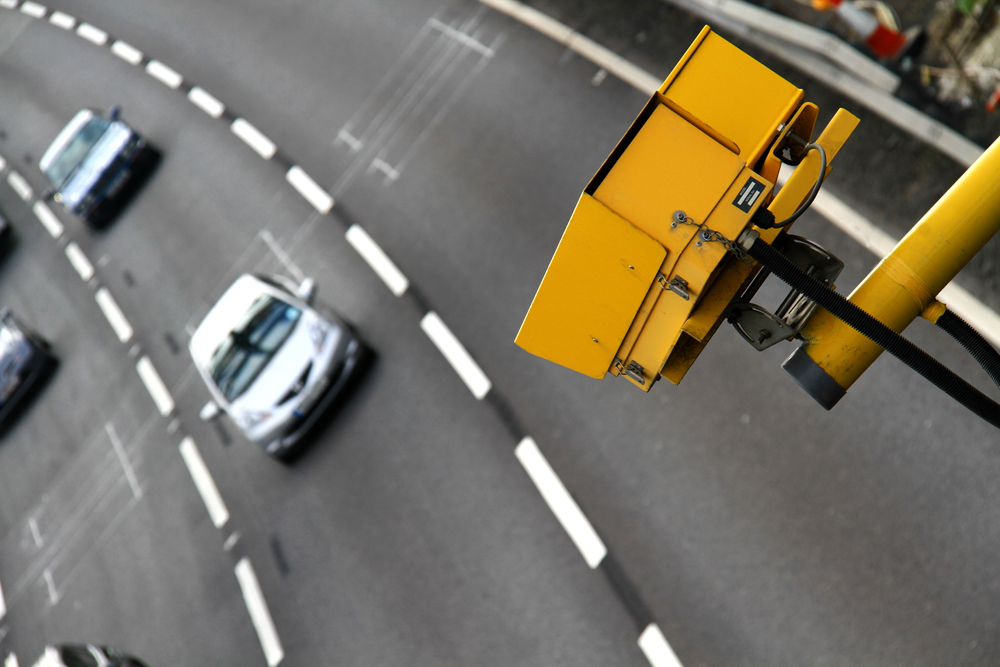
Familiarly known as “speed cameras” to motorists around the world, automated speed enforcement (ASE) devices produce a record of the speed of a vehicle when the driver has exceeded the acceptable maximum limit. However, as recently publicised cases have shown, for an ASE system to be effective and widely accepted, it is of paramount importance that all readings from these devices are accurate, and that this accuracy can be proven by those operating the devices.

by Sarah Biswell
August 3, 2020
in Features
Reading Time: 3 mins read
A A
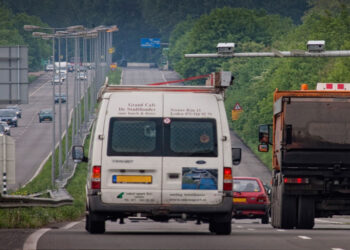
© Derektenhue | Dreamstime.com

© Derektenhue | Dreamstime.com

If aspeed camera system is found to be unreliable and inaccurate during or after a period of uncalibrated enforcement operation, the safety benefit of the ASE treatment as a whole is at risk. A reduction in the trust in the accuracy of the ASE systems will result in a loss of public support and confidence in the enforcement authority. Inaccurate readings by speed monitoring equipment may also result in reparations that frequently include the repayment of fines and penalties that have been incorrectly issued as a result of the defect. Finally, the removal of an improperly calibrated speed enforcement system will create a period of increased risk to the public.

Working through its Committee on Enforcement, IRF members have tackled the issue through a new White Paper titled “Accuracy and Integrity of Speedmeters by Calibration” now available on the IRF website (www.irf.global). The purpose of this paper is to enable all actors of the speed enforcement chain to understand the high-level principles required to achieve accuracy and integrity of ASE equipment.

National approval authorities for ASE set requirements that generally follow international specifications. Once approval is gained by the manufacturer, it is up to the operator of the ASE to procure independent services such as ISO-accredited independent laboratories who can provide traceable calibrations under an internationally accepted accreditation scheme. ASE equipment that is calibrated on an annual basis, or at an agreed interval, by an ISO 17025 accredited calibration laboratory is much less susceptible to legal or technical challenge.
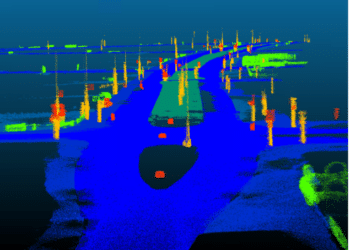
ASE Visual

There is also potential for accredited ASE systems to be installed in a way that does not comply with the specified dimension. As such, the readings may diverge sufficiently from the installation parameters to cause an inaccuracy in a reading or reduction in the integrity. This creates what drivers, their representatives and courts, may consider ‘reasonable doubt’ in the accuracy of evidence produced by errors that could exist even when Type Approved equipment is installed.

As a result, an independent calibration test that is conducted by an accredited laboratory which can produce traceable and accurate data in a full system test from the road to the violation record will provide the strongest assurance of accuracy and integrity. Done this way, it is difficult to contest in a reasonable way and, when challenged, it can withstand the sternest of tests.

The reduction of challenges will keep the work of ASE authorities to a minimum, with challenges restricted to avenues not related to speed accuracy. The resulting cost savings, not to mention the decreased threat to reputational risk of the enforcement authority, are just two of the benefits. The main advantage though is to have a system that is fair to members of the public using the highways and road network. Ultimately, the approach outlined in this paper allows all stakeholders to have confidence in a credible and accurate system, a system which is deployed fundamentally to save lives.

Promoted Content Header
IRF Washington VIEW COMPANY
Digital Roads of the Future initiative involves 25 Industry partners acting as co-funders in the Future Roads Fellowship Programme extending the initiative to the number of involved practitioners.
Features

Digital roads of the future – we are there!

November 20, 2023
The IRF’s GRAA highlight advances for the sector
Features

The IRF’s GRAA highlight advances for the sector

September 11, 2023
shutterstock_1493123198
Features

Safe and efficient urban mobility for Africa

May 17, 2023
© Shutterstock
Features

Safe and efficient urban mobility for Africa

March 16, 2023

Related Posts

One of the tasks involved flipping bottles up from the ground (Image: Hitachi Construction Machinery Europe/HCME)

Europe’s best operators get ready for the LANDCROS Operator Challenge Final

by Sarah Biswell
July 10, 2026

More than 90 of Europe's most skilled excavator operators have showcased their skills in recent months by taking part in...

Road repairs work

The importance of road maintenance

by Staff Writer
July 10, 2026

Gülay Malkoc discusses the importance of investing in road maintenance.

The new 24litre engine from DEUTZ is designed for high-load genset applications - (image: Deutz)

High power generation from Deutz

by Mike Woof
July 8, 2026

Deutz is offering a rugged new engine to suit challenging power generation installations

Join our newsletter

The mission of Global Highways is to cover the latest technologies and best practices in all areas of road, bridge and tunnel construction and maintenance, as well as their safe operation and management.

Subscribe to our newsletter

About Us

  • About Us
  • Advertise
  • Contact
  • Terms & Conditions
  • Privacy Collection Notice
  • Privacy Policy

Popular Topics

  • News
  • Features
  • Products
  • Videos
  • Events
  • CONEXPO-CON/AGG 2026
  • Intertraffic Amsterdam 2026
  • bauma 2025

© 2026 All Rights Reserved. All content published on this site is the property of Prime Creative Media. Unauthorised reproduction is prohibited

No Results
View All Results
NEWSLETTER
  • News
  • Products
  • Features
  • Categories
    • Asphalt Milling, Paving & Compaction
    • Concrete Milling, Paving & Compaction
    • Connected Construction
    • Earthmoving & Soil Compaction
    • Engines, Components & Tyres
    • Finance & Funding
    • Highway & Network Management
    • Maintenance
    • Materials
    • Recycling
    • Road Markings, Barriers & Workzone Protection
    • Road Structures
  • Events
    • Events Calendar
    • CONEXPO-CON/AGG
    • Intertraffic Amsterdam 2026
    • bauma 2022
  • Latest Magazine
  • Videos
  • About
  • Advertise
  • Contact

© 2026 All Rights Reserved. All content published on this site is the property of Prime Creative Media. Unauthorised reproduction is prohibited